ตั่วแปะกง Tua Pek Kong · Tua Pek Kong medallion
大伯公 · 福德正神 (zh) · Ông Bổn · Bổn Đầu Công (vi) · Tokong Tua Pek Kong (ms)
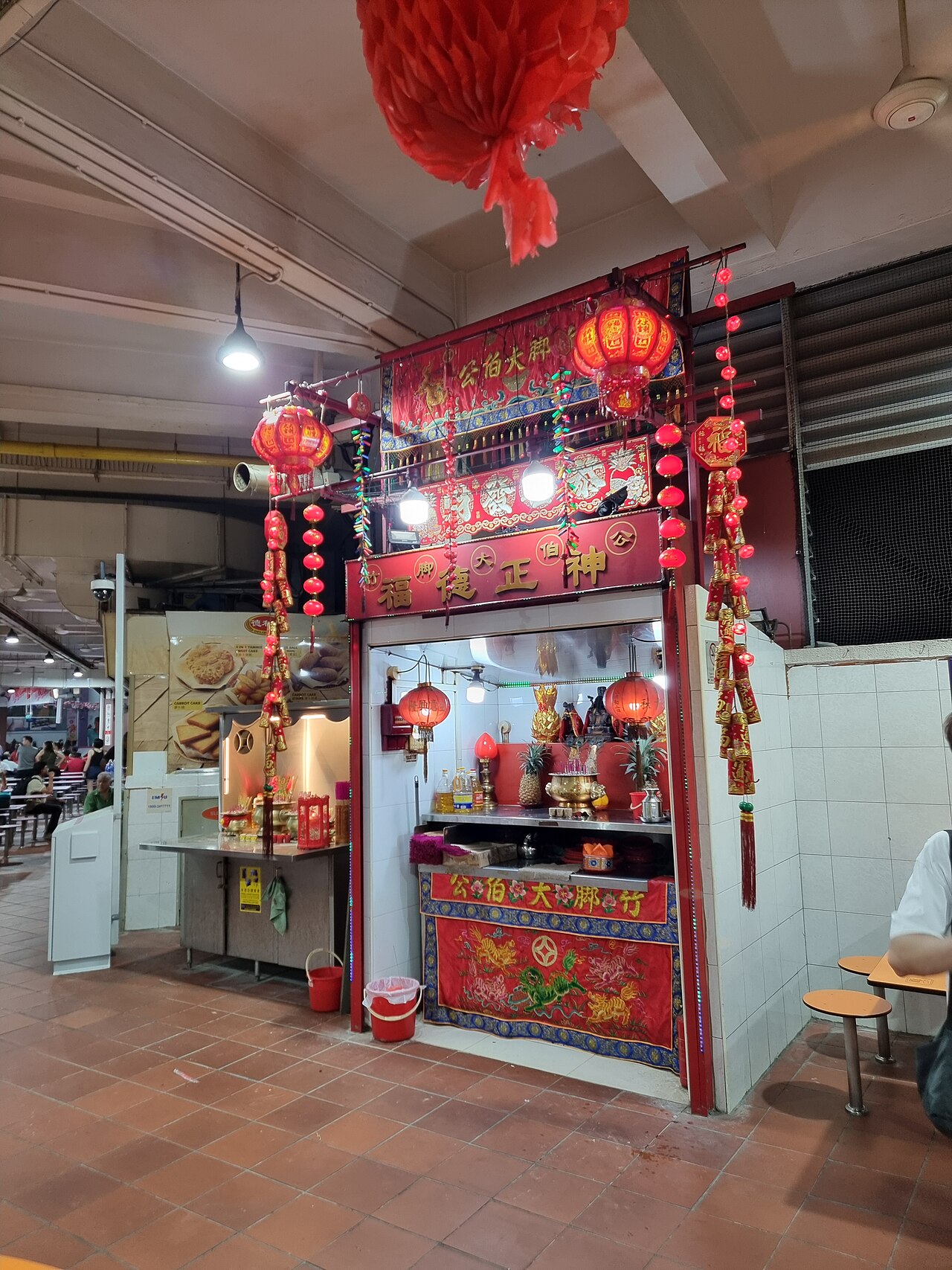
📷 ถือชิ้นนี้อยู่? ถ่ายรูปเทียบ · Holding one? Photograph it to compare 🔍 ค้นหา · search Tua Pek Kong medallion
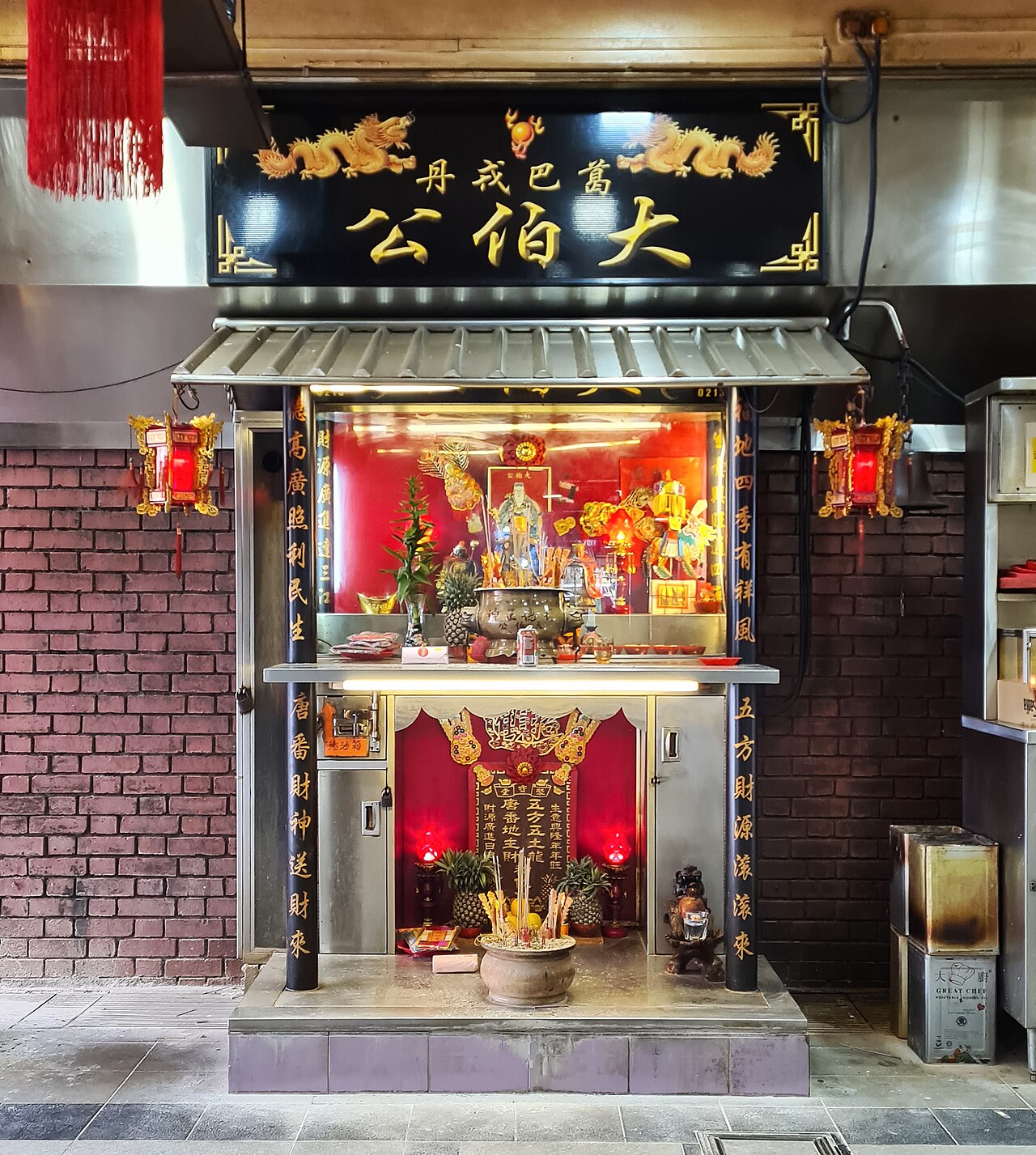
เทพผู้คุ้มครองของชาวจีนโพ้นทะเลในปีนัง สิงคโปร์ มาเลเซีย อินโดนีเซีย และบางส่วนของไทย รูปชายชราเครายาวถือไม้เท้าและก้อนทอง ทำเป็นเหรียญห้อยคอและรูปตั้งบูชา ให้ค้าขายรุ่งเรืองและปลอดภัย เป็นเทพที่บูชาผ่านวัตถุ ไม่ใช่ผี ในไทยญาติใกล้คือปึงเถ่ากง
The tutelary god of Southeast Asian Chinese communities, 'Grand Uncle': an old bearded man with staff and ingot, worn as a temple medallion or kept as an altar figure for trade and safety. A deva-tier resident venerated through the object, in the vault's sense, not a raised spirit. Thailand's Pun Thao Kong (本頭公) is the near relative.
also: ต่าวเป๊กกง · ต้าป๋อกง · ฮกเต็กเจี่ยสิ้ง · ปึงเถ่ากง (ญาติใกล้) · Dabogong · Toa Pek Kong · Topekong · Tepekong · Fude Zhengshen · Ông Bổn · Grand Uncle · God of Prosperity · Southeast Asian earth god
At a glance · โดยย่อ
| Class · หมวด | เทพ / เทวดา deva-tier resident Catalogue · จากคลัง |
|---|---|
| Resident · ผู้อยู่ | deva |
| Upkeep · การเลี้ยง | veneration |
| Provenance sensitivity | medium |
| Form · รูปแบบ | medallion · เหรียญ |
| Material · เนื้อ | — |
| Function · คุณ | ค้าขาย trade, selling · โชคลาภ luck and windfall · คุ้มครอง general protection, watching over |
| Region · ถิ่น | มาเลเซีย Malaysia · สิงคโปร์ Singapore · ทั่วประเทศไทย Thailand, not regionally specific · อินโดนีเซีย Indonesia · เวียดนาม Vietnam · ชุมชนไทยโพ้นทะเล Overseas Thai / Chinese-Thai collector communities |
| Maker · ผู้สร้าง | ศาลเจ้าตั่วแปะกงในปีนัง สิงคโปร์ มาเลเซีย อินโดนีเซีย และศาลเจ้าปึงเถ่ากงในไทย Tua Pek Kong temples in Penang, Singapore, Malaysia and Indonesia; in Thailand the related Pun Thao Kong shrines |
| Era · ยุค | ศาลเจ้าตันจงโตกง ปีนัง มีมาก่อน พ.ศ. ๒๓๓๕ The Tanjung Tokong temple in Penang was established by 1792, the oldest site Cited · อ้างอิง |
Form · รูปทรง Tradition · ตามประเพณี
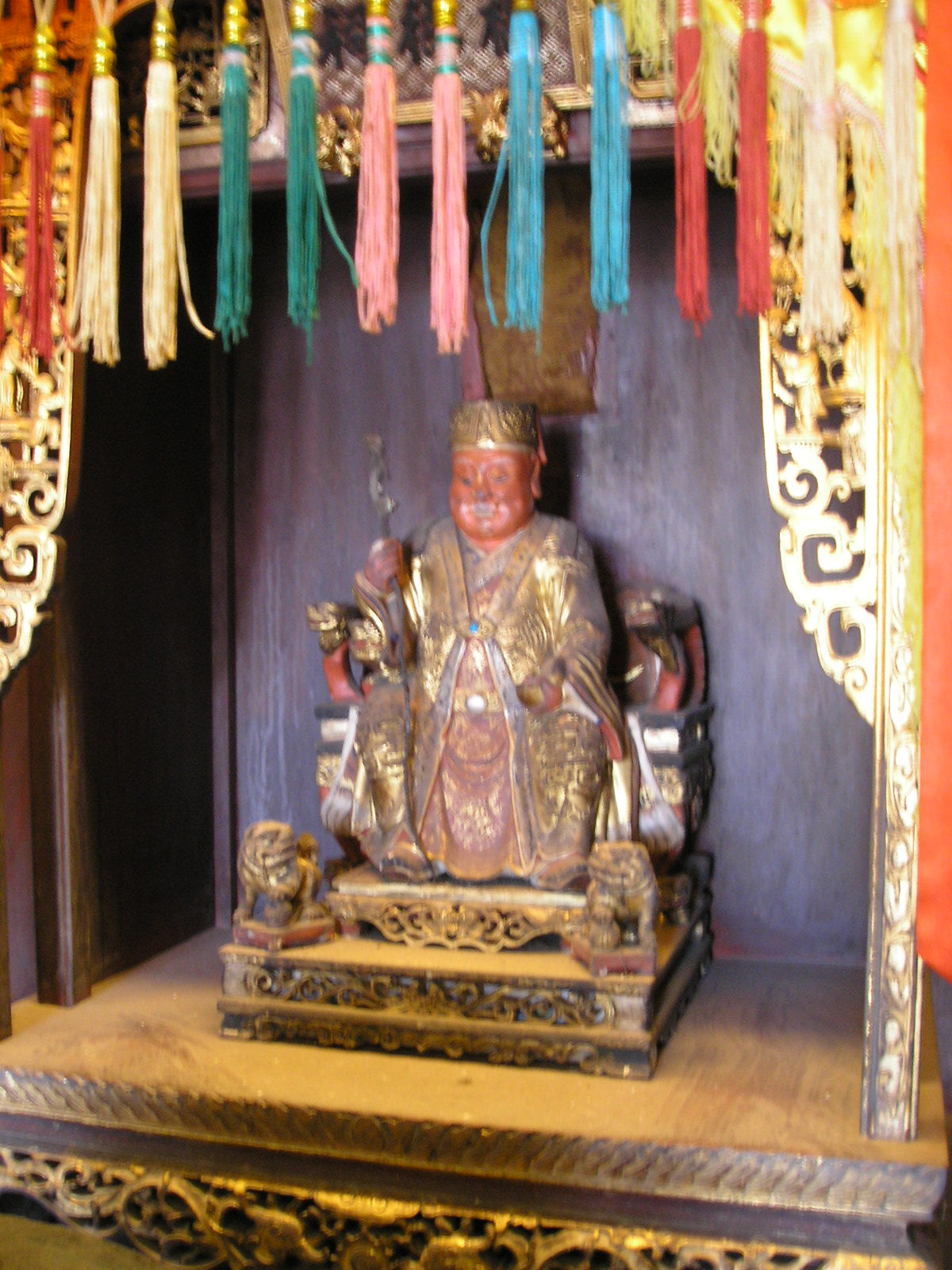
| Shape · ทรง | เหรียญหรือจี้รูปชายชรานั่ง หนวดเครายาวขาว มือหนึ่งถือไม้เท้าหรือลูบเครา อีกมือถือก้อนทอง; รูปหล่อตั้งโต๊ะก็มี A medallion or pendant of a seated old man with a long white beard, one hand on a staff or stroking the beard, the other holding a gold ingot or ruyi; small altar figures are the other common form |
|---|---|
| Worn · การพก | เหรียญห้อยคอ หรือรูปตั้งบูชาที่ร้านและบ้าน Worn as a medallion, or kept as a figure on the shop or house altar |
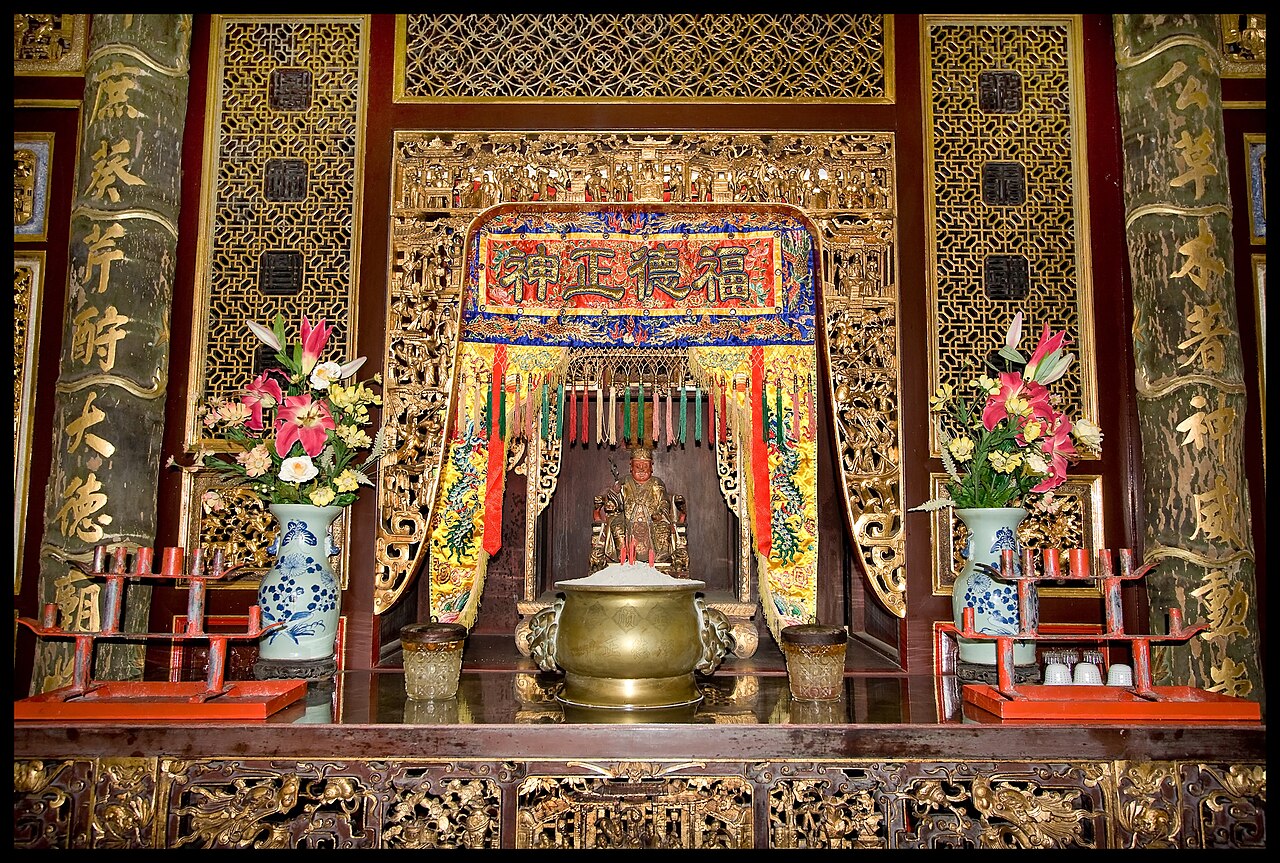
| Obverse · ด้านหน้า | รูปตั่วแปะกงนั่ง มักมีอักษร 大伯公 หรือ 福德正神 Seated Tua Pek Kong, usually with the characters 大伯公 or 福德正神 |
| Reverse · ด้านหลัง | ชื่อศาลเจ้าและปีที่ออก หรือยันต์ Issuing temple and year, or a talisman |
| Notes | The medallion form follows the pattern of Thai temple medals; specific issues are not documented in the cited sources and are recorded here as tradition. |
| Iconography · สัญลักษณ์ | ชายชรา เครายาวขาว หน้ายิ้ม Old man with a long white beard and a smiling face ไม้เท้า ก้อนทอง หรือหรูอี้ Staff, gold ingot or ruyi sceptre หมวกและเสื้อคลุมขุนนาง Official's hat and robe |
What to look at · จุดสังเกต
Type-level marks a reader can check by eye or loupe.
| ชายชราเครายาวขาวนั่ง ถือไม้เท้าและก้อนทอง — แบบเดียวกับตี่จู้เอี๊ยะ Seated old man with a long white beard, staff and ingot; the iconography is the earth god Tudigong's, which is why the two are conflated | Cited · อ้างอิง |
| ชื่อและอักษร: 大伯公 หรือ 福德正神 บนเหรียญ; ในไทยศาลเจ้าใช้ 本頭公 ปึงเถ่ากง ซึ่งเป็นคนละชื่อ Read the characters: 大伯公 or 福德正神 marks Tua Pek Kong; Thai shrines mostly carry 本頭公 (ปึงเถ่ากง), a related but distinct name Thai Wikipedia treats separately | Cited · อ้างอิง |
| ตัวตน: บ้างว่าเป็นจางลี่ ชาวฮากกาที่มาปีนังก่อนฟรานซิส ไลต์ บ้างว่าเป็นฮกในฮกลกซิ่ว Identity is contested: a Hakka settler Zhang Li who reached Penang before Francis Light, or Fu of the Fu Lu Shou triad, or a Fujian sailor; a medallion's inscription may pick one | Cited · อ้างอิง |
| ในเวียดนามเป็น Ông Bổn ที่หมิ่วหญิเฝ่อ เจอะเลิ้น รูปไม้สูง ๑.๕ ม. ฉลอง ๑๕ ค่ำเดือน ๘ In Vietnam the same figure is Ông Bổn / Bổn Đầu Công at Miếu Nhị Phủ in Chợ Lớn: a 1.5 m wooden statue, festival on the 15th of the 8th lunar month | Cited · อ้างอิง |
| วันเกิดตี่จู้เอี๊ยะ ๒ ค่ำเดือน ๒ — เหรียญรุ่นมักออกช่วงนี้ Tudigong's birthday is the 2nd day of the 2nd lunar month; temple issues cluster on the festival, which the trade holds | Cited · อ้างอิง |
| ลาซาด้าไทยไม่มีชื่อนี้เลย ไม่ว่าสะกดแบบใด No Lazada Thailand title carries the name in any spelling as of 2026-09-02; the medallions move through temples and Penang and Singapore shops, not Thai online retail | Catalogue · จากคลัง |
How to tell it from · แยกจาก
| รูปพระฤๅษี · Phra Lersi figure (the hermit-teacher) | ฤๅษีเป็นนักบวชหนังเสือ ผมมวย ตั่วแปะกงเป็นขุนนางจีนใส่หมวก Both are bearded old men. The lersi wears a tiger skin and a hair knot and is a hermit; Tua Pek Kong wears a Chinese official's hat and robe and holds an ingot. |
|---|---|
| ชูชก · Chuchok (the beggar of the Vessantara Jataka) | ชูชกเป็นพราหมณ์ขอทานถือไม้เท้า ผอม ตั่วแปะกงอ้วนยิ้ม ถือทอง Chuchok is a gaunt beggar-brahmin with a staff and a begging bag; Tua Pek Kong is plump, smiling and holding gold. Same staff, opposite man. |
| พระสีวลี · Phra Siwali (the never-hungry monk) | พระสีวลีเป็นพระภิกษุถือกลดและบาตร Phra Siwali is a monk with an umbrella and bowl, no beard; Tua Pek Kong is a layman with a beard and a hat. |
| เหรียญพระเกจิ · monk medallion | เหรียญเกจิเป็นพระสงฆ์ไทยโกนหัว A Thai monk medallion shows a shaven-headed bhikkhu; here the head has hair and a hat and the face a beard. |
The story · เรื่องเล่า Cited · อ้างอิง
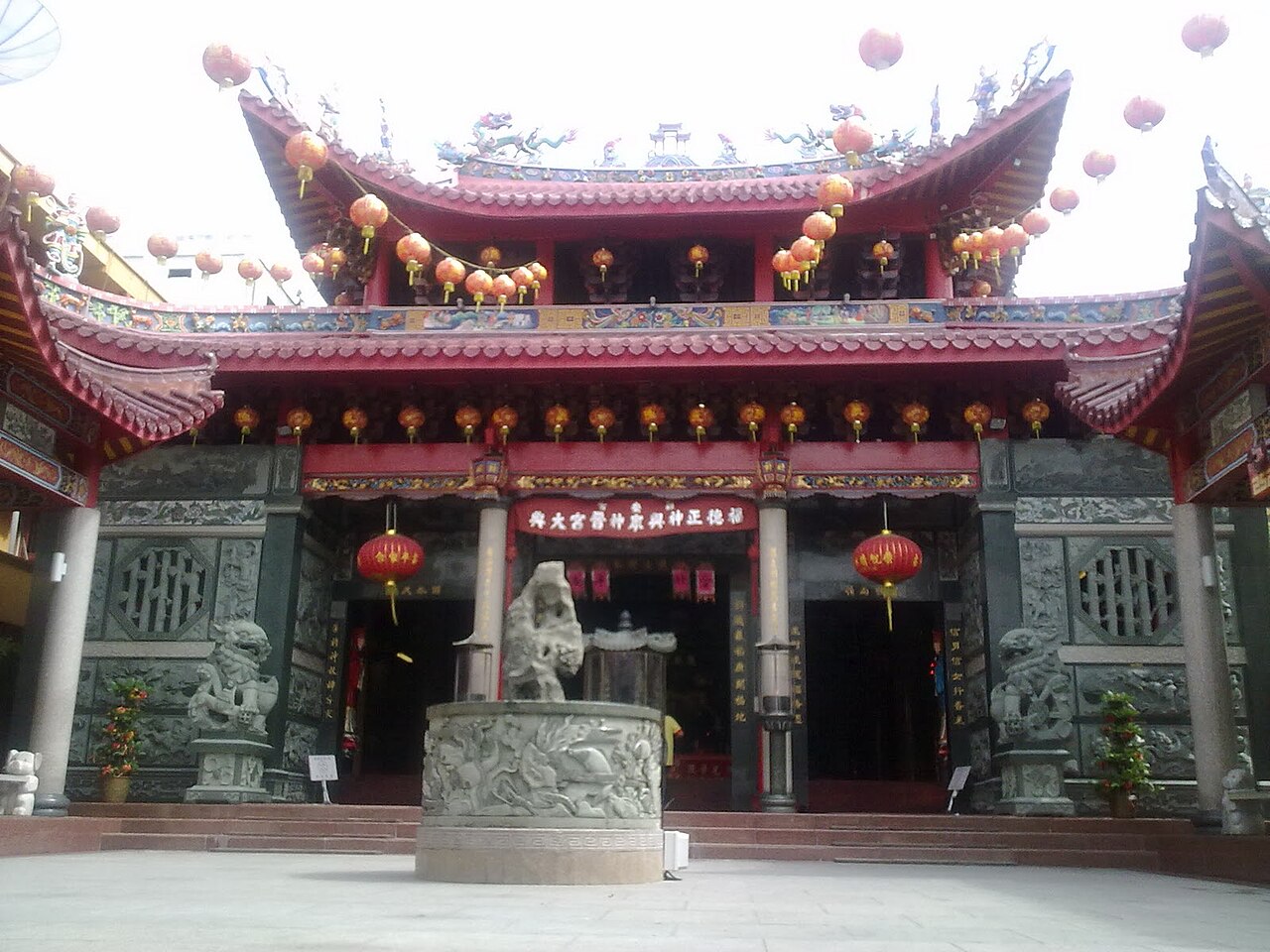
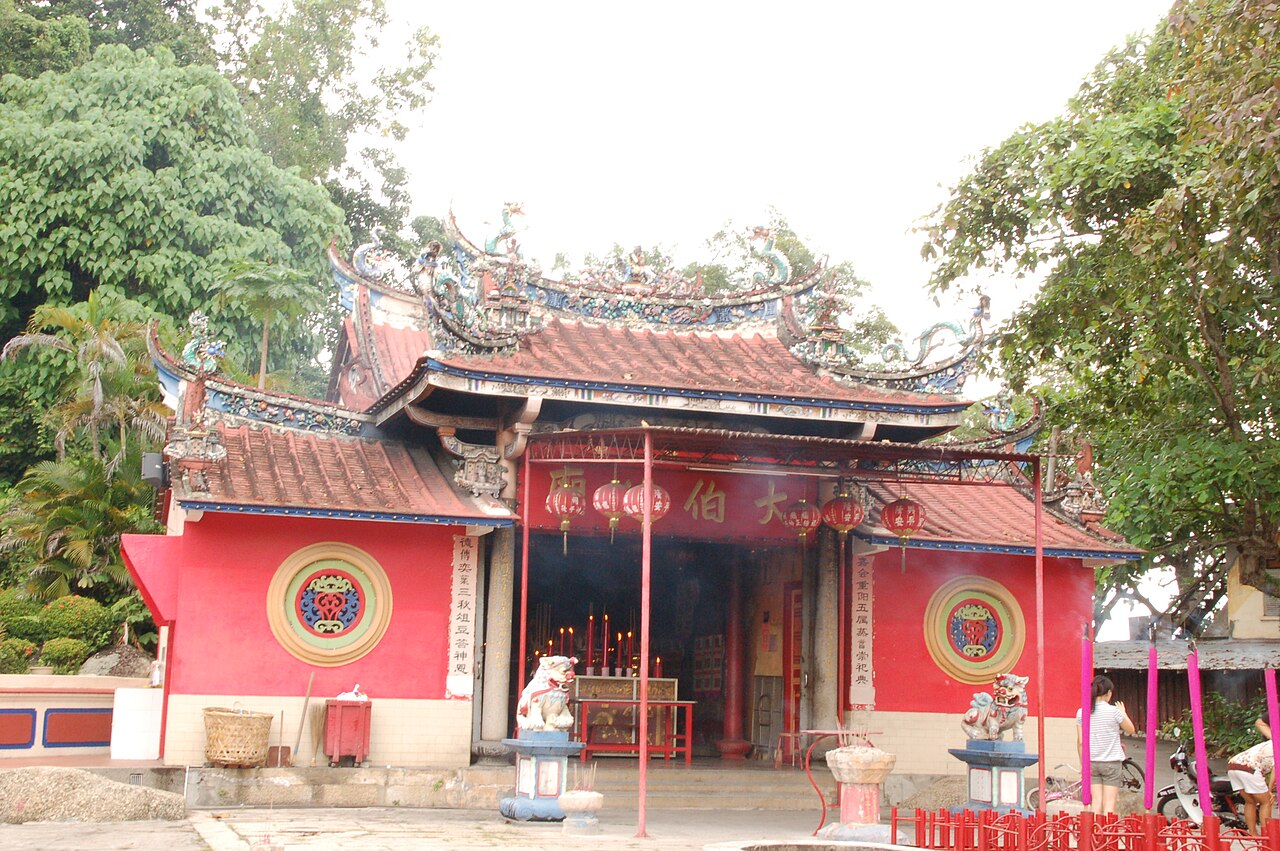
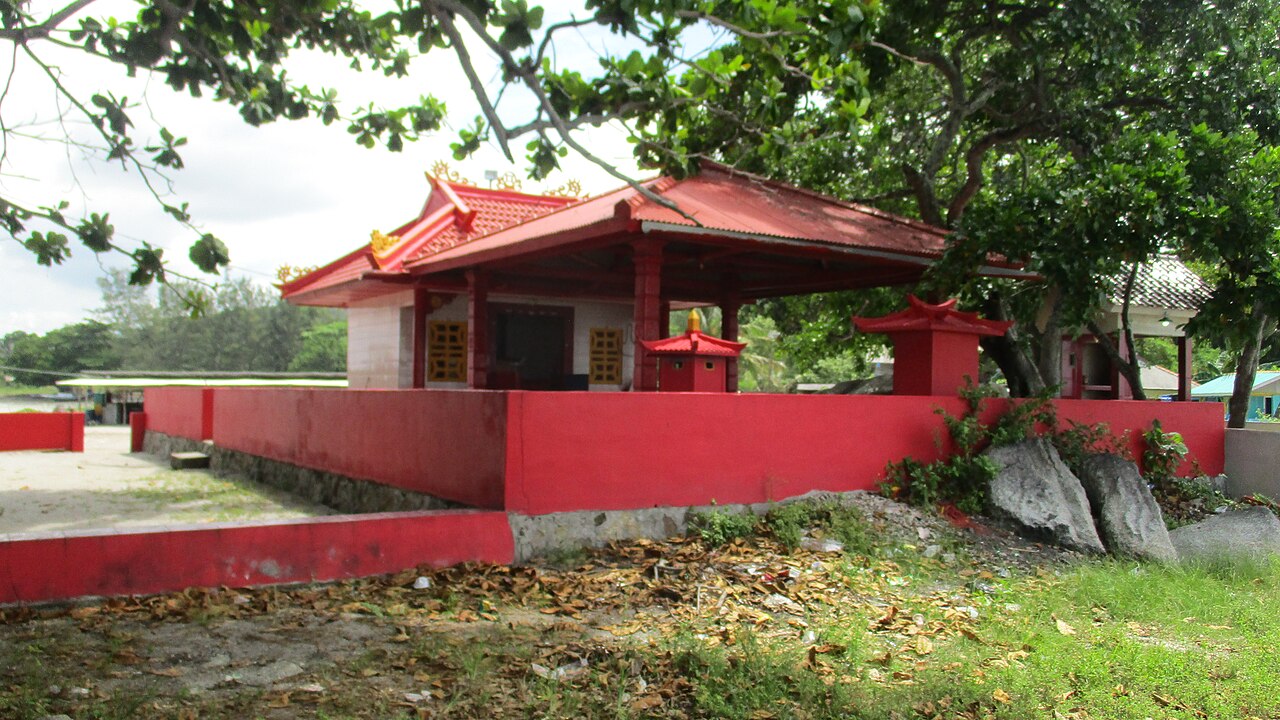
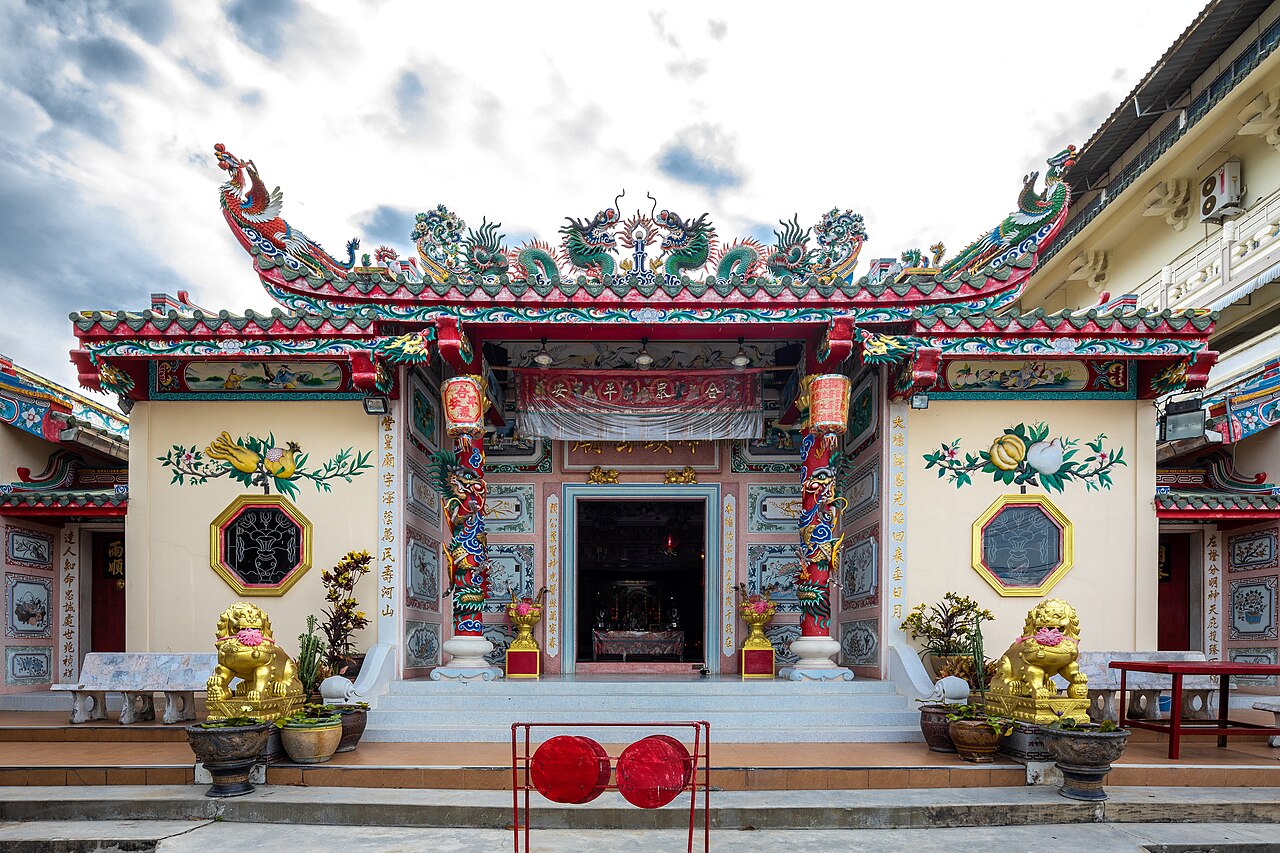
ศาลเจ้าเก่าสุดที่ตันจงโตกง ปีนัง มีก่อน พ.ศ. ๒๓๓๕ บ้างว่าท่านคือจางลี่ ชาวฮากกาที่มาถึงก่อนฟรานซิส ไลต์ บ้างว่าคือฮกในฮกลกซิ่ว หรือกะลาสีฮกเกี้ยนที่สละชีวิตช่วยเพื่อน ลัทธิผูกกับสมาคมพี่น้องร่วมสาบาน แพร่ไปซาราวัก (๗๖ ศาล) สิงคโปร์ บาตัม และเวียดนามในชื่อ Ông Bổn
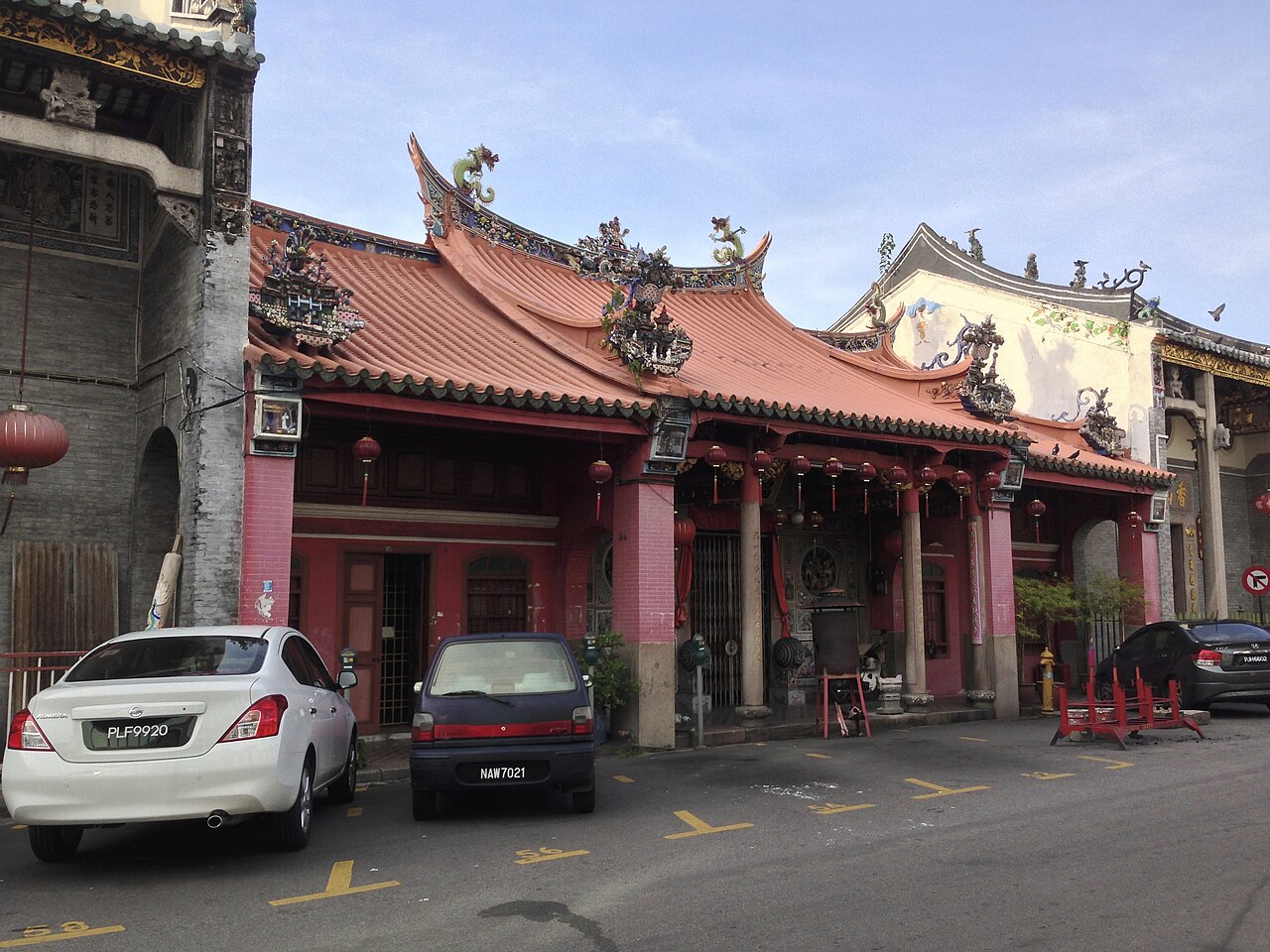
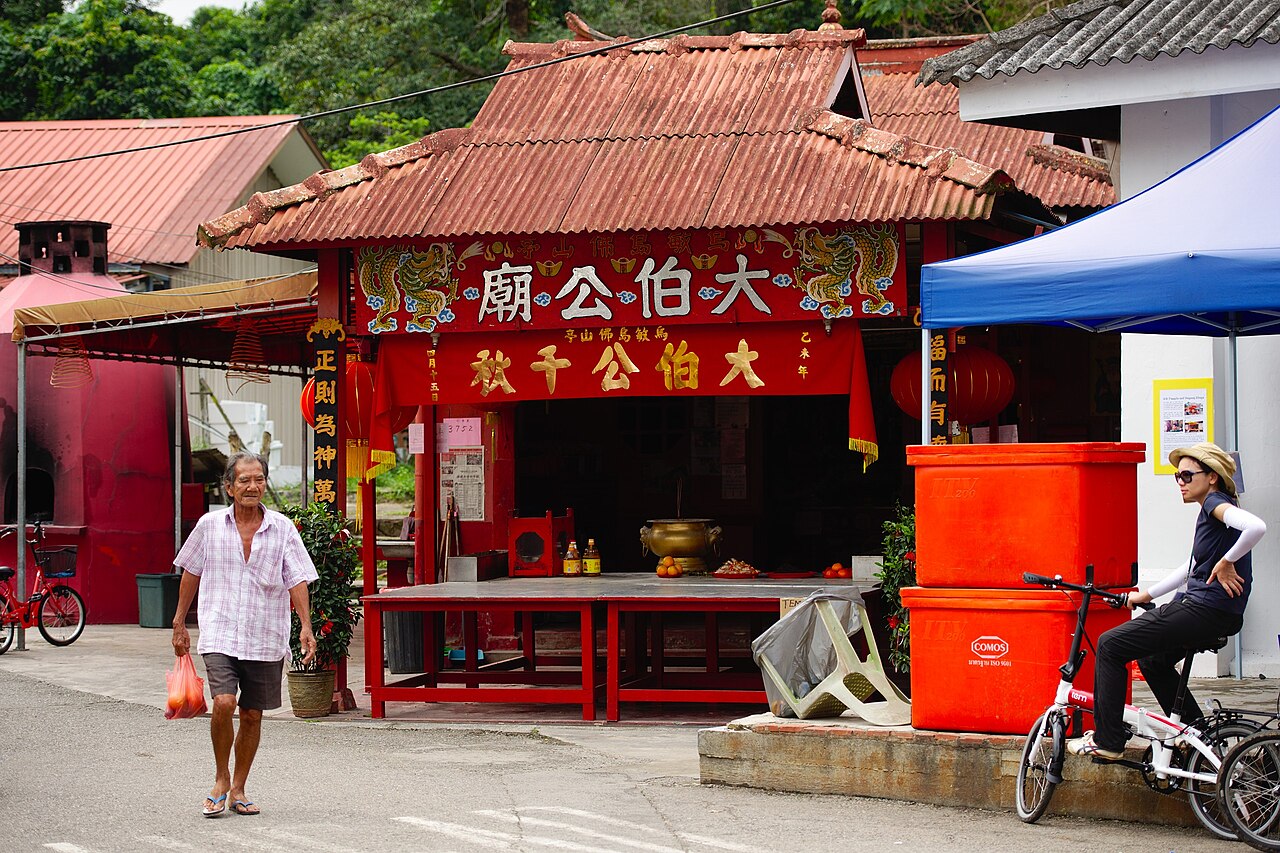
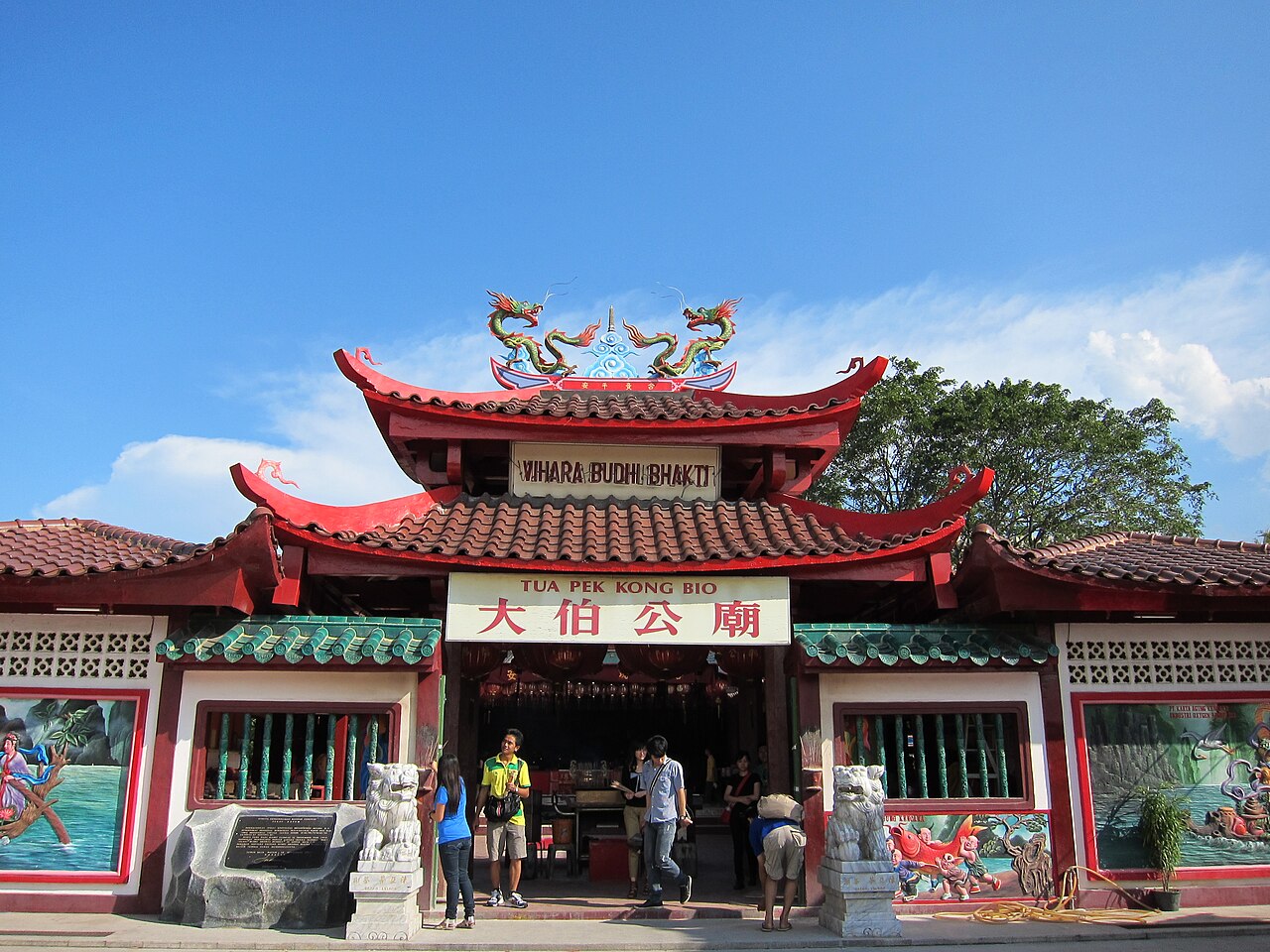
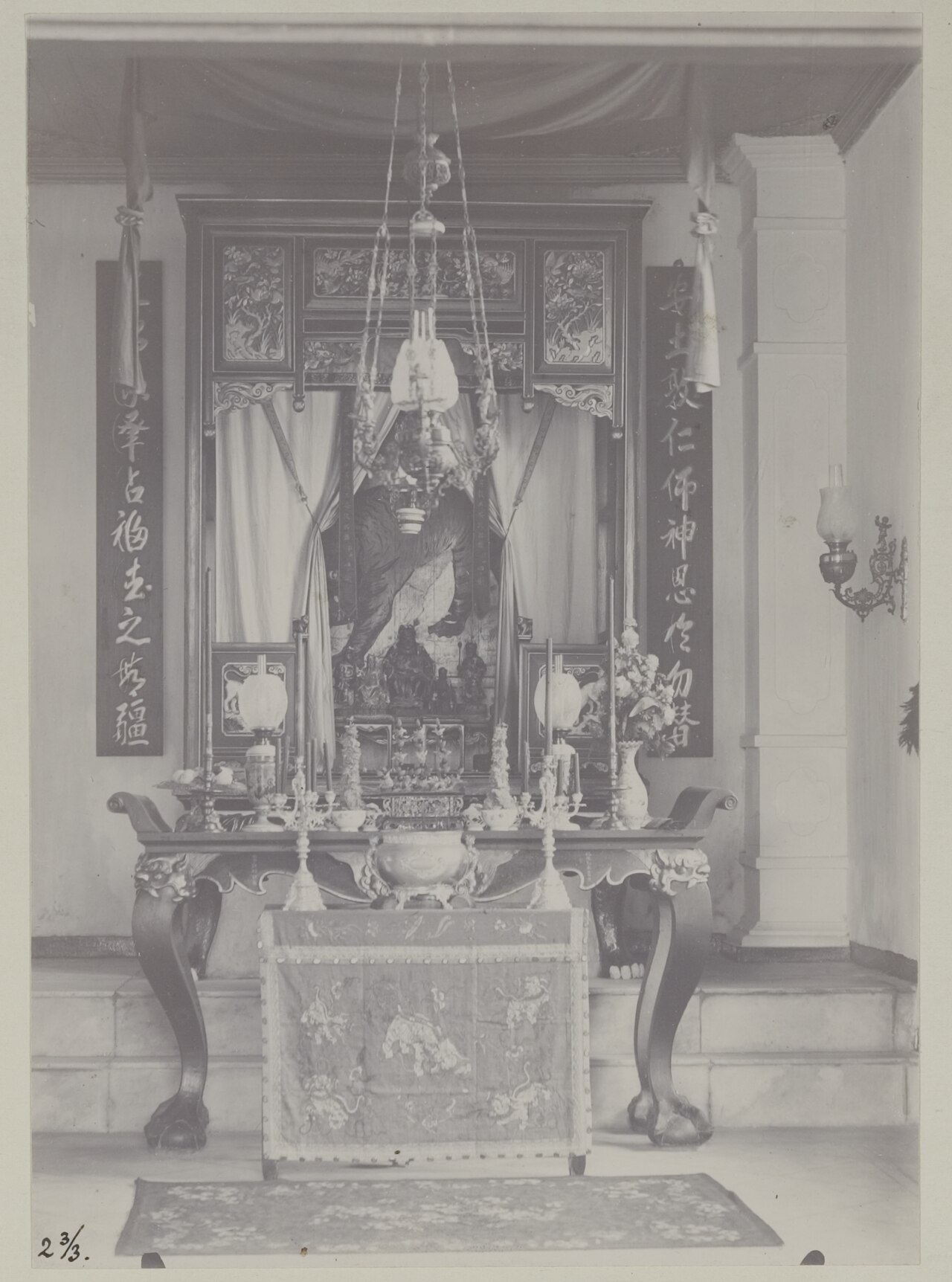
The oldest temple, at Tanjung Tokong in Penang, was there by 1792. Who he was is argued: Zhang Li, a Hakka who reached Penang before Francis Light; Fu of the Fu Lu Shou triad; a Fujian sailor who gave his life for a companion. The cult grew with sworn-brotherhood societies and followed the diaspora to Sarawak, where Kuching and Sibu have landmark temples, to Singapore's Kusu Island and Pulau Ubin, to Batam, and to Chợ Lớn as Ông Bổn. Because his image is Tudigong's, the two are routinely merged, and in Penang the Nine Emperor rites include him.
Keeping · การเลี้ยงดู Catalogue · จากคลัง
เทพที่บูชาผ่านวัตถุ ถวายธูป ผลไม้ น้ำชา ตามวาระ ไม่ใช่ผีที่ต้องเลี้ยง
Veneration, not feeding: incense, fruit and tea on the altar at the festivals and when asking, as for any deva-tier object in the vault. A worn medallion needs nothing beyond respect. Provenance sensitivity is medium, the class's own figure, and mostly a question of which temple issued it.
Pictures · ภาพ
Sources · แหล่งที่มา
- Tua Pek Kong — Wikipedia (wikipedia; CC BY-SA 4.0)
- Tudigong — Wikipedia (wikipedia; CC BY-SA 4.0)
- ปุนเถ่ากง — วิกิพีเดีย (wikipedia; CC BY-SA 4.0)
- Miếu Nhị Phủ — Wikipedia tiếng Việt (wikipedia; CC BY-SA 4.0)
- Chinese folk religion in Southeast Asia — Wikipedia (wikipedia; CC BY-SA 4.0)
- manuscript-crawler catalog.db — items table, 13,020 Lazada TH listings (method=commerce) + 6,990 manuscripts (catalogue; crawled; counts and price spreads only, never listing text)
- wichaa-vault _meta/vocab/classes.md — class axis (resident / upkeep / provenance_sensitivity) (vault; own)
- General knowledge of the Thai / Lanna amulet tradition (model training + secondary literature), hedged — never a specific date, title or scholar unless separately cited (book; n/a)
Default provenance: Cited · อ้างอิง axes → Catalogue · จากคลัง names.th → Tradition · ตามประเพณี form → Tradition · ตามประเพณี text.keeping_en → Catalogue · จากคลัง market → Catalogue · จากคลัง · confidence medium · needs verification · updated 2026-09-02