กริช keris · Keris / kris (the heirloom dagger)
كريس (Jawi) · keris (ms) · keris (id) · ꦏꦼꦫꦶꦱ꧀ · keris (ngoko) / dhuwung (krama) (jv)
📷 ถือชิ้นนี้อยู่? ถ่ายรูปเทียบ · Holding one? Photograph it to compare 🔍 ค้นหา · search Keris / kris (the heirlo
มีดสั้นสองคมของโลกมลายู-ชวา โคนไม่สมมาตร ใบตรงหรือคดเลขคี่ ลายพามอร์จากเหล็กซ้อนชั้น ถือเป็นปูซากา (มรดกศักดิ์สิทธิ์) ที่มีทัวะห์หรือ “ผู้อยู่” ในเล่ม ล้างน้ำมันปีละครั้ง ห้ามชักเล่น ห้ามชี้
The double-edged dagger of the Malay-Javanese world: asymmetric base, straight or odd-waved blade, pattern-welded pamor. Kept as pusaka — a sanctified heirloom held to carry tuah, and in Javanese belief an isi or presence of its own — washed and oiled once a year, never drawn idly, never pointed.
also: กริชมลายู · กริชชวา · กริชปัตตานี · kris · kriss · creese · dhuwung · wangkingan · karih · kris dagger · pusaka blade
At a glance · โดยย่อ
| Class · หมวด | ยังไม่ชี้ขาด left to a knower Inference · อนุมาน |
|---|---|
| Resident · ผู้อยู่ | left to a knower |
| Upkeep · การเลี้ยง | left to a knower |
| Provenance sensitivity | — |
| Form · รูปแบบ | blade · มีด/ของมีคม |
| Material · เนื้อ | เนื้อโลหะ metal (unspecified) |
| Function · คุณ | — |
| Region · ถิ่น | อินโดนีเซีย Indonesia · มาเลเซีย Malaysia · ภาคใต้ Southern Thailand · สิงคโปร์ Singapore |
| Maker · ผู้สร้าง | เอิมปู (empu) ช่างตีที่ต้องมีทั้งฝีมือและบารมี The empu, a smith expected to hold technical skill and spiritual standing together; Javanese tradition credits him with literature, history and the occult besides |
| Era · ยุค | ชวาโบราณ; จารึกราว พ.ศ. ๑๔๔๔–๑๔๔๗ กล่าวถึงกริช; รูปแบบชัดเจนสมัยมัชปาหิต Old Java: inscriptions of 901–904 CE name keris among offerings (id.wikipedia); the recognisable form is attested by 1361 under Majapahit (en.wikipedia). UNESCO intangible heritage list, 2008. Cited · อ้างอิง |
Form · รูปทรง Cited · อ้างอิง
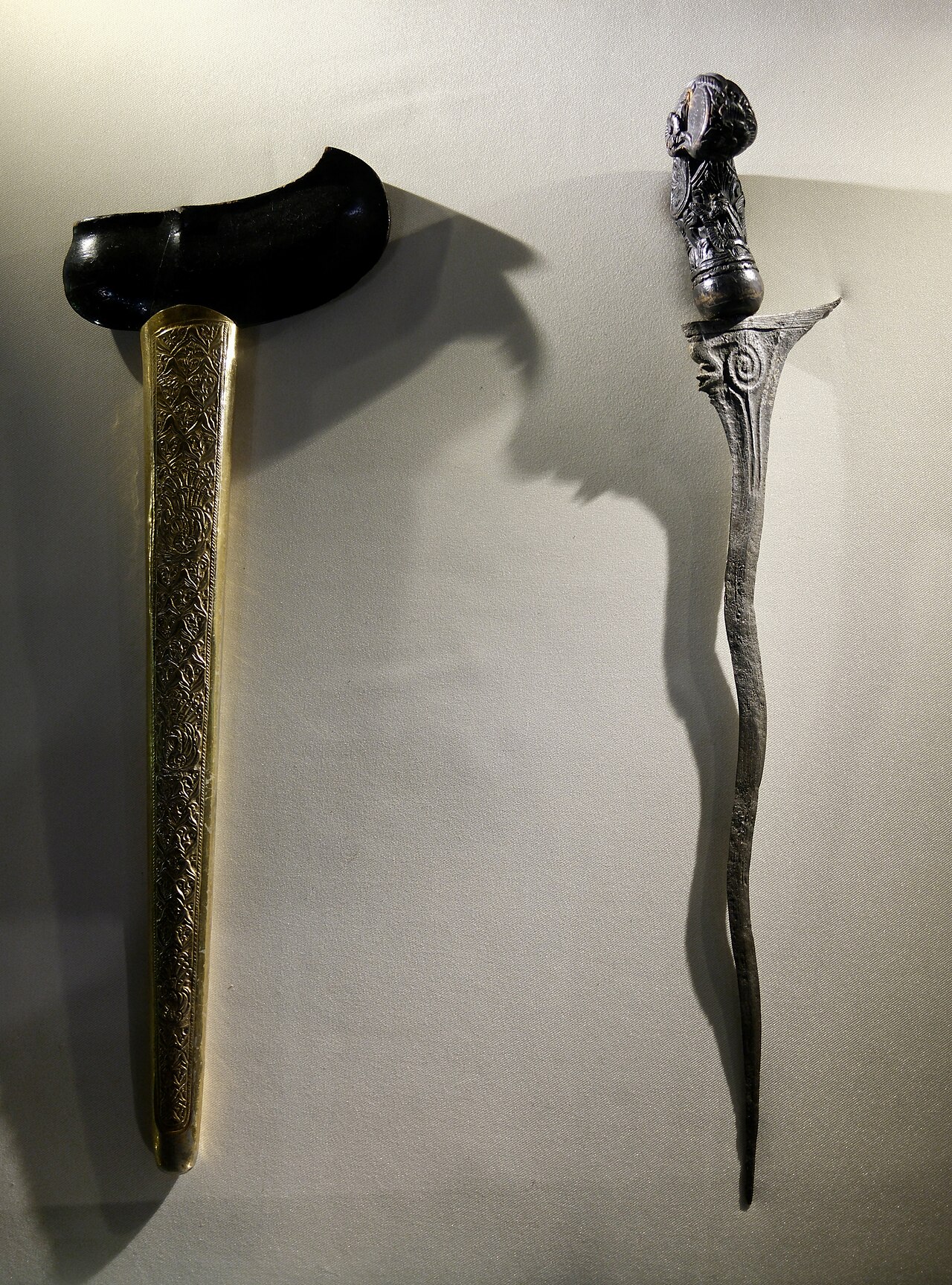
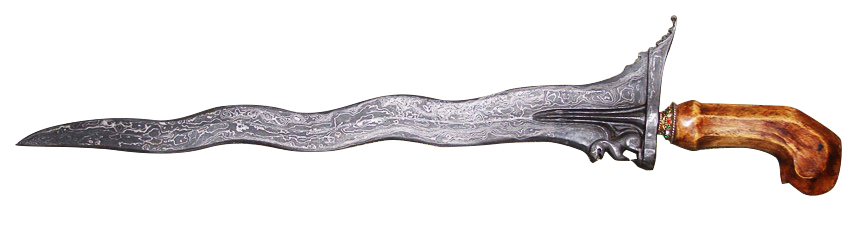
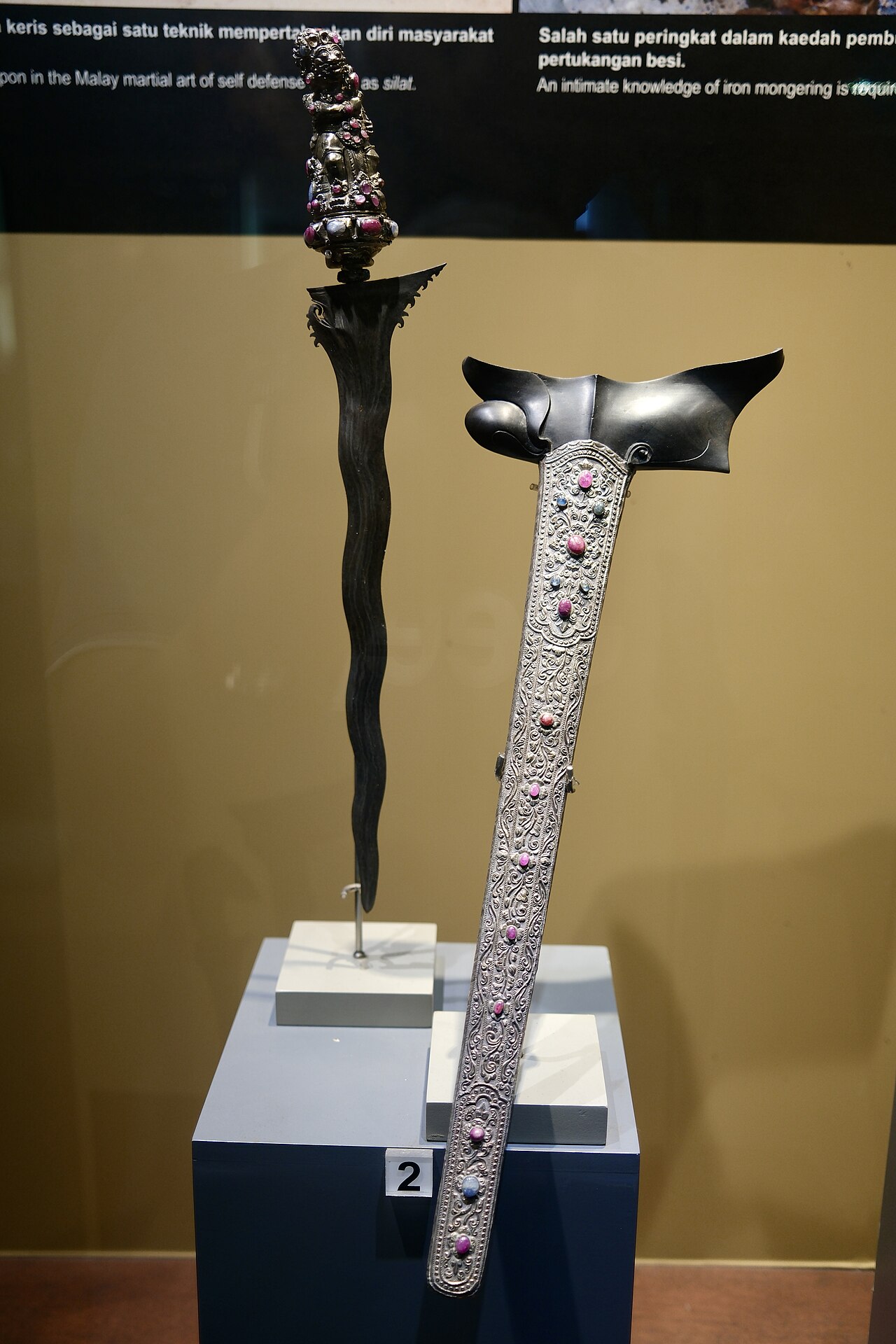
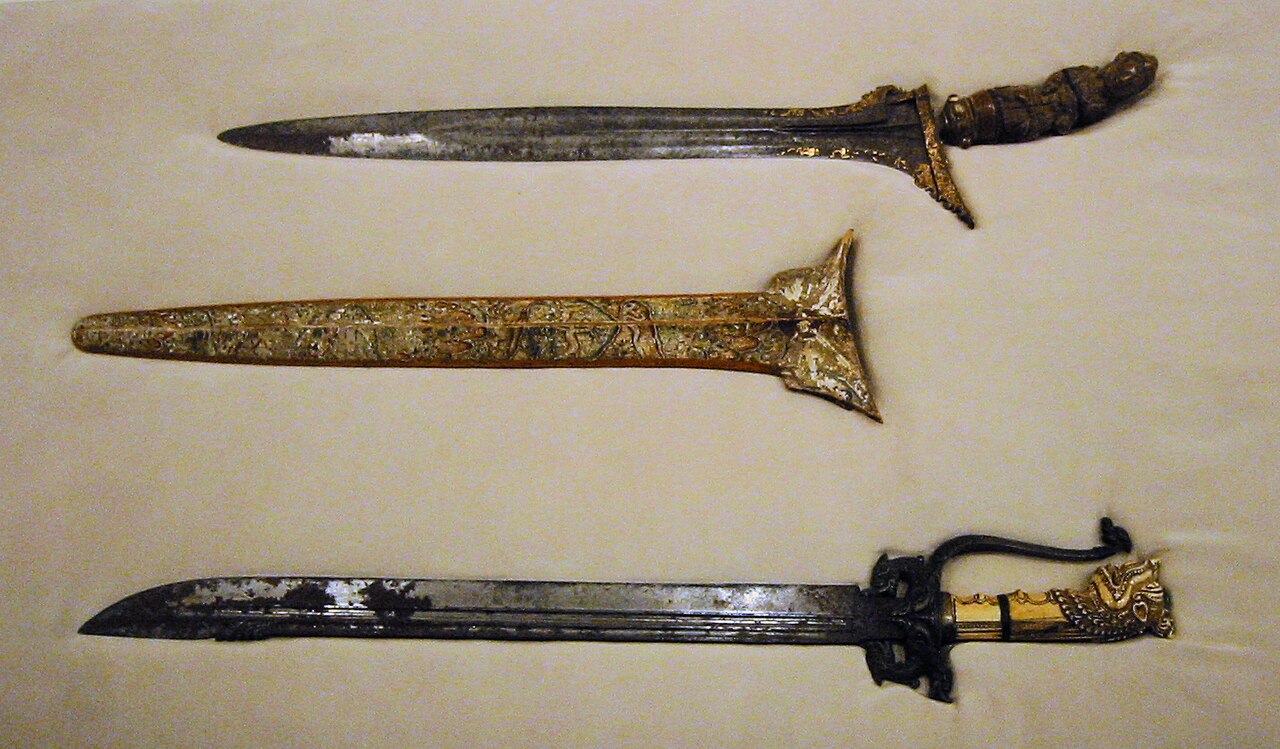
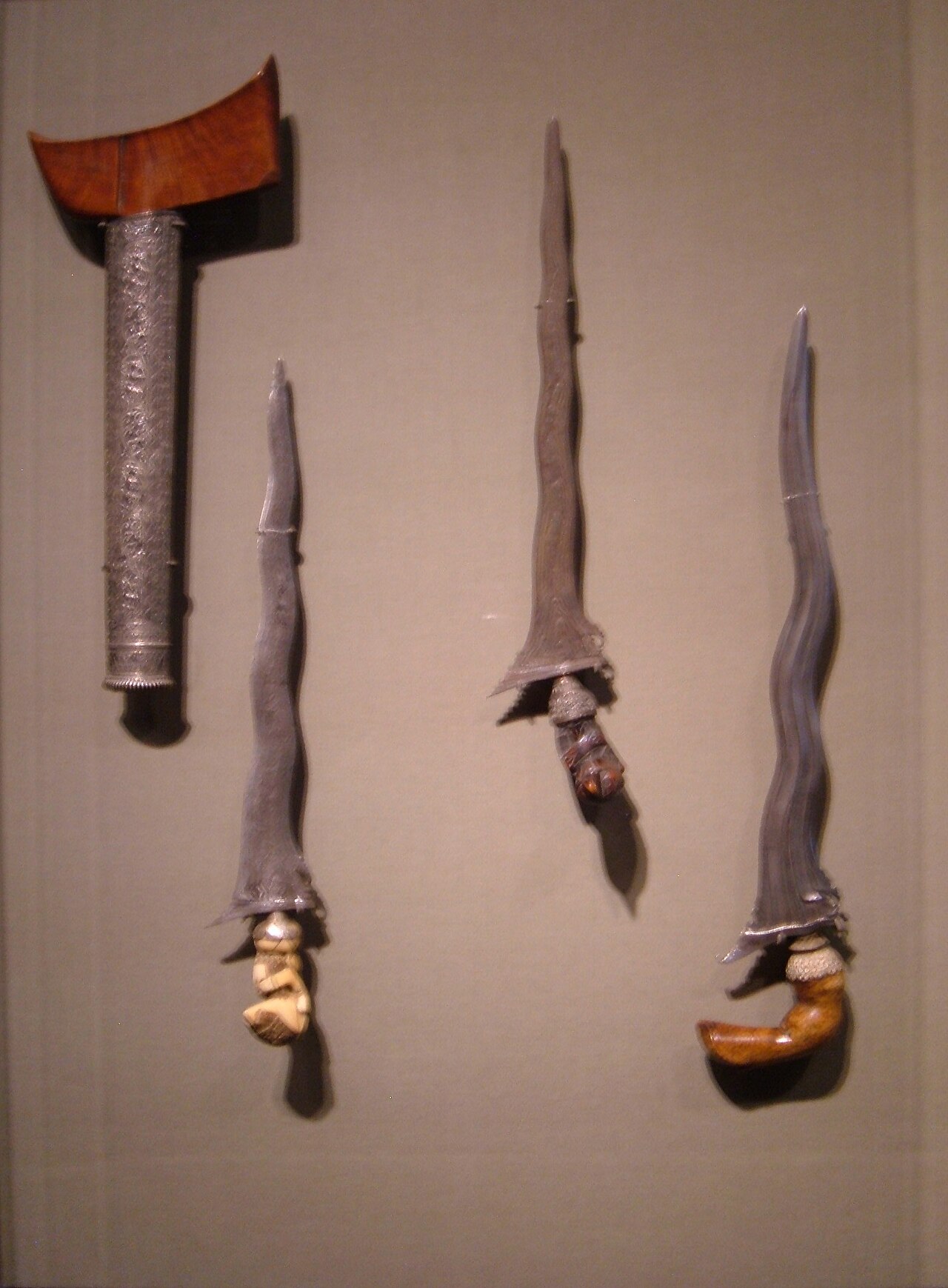
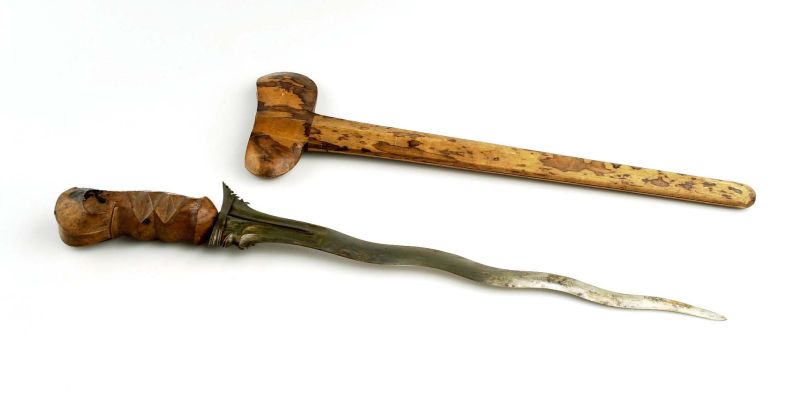
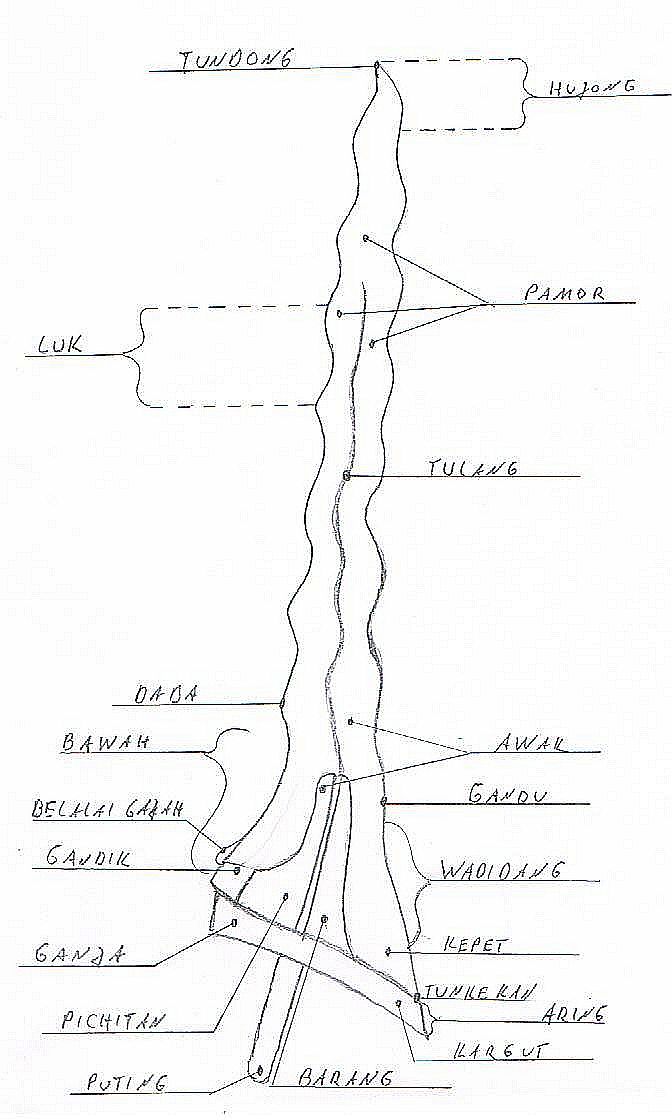
| Shape · ทรง | มีดสองคมโคนกว้างไม่สมมาตร ใบตรงหรือคด (ลุก) จำนวนคดเป็นเลขคี่ ลายพามอร์จากการตีเหล็กซ้อนชั้น ด้ามงอ ฝักไม้ A double-edged dagger with a wide, asymmetric base, blade straight or waved (luk, always an odd count), the surface pattern-welded (pamor) from layered iron and nickel, a curved pistol-grip hilt and a wooden sheath. |
|---|---|
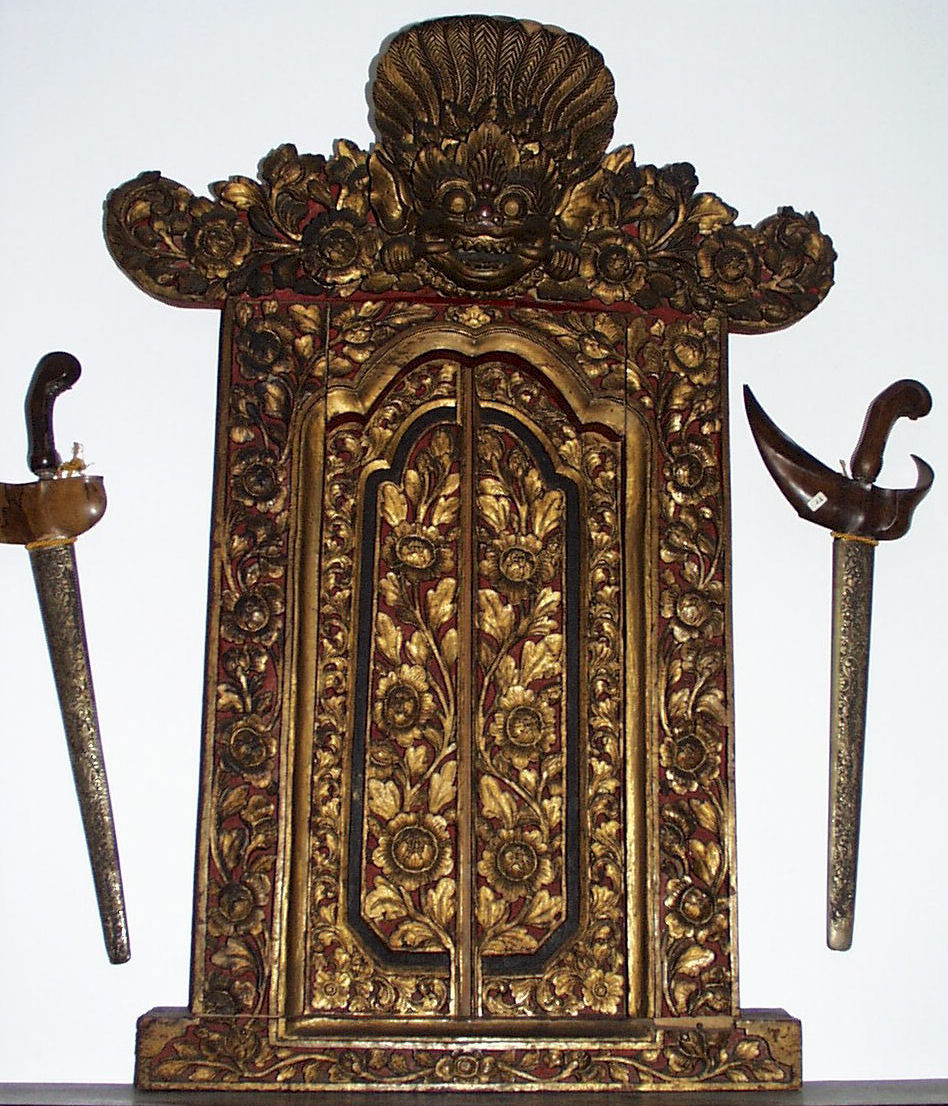
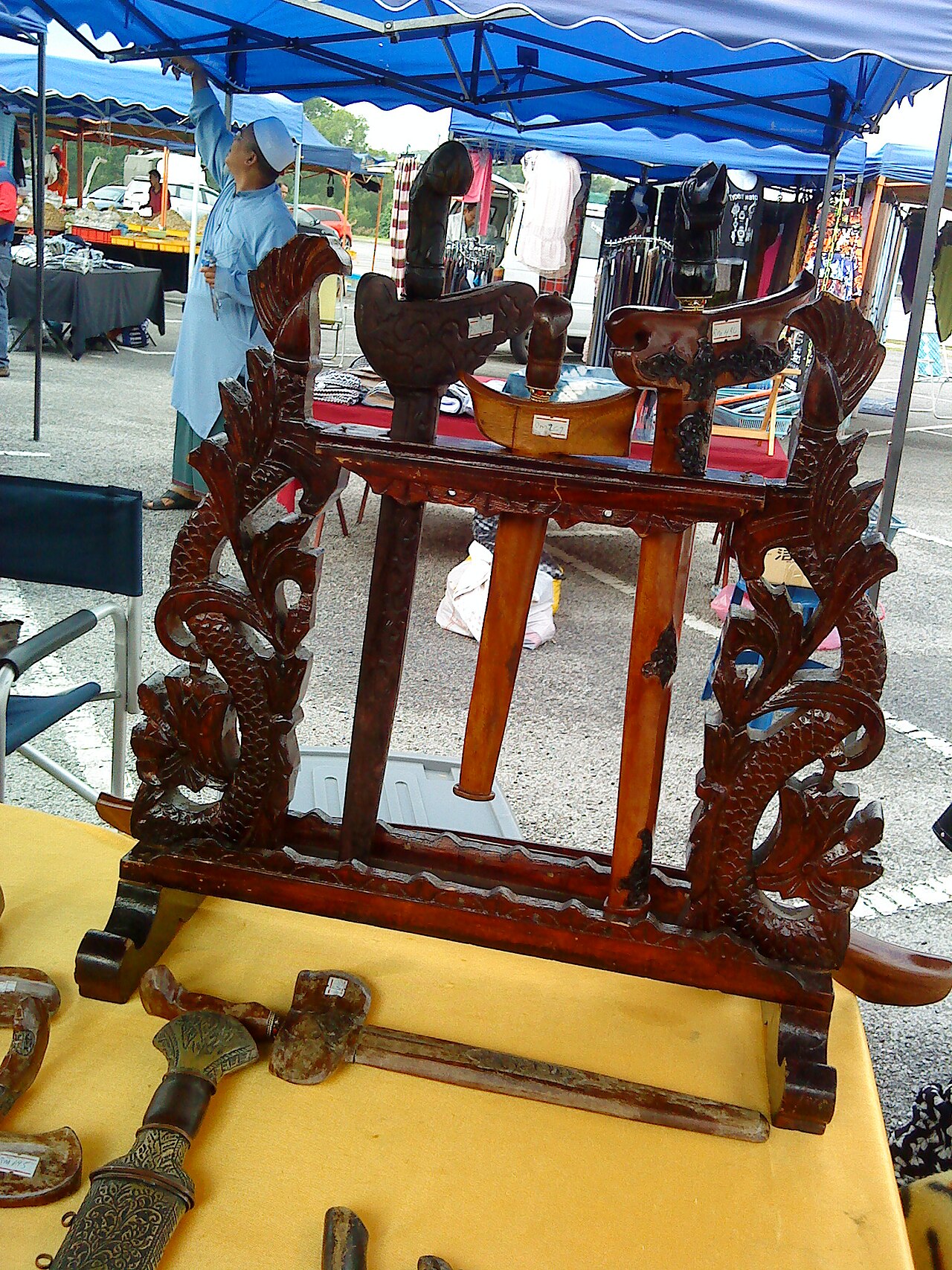
| Worn · การพก | เหน็บเอวด้านหลัง (ชวา บาหลี) หรือด้านหน้า (บูกิส มลายู) ในบ้านตั้งบูชาในที่สูง Worn at the waist — at the back in Java and Bali, at the front among Bugis and Malays; kept at home on a high shelf or in a pusaka chest. |
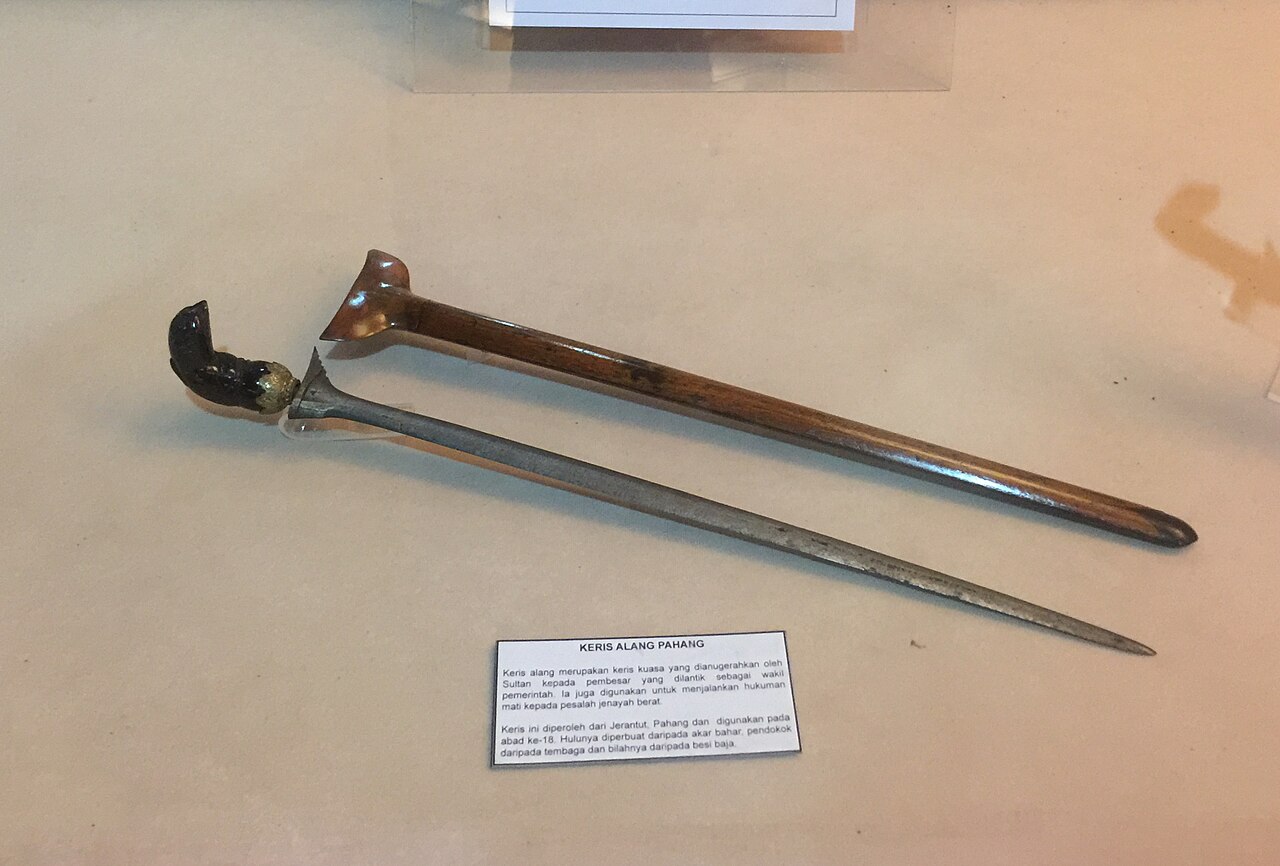
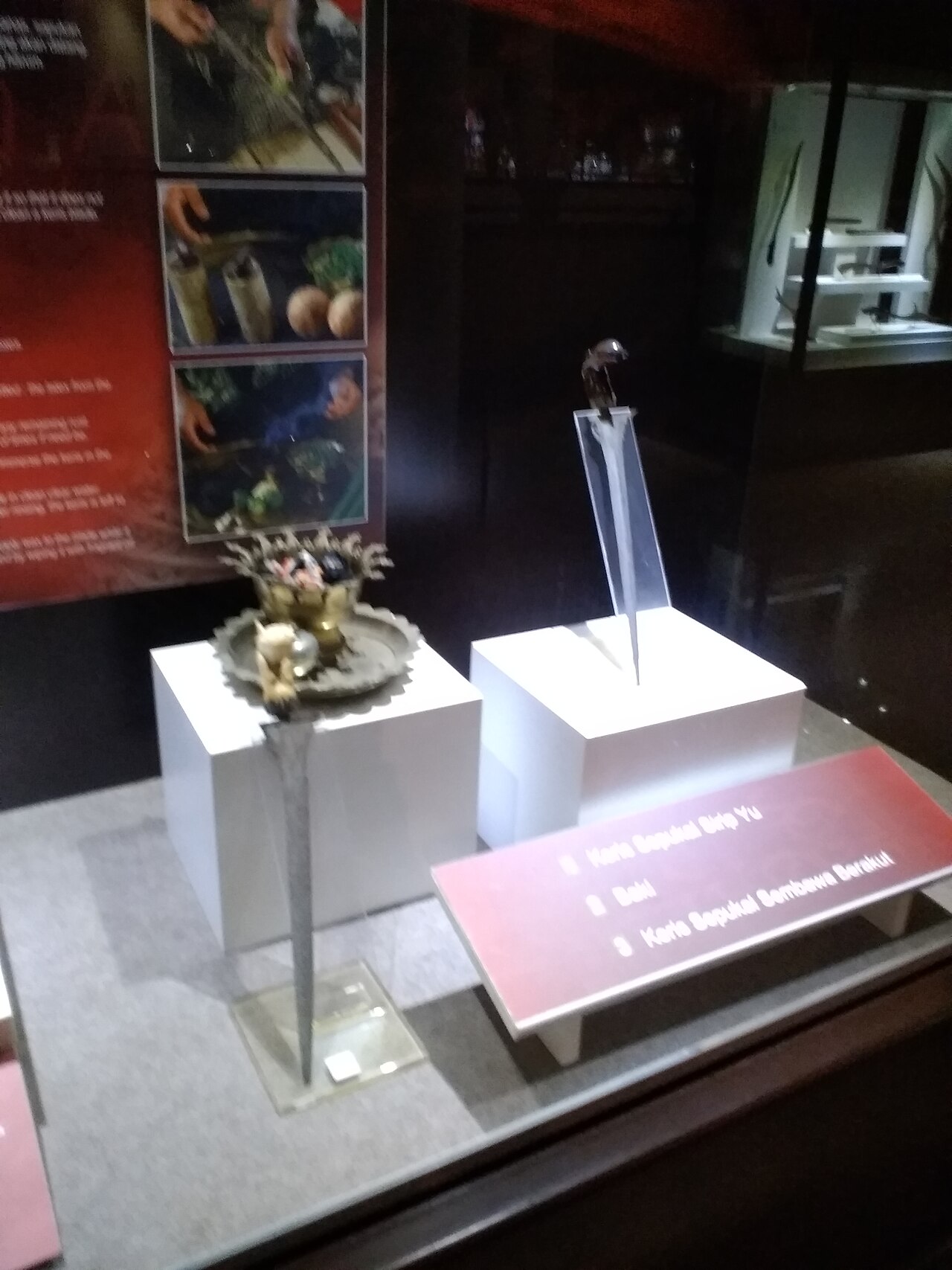
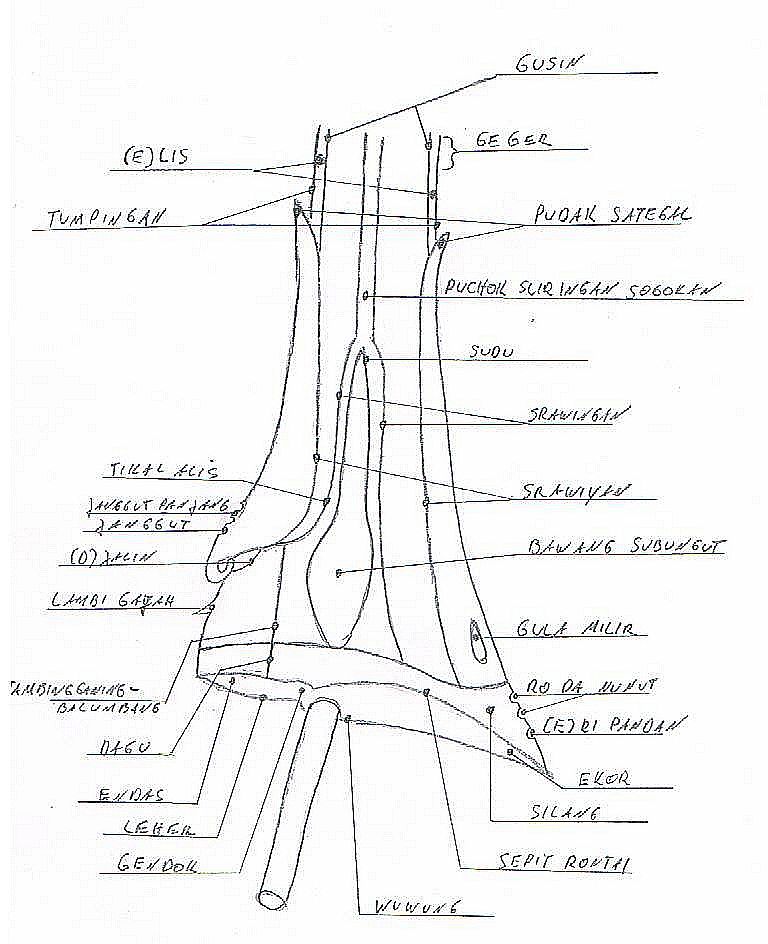
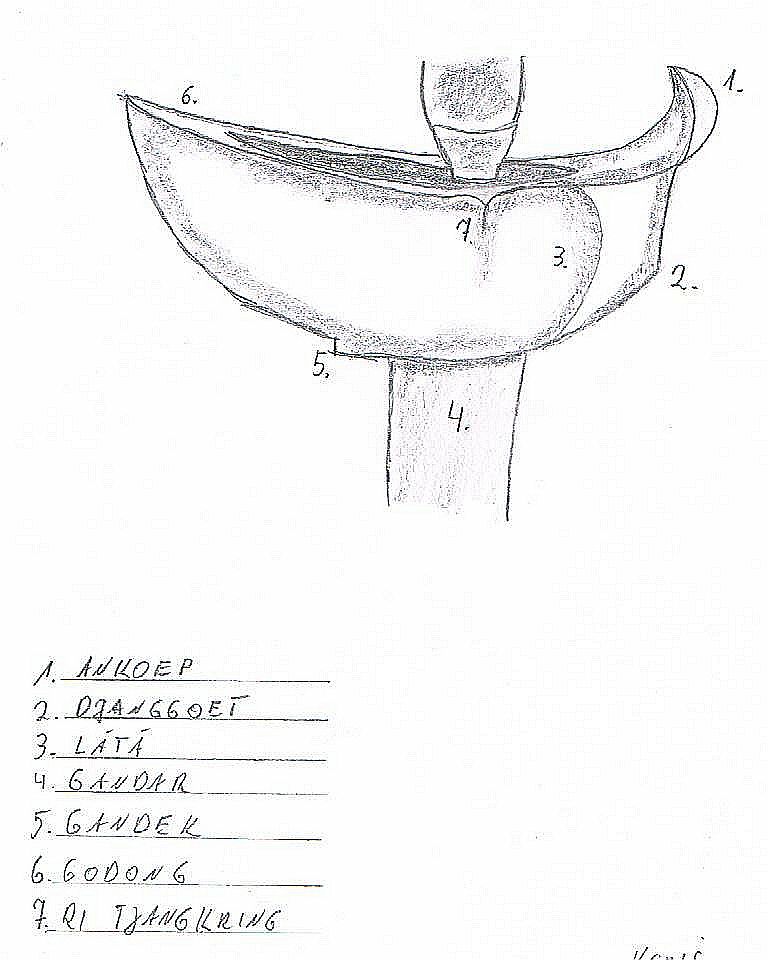
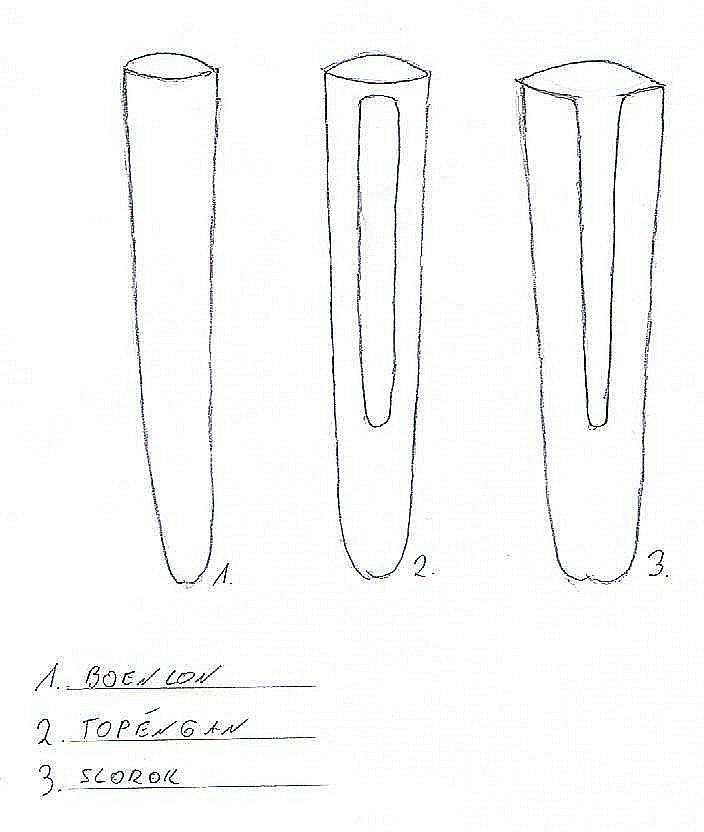
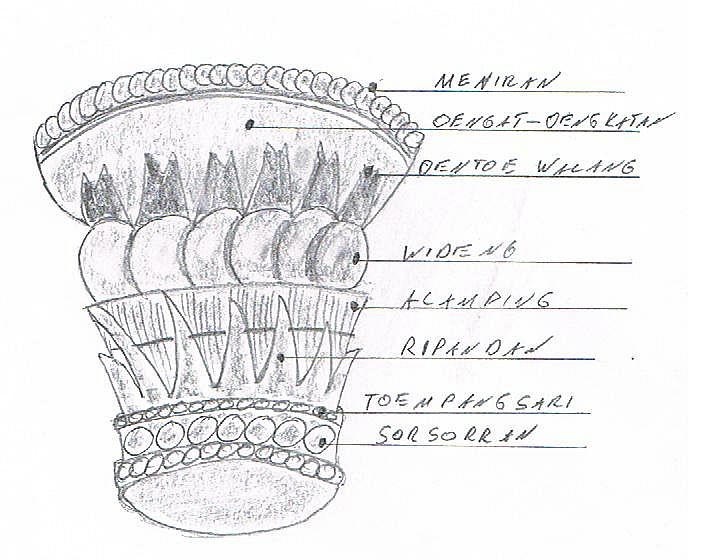
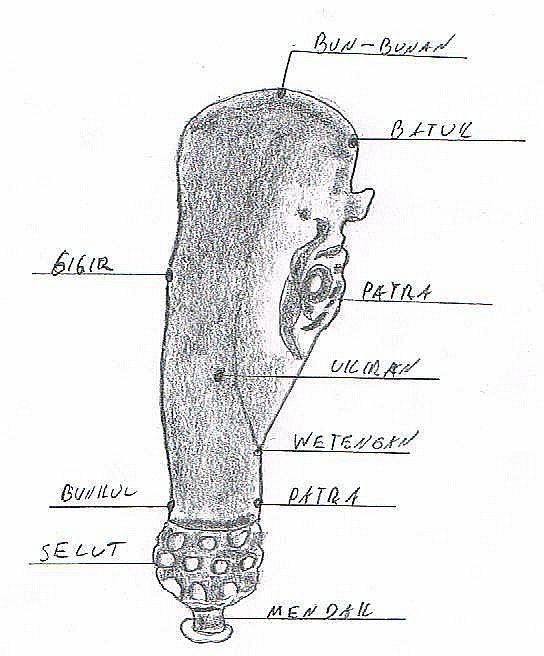
| Obverse · ด้านหน้า | ใบ (wilah) โคน (ganja) เดือย (pesi) ด้าม (hulu/ukiran) ฝัก (warangka) ปลอกโลหะ (pendok) Parts: wilah (blade), ganja (crosspiece at the base), pesi (tang), hulu or ukiran (hilt), warangka (sheath), pendok (metal sheath cover), mendak (hilt ring). |
| Notes | Blade length runs from roughly 15 to 50 inches per en.wikipedia — too wide a spread for a typical size; left null. The Thai กริช of Pattani and Songkhla is the same object in the southern Malay tradition, which is why th-south is a region here. |
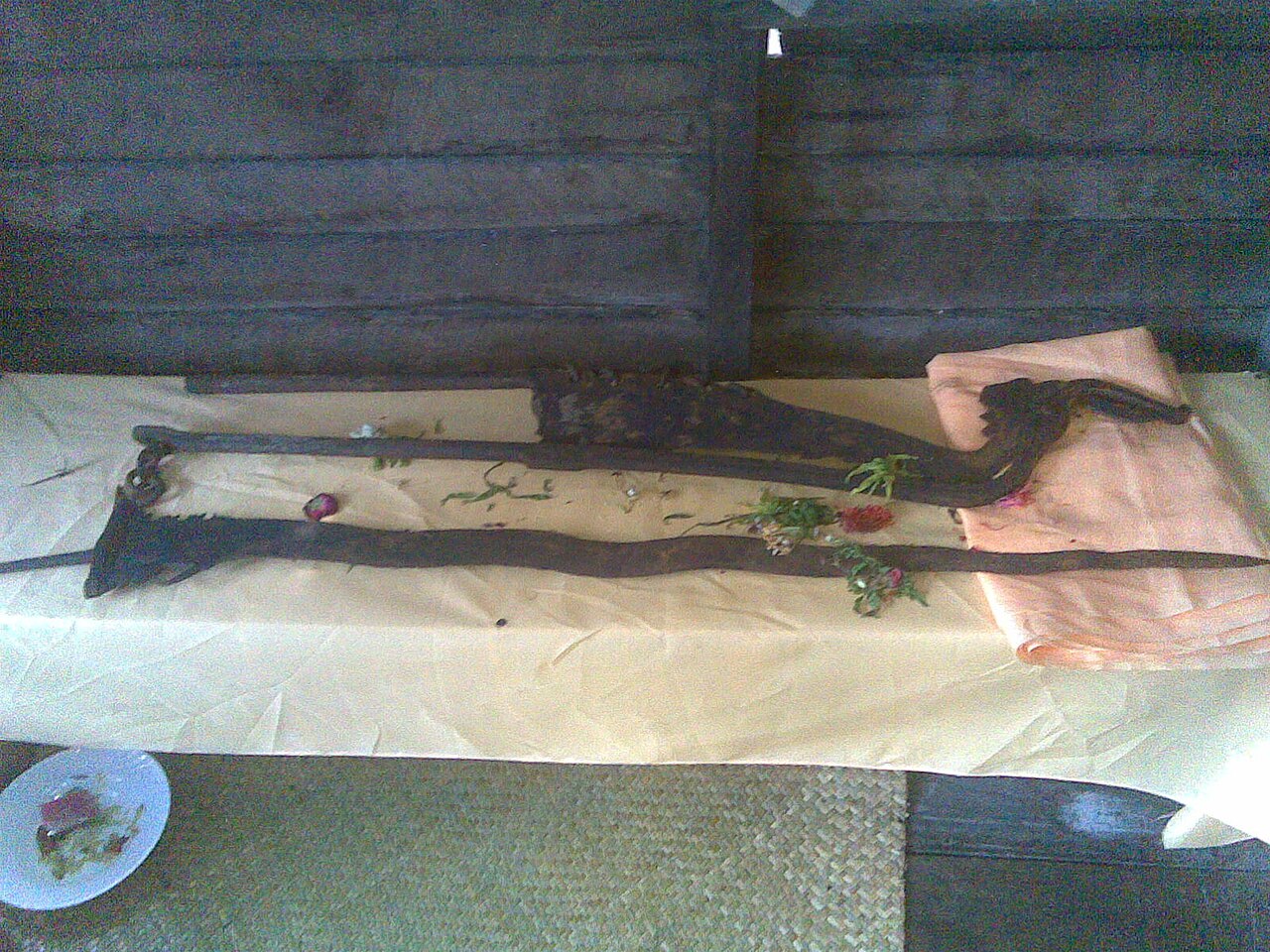
| Iconography · สัญลักษณ์ | ลายพามอร์ — beras wutah, udan mas, kembang kacang ฯลฯ ราว ๖๐ แบบ Pamor patterns, some 60 named — beras wutah (spilled rice), udan mas (golden rain), kembang kacang ทรงใบ (dhapur) ตามจำนวนคด: jalak ตรง · jangkung ๓ · sempana ๗ · sengkelat ๑๓ Dhapur, the blade type by luk count: jalak (straight), jangkung (3), sempana (7), sengkelat (13) ด้ามรูปเทวดานั่ง (บาหลี) นกทะเล (สุลาเวสี) หรือด้ามนามธรรม (ชวา มลายู) Hilts as a seated deity (Bali), a seabird (Sulawesi), or an abstracted figure (Java, Malay peninsula) นาคทอดตัวตามใบ (keris naga) A naga running the length of the blade, often gilt (keris naga) |
What to look at · จุดสังเกต
Type-level marks a reader can check by eye or loupe.
| โคนใบกว้างข้างเดียว (ไม่สมมาตร) มี ganja เป็นชิ้นขวาง The base is asymmetric — one side flares wider — with the ganja as a separate crosspiece | Cited · อ้างอิง |
| นับคด: ต้องเป็นเลขคี่ ๓–๑๓ ปกติ บางเล่มถึง ๒๙ Count the waves: always odd, usually 3 to 13, rarely up to 29. An even count is a mark against the type | Cited · อ้างอิง |
| พามอร์คือชั้นเหล็กกับนิกเกิล ปรากฏหลังกัด warangan (สารหนู) กับน้ำมะนาว Pamor is laminated iron and nickelous iron, brought up by etching with warangan (arsenic) and lime juice; a painted-on pattern has no depth under a loupe | Cited · อ้างอิง |
| เดือย (pesi) เสียบเข้าด้าม ถอดได้ ด้ามกับฝักมักคนละอายุกับใบ The tang (pesi) seats in the hilt and comes apart; hilt and sheath are routinely younger than the blade, so date the blade alone | Cited · อ้างอิง |
| tangguh คือการประมาณยุค/ถิ่นของใบ ซ้อนทับกันมาก Tangguh is the trade's dating of a blade by period and region; the categories overlap and the source says so | Cited · อ้างอิง |
| ชวา/บาหลีเหน็บหลัง บูกิส/มลายูเหน็บหน้า — ท่าใส่บอกถิ่น Worn at the back in Java and Bali, at the front by Bugis and Malays — how it is worn in a photograph places it | Cited · อ้างอิง |
How to tell it from · แยกจาก
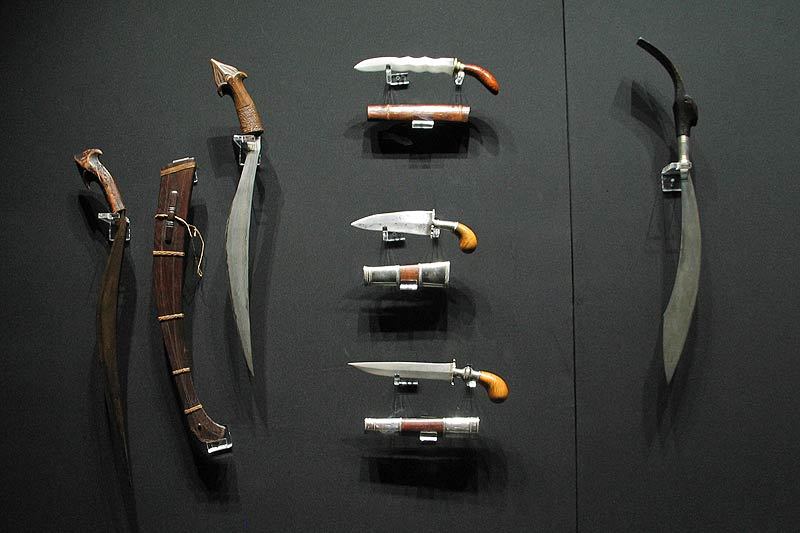
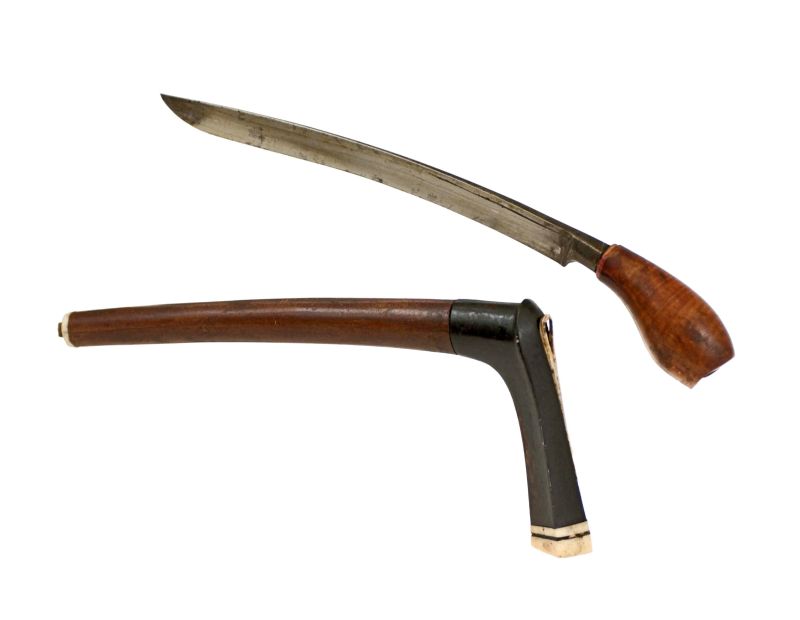
| มีดหมอ · Mit mo (ritual knife) | มีดหมอเป็นมีดพิธีของหมอไทย ใบตรง ด้ามยันต์ ใช้ทำของ · กริชเป็นมรดกประจำตระกูล ใบไม่สมมาตร มีพามอร์ A mit mo is a Thai ritual knife the maker uses on other objects — straight blade, yantra on the hilt; a keris is an heirloom in its own right, asymmetric base, pamor, an odd count of waves. |
|---|---|
| ยันต์มลายู · Jimat / azimat (Islamic-Malay written amulet) | จิมัตคือตัวเขียนพกได้ · กริชคือใบมีดที่ถือว่ามีทัวะห์ในตัว A jimat is carried writing; a keris is a blade held to carry its own tuah. One is scripture, the other is a pusaka. |
| หินมุสติกา · Batu mustika (stones and 'pearls' of inherent power) | หินมุสติกาบางทีฝังในด้ามกริช — หินเป็นมุสติกา เล่มเป็นกริช A mustika stone is sometimes set into a keris hilt or ring; the stone is the mustika, the blade is the keris, and each carries its own claim. |
The story · เรื่องเล่า Cited · อ้างอิง
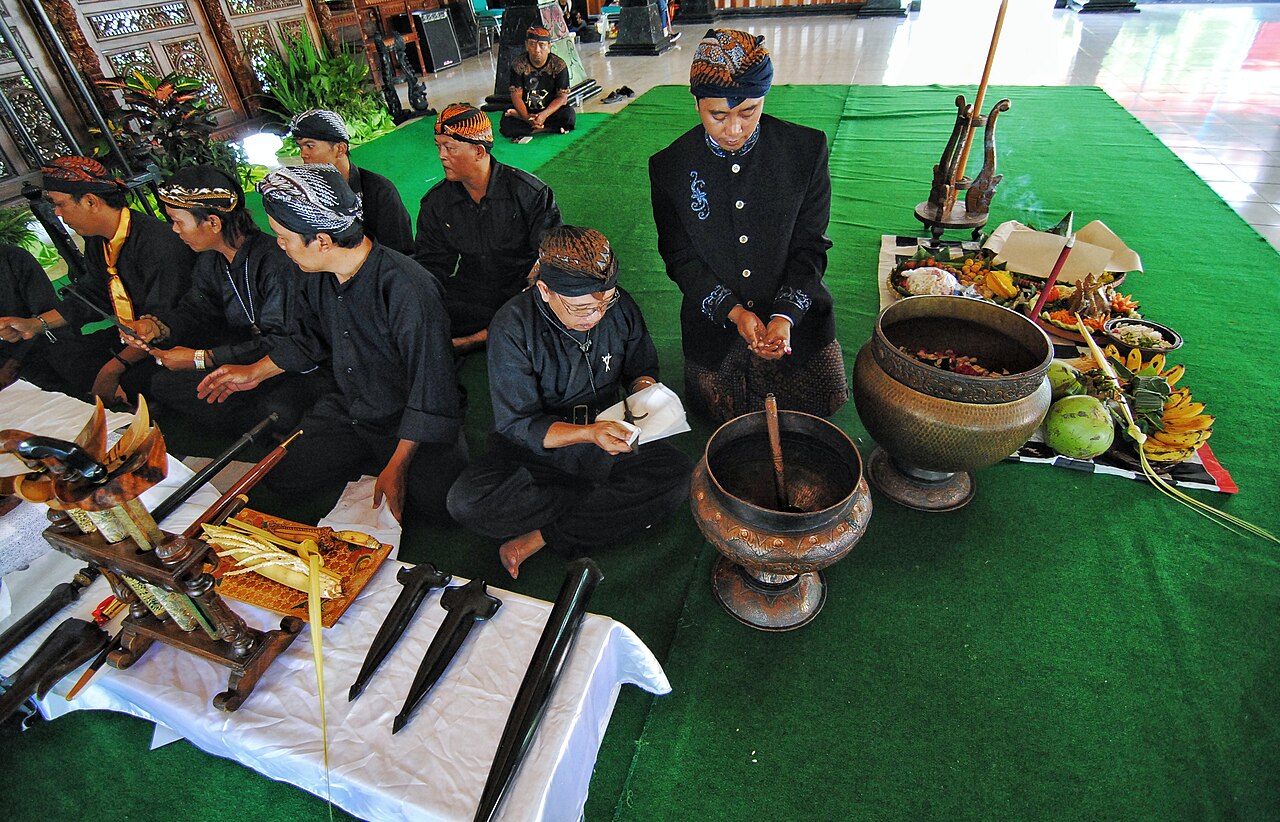
ตำนานชวาเล่าถึงกริชที่ขยับได้เองและฆ่าคนได้ตามใจ เจ้าของทดสอบความเข้ากันโดยนอนหนุนกริชไว้ใต้หมอนแล้วดูความฝัน ฝันร้ายคือไม่ถูกโฉลก ทุกปีในเดือนซูรอ (มุฮัรรอม) จะทำ jamasan: ล้างน้ำมันเก่ากับสนิมด้วยน้ำมะนาว มะกรูด หรือน้ำมะพร้าว กัดด้วย warangan ให้พามอร์ขึ้น แล้วชโลมน้ำมันหอมมะลิหรือจันทน์ ช่างตีคือ empu ผู้ต้องมีทั้งฝีมือและบารมี ยูเนสโกขึ้นทะเบียนมรดกภูมิปัญญาปี ๒๕๕๑
Javanese legend has keris that move of their own will and kill at will; an owner tested the match by sleeping with the blade under the pillow and reading the dream — bad dreams meant the blade should go. Every year in Sura (Muharram) the jamasan strips old oil and rust with lime, noni or coconut water, re-etches the pamor with warangan, and lays down fresh jasmine or sandalwood oil. The empu who forged it was expected to be a spiritual as much as a technical master; pamor once used meteoric iron, now nickel. Pointing a keris at someone is held to foretell their death, which is why silat players touch the tip to the ground before a demonstration. UNESCO listed it in 2008.
Keeping · การเลี้ยงดู Cited · อ้างอิง
vault ไม่มีหมวด “ปูซากา” — ไม่ใช่เทพที่บูชา ไม่ใช่ผีที่เลี้ยง ไม่ใช่หุ่นที่ปลุก — จึงปล่อยหมวดว่าง ที่เจ้าของทำ: เก็บในที่สูง ล้าง-ชโลมน้ำมันปีละครั้ง (jamasan) ห้ามชักเล่น ห้ามชี้ ถ้าฝันร้ายให้ส่งต่อ
Class null: the vault has no pusaka category — the keris is neither a venerated deva, a fed ghost, nor an animated servant, and khong_thammachat (inherent power) misses the isi belief. What the keeper owes is nonetheless specific: a high resting place, the yearly jamasan wash and oiling, never drawn for show, never pointed, and passed on if the dreams say the match is wrong. A keris whose history is unknown is, in its own tradition, a keris you sleep on before you keep.
Pictures · ภาพ
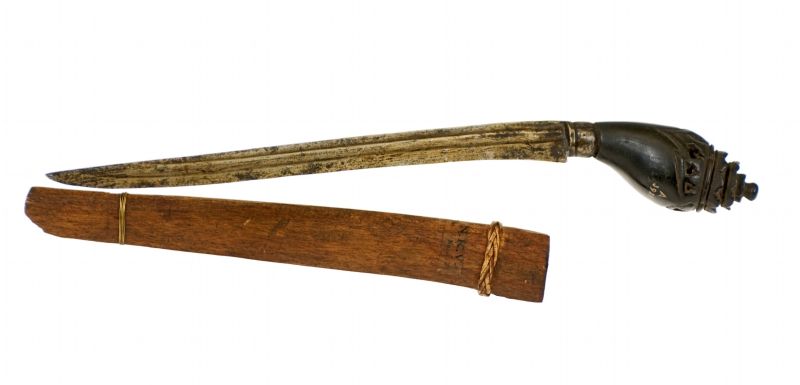
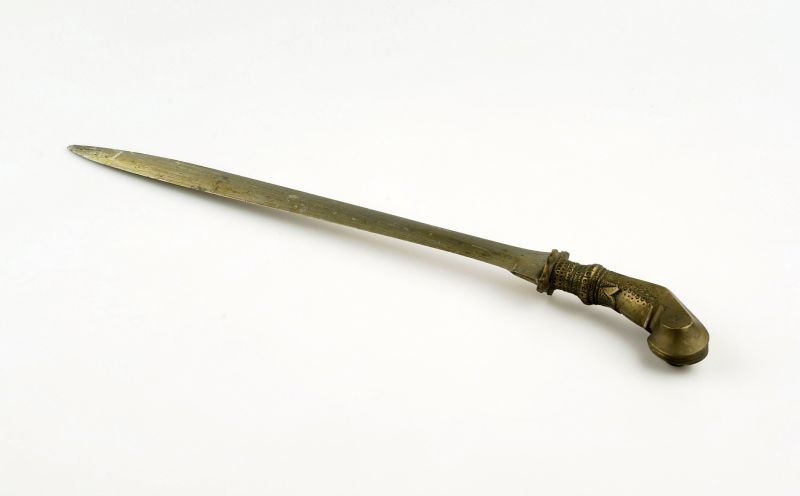
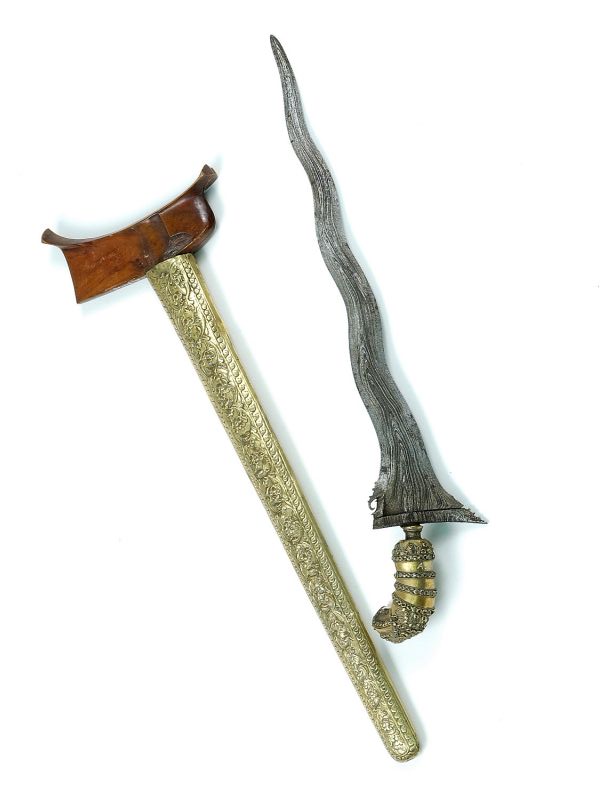
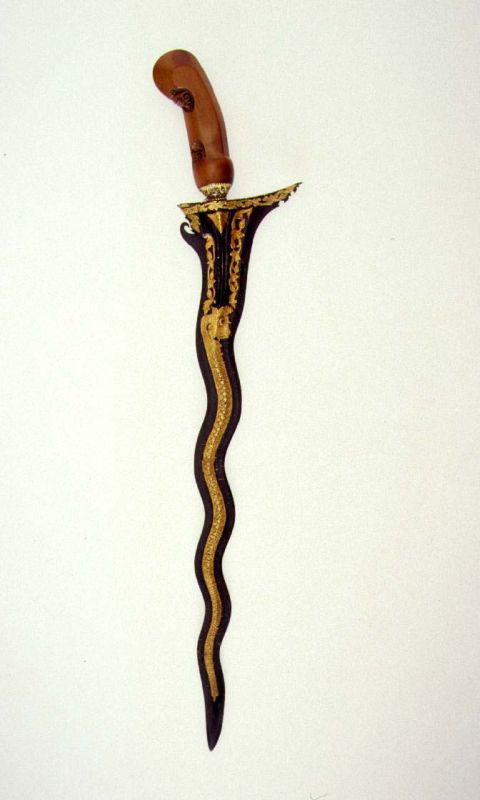
Sources · แหล่งที่มา
- wichaa-vault _meta/vocab/classes.md — class axis (resident / upkeep / provenance_sensitivity) (vault; own)
- Kris — Wikipedia (wikipedia; CC BY-SA 4.0)
- Keris — Wikipedia bahasa Indonesia (wikipedia; CC BY-SA 4.0)
- Wikimedia Commons — Category:Kris (and subcategories) (commons; per file; only CC0 / PD / CC BY / CC BY-SA files are listed)
Default provenance: Cited · อ้างอิง text.story_en → Cited · อ้างอิง axes → Inference · อนุมาน form.wearable_en → Cited · อ้างอิง media → Catalogue · จากคลัง · confidence high · updated 2026-09-02