ยันต์มลายู jimat · Jimat / azimat (Islamic-Malay written amulet)
جيمت / عزيمة (Jawi) · jimat / azimat (ms) · jimat / azimat (id) · عزيمة (ar)
📷 ถือชิ้นนี้อยู่? ถ่ายรูปเทียบ · Holding one? Photograph it to compare 🔍 ค้นหา · search Jimat / azimat (Islamic-
เครื่องรางเขียนของโลกมลายู: กระดาษหรือผ้าจารอายะฮ์อัลกุรอาน พระนามพระเจ้า หรือตารางเลข พับเล็กพกติดตัว ผูกรถ หรือแขวนบ้าน พลังอยู่ที่ตัวเขียนและผู้เขียน ไม่มีผู้อยู่
The written amulet of the Malay world: Quranic verses, names of God or a numbered square, set down in Arabic on paper or cloth by a teacher or bomoh, folded small and carried, tied to a vehicle or hung in a house. Power sits in the writing and the hand that wrote it; nobody is home.
also: จิมัต · อาซิมัต · ตะกรุดมลายู · azimat · azimah · tamimah · ta'wiz · Malay talisman · Quranic amulet · taweez
At a glance · โดยย่อ
| Class · หมวด | วัตถุมงคล (ยันต์) blessed/inscribed object Cited · อ้างอิง |
|---|---|
| Resident · ผู้อยู่ | none |
| Upkeep · การเลี้ยง | none |
| Provenance sensitivity | low |
| Form · รูปแบบ | other · อื่น ๆ |
| Material · เนื้อ | — |
| Function · คุณ | คุ้มครอง general protection, watching over · กันผี warding spirits · คงกระพัน invulnerability to blades · ค้าขาย trade, selling · มหาเสน่ห์ powerful attraction, allure |
| Region · ถิ่น | มาเลเซีย Malaysia · อินโดนีเซีย Indonesia · สิงคโปร์ Singapore |
| Maker · ผู้สร้าง | โต๊ะครู / ดุกุน / กียาอี Written by a religious teacher (tok guru, kyai), a bomoh or a dukun; the writer's standing is the object's credential |
| Era · ยุค | สืบมากับอิสลามในโลกมลายู Arrived with Islam in the Malay world; the paper-and-Arabic form is continuous with the ta'wiz of the wider Muslim world Tradition · ตามประเพณี |
Form · รูปทรง Cited · อ้างอิง
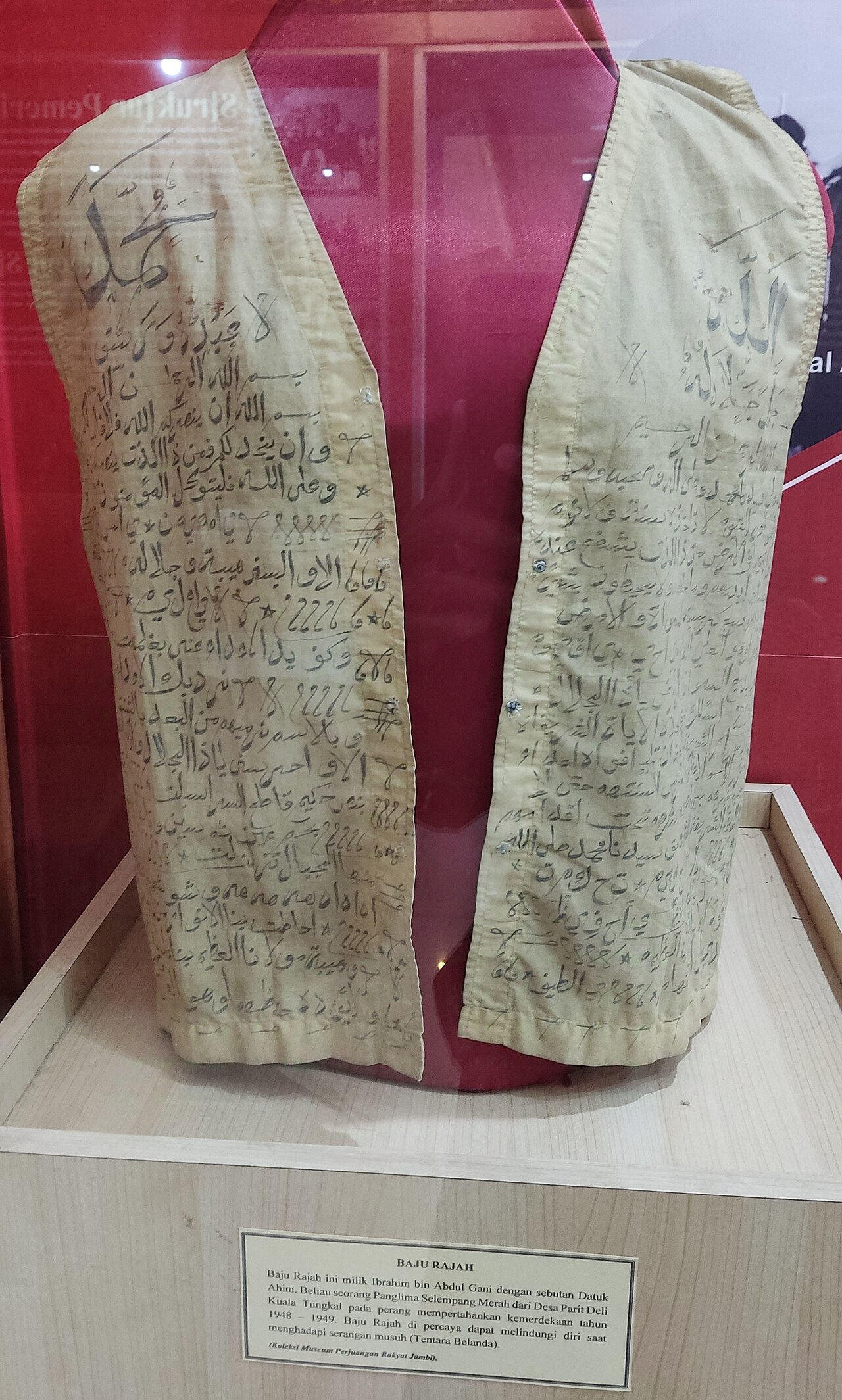
| Shape · ทรง | กระดาษหรือผ้าเขียนอักษรอาหรับ/ยาวี พับเล็กใส่ซองผ้า ตลับโลหะ หรือเย็บติดเสื้อ เข็มขัด A sheet of paper or cloth written in Arabic or Jawi script, folded small and sealed in a cloth pouch, a metal case, a belt or the lining of a garment; also whole talismanic shirts (baju rajah) written all over. |
|---|---|
| Worn · การพก | แขวนคอ ผูกแขน เหน็บเอว ติดรถ หรือแขวนในบ้าน Hung on the body, a vehicle or a building — the Indonesian definition names all three; worn at the neck, upper arm or waist. |
| Obverse · ด้านหน้า | ข้อความ: อายะฮ์อัลกุรอาน พระนามอัลลอฮ์ ตารางเลข (วะฟัก) ตัวอักษรโดด Text: Quranic verses, names of God, a numbered wafq square, isolated letters; the writing is the whole object. |
| Notes | Azimat is the Arabic loan (ʿazīma); jimat is its Malay/Indonesian clip. Ta'wiz is the same object in South Asia. Compare the Thai takrut: same logic of an inscribed sheet closed by a rite, different script and a different sacred language. |
| Iconography · สัญลักษณ์ | อักษรอาหรับ / ยาวี Arabic or Jawi script, never a figure ตารางวะฟัก (magic square) a wafq — the Islamic magic square, most often 3×3 (buduh) ชื่อพระเจ้า ๙๙ พระนาม / ตราสุลัยมาน the 99 names of God; the Seal of Solomon star |
What to look at · จุดสังเกต
Type-level marks a reader can check by eye or loupe.
| เป็นข้อความ ไม่ใช่รูป — อักษรอาหรับ ยาวี เลขอาหรับ It is writing, not an image: Arabic or Jawi letters and Arabic numerals. A figure means it is something else | Cited · อ้างอิง |
| ตารางเลข (วะฟัก) ช่องละตัวเลขหรือตัวอักษร ผลรวมเท่ากันทุกแถว A grid of numbers or letters whose rows sum alike — the wafq al-a'dad, in occult use since the 13th century | Cited · อ้างอิง |
| พับเล็กใส่ซอง ตลับ หรือเย็บติดเสื้อ ไม่ม้วนเป็นหลอดแบบตะกรุด Folded flat into a pouch, locket, armband or sewn into clothing — not rolled into a tube like a takrut | Cited · อ้างอิง |
| แขวนได้ทั้งคน รถ และบ้าน Hung on a person, a vehicle or a building — the same object serves all three | Cited · อ้างอิง |
| เสื้อราจะฮ์ (baju rajah) คือจิมัตทั้งตัว เขียนเต็มผืน A baju rajah is a whole shirt written over as one jimat; the Commons example belonged to a 1948–49 fighter | Cited · อ้างอิง |
How to tell it from · แยกจาก
| ตะกรุด · Takrut (inscribed scroll-tube) | ตะกรุดม้วนแผ่นโลหะจารอักขระขอม · จิมัตพับกระดาษเขียนอาหรับ ทั้งคู่ไม่มีผู้อยู่ Same class, different script and fold: a takrut is a metal sheet in Khom letters rolled into a tube; a jimat is paper or cloth in Arabic folded flat. Neither is fed. |
|---|---|
| ราจาห์ · Rajah (Javanese-Malay written talisman) | ราจาห์คือตัวเขียนที่ทำให้จิมัตขลัง จิมัตคือของที่พกไป Rajah is the written formula; jimat is the carried object that holds it. Indonesian usage lets rajah stand alone on skin or a shirt, and jimat cover unwritten charms too. |
| ยันต์พม่า · In (Burmese cabalistic square) | อินพม่าเป็นตารางยันต์อักษรพม่า ในบริบทพุทธ · จิมัตเป็นอาหรับ ในบริบทอิสลาม A Burmese in is a grid yantra in Burmese letters from a Buddhist weikza lineage; a jimat is Arabic in an Islamic one. Same idea of a squared diagram, different script and sacred language. |
| ผ้ายันต์ · Pha yan (yantra cloth) | ผ้ายันต์ไทยเป็นผืนใหญ่ มีรูปพระ ฤๅษี สัตว์ · จิมัตไม่มีรูปคนหรือสัตว์ A Thai pha yan is a large cloth carrying figures — Buddha, hermit, animals; a jimat is aniconic, text only. |
The story · เรื่องเล่า Cited · อ้างอิง
คำว่า azimat มาจากอาหรับ ʿazīma ส่วน jimat เป็นรูปย่อในภาษามลายู ของชนิดเดียวกันที่อินเดียเรียก ta'wiz วิกิพีเดียอินโดนีเซียนิยามว่าเป็นของหรือข้อความที่แขวนไว้กับร่างกาย รถ หรืออาคาร เพื่อป้องกันโรคและเคราะห์ (tolak bala) ในศาสนาอิสลามมีข้อโต้แย้งชัดเจน: สำนักที่เคร่งถือว่าเป็นชิริก ฝ่ายที่ผ่อนปรนยอมรับถ้าข้อความเป็นอัลกุรอานล้วน
Azimat is Arabic ʿazīma; jimat is what Malay made of it, and ta'wiz is the same thing in South Asia. Indonesian Wikipedia defines it as an object or writing hung on a body, a vehicle or a building to turn aside sickness and misfortune (tolak bala). The theological fight is part of the object: stricter schools call it shirk — seeking protection from other than God — while others accept it when the text is Quran alone. The Malay trade also sells it for kebal (invulnerability), pelaris (custom for a shop) and pengasihan (attraction); those three are what the vault's function keys are doing here.
Keeping · การเลี้ยงดู Tradition · ตามประเพณี
ไม่มีผู้อยู่ ไม่ต้องเลี้ยง ให้เกียรติตัวเขียนตามธรรมเนียม: ไม่ให้เปียก ไม่พาเข้าที่สกปรก ผู้ถือมักถือว่าห้ามเปิดซอง
Impersonal — nothing is owed and nothing is fed. Keepers treat the writing as scripture: kept dry, kept out of unclean places, and the trade holds that the fold is not opened.
Pictures · ภาพ
Sources · แหล่งที่มา
- wichaa-vault _meta/vocab/classes.md — class axis (resident / upkeep / provenance_sensitivity) (vault; own)
- Jimat — Wikipedia bahasa Indonesia (wikipedia; CC BY-SA 4.0)
- Azimat (Tangkal) — Wikipedia Bahasa Melayu (wikipedia; CC BY-SA 4.0)
- Ta'wiz — Wikipedia (wikipedia; CC BY-SA 4.0)
- Magic square — Wikipedia (wafq al-a'dad section) (wikipedia; CC BY-SA 4.0)
- General knowledge of the Thai / Lanna amulet tradition (model training + secondary literature), hedged — never a specific date, title or scholar unless separately cited (book; n/a)
Default provenance: Cited · อ้างอิง axes.class → Inference · อนุมาน axes.functions → Tradition · ตามประเพณี names.th → Inference · อนุมาน text.keeping_en → Tradition · ตามประเพณี origin → Tradition · ตามประเพณี · confidence medium · needs verification · updated 2026-09-02