ผ้ายันต์ pha yan · Pha yan (yantra cloth)
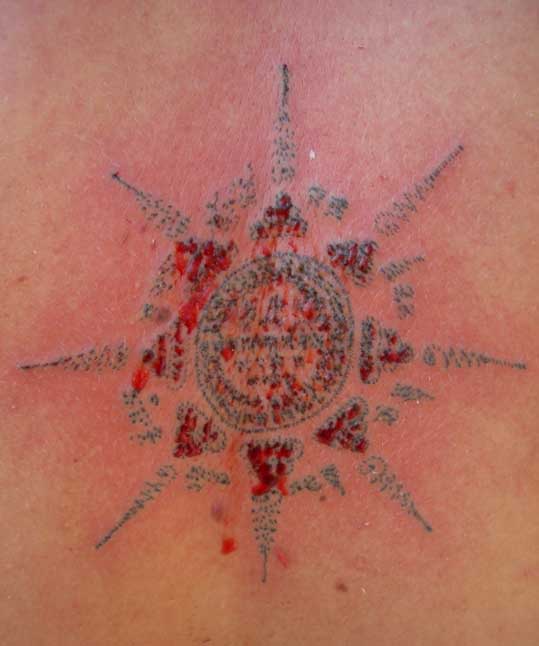
📷 ถือชิ้นนี้อยู่? ถ่ายรูปเทียบ · Holding one? Photograph it to compare 🔍 ค้นหา · search Pha yan (yantra cloth)
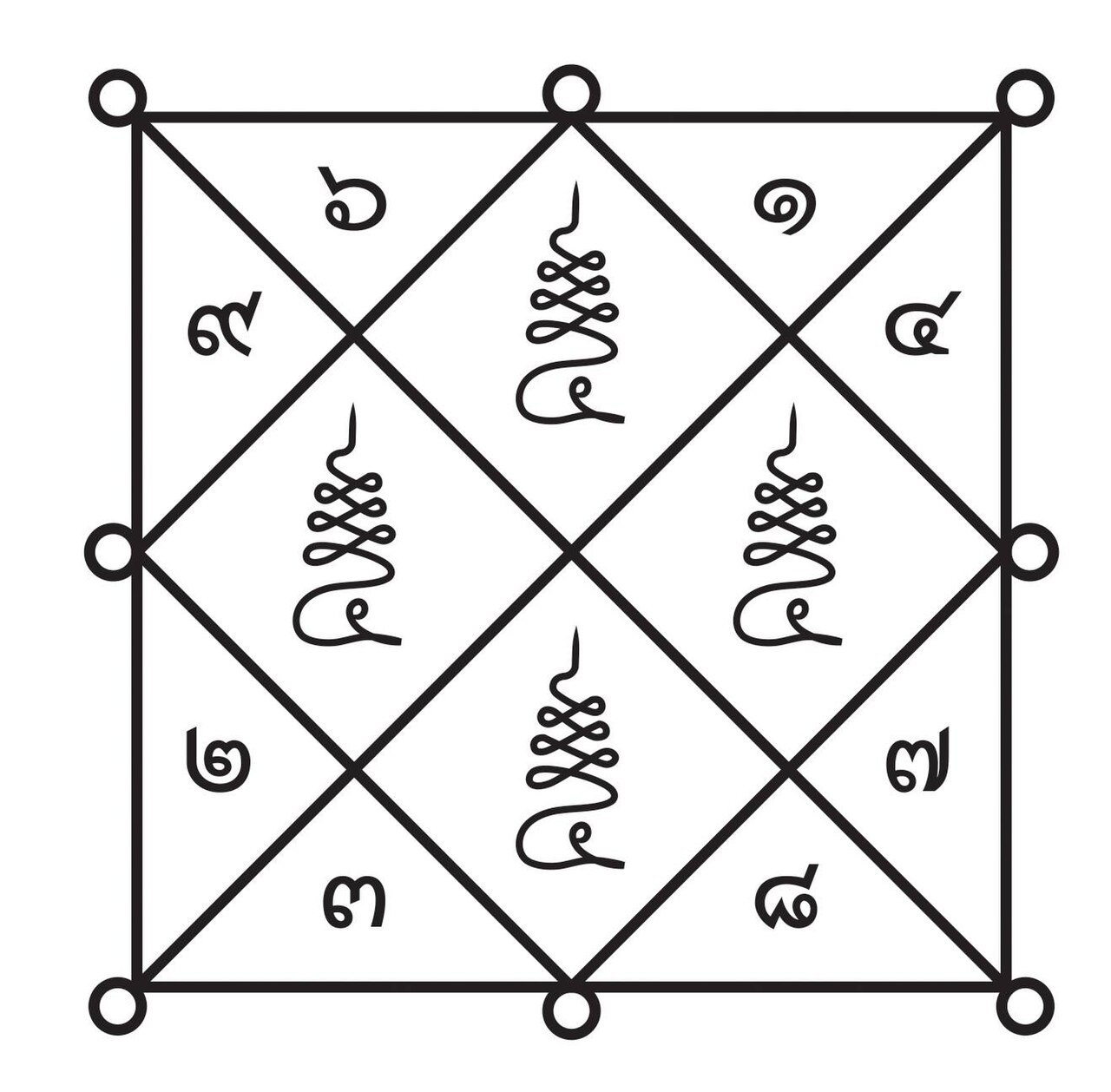
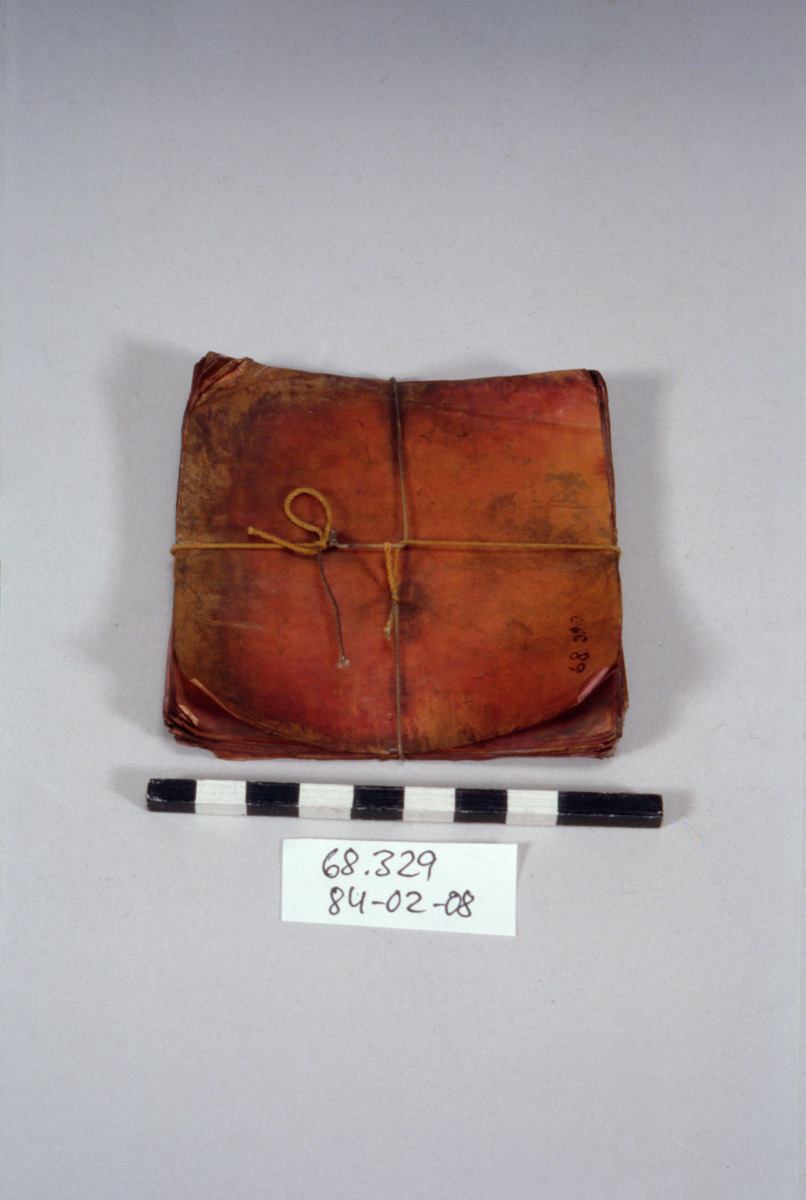
ผ้าผืนสี่เหลี่ยมหรือธงที่เขียนตาราง รูป และอักขระ แขวนเหนือประตู พับใส่กระเป๋า หรือพันตัว ลายยันต์มีดัชนีของตัวเองที่ /yant
A cloth square or banner drawn with grids, figures and script — hung over a door, folded into a pocket, or worn. The drawn designs have their own index here: /yant.
also: ผ้าประเจียด · ประเจียด · เสื้อยันต์ · pha yant · pha prachiat · prajiad · yantra cloth · yant cloth · prajiad armband
At a glance · โดยย่อ
| Class · หมวด | วัตถุมงคล (ยันต์) blessed/inscribed object Catalogue · จากคลัง |
|---|---|
| Resident · ผู้อยู่ | none |
| Upkeep · การเลี้ยง | none |
| Provenance sensitivity | low |
| Form · รูปแบบ | cloth · ผ้า |
| Material · เนื้อ | ผ้ายันต์ inscribed cloth |
| Function · คุณ | คุ้มครอง general protection, watching over · แคล้วคลาด evasion, narrow escape · คงกระพัน invulnerability to blades · กันผี warding spirits · เมตตามหานิยม loving-kindness and wide popularity |
| Region · ถิ่น | ทั่วประเทศไทย Thailand, not regionally specific |
| Era · ยุค | วิกิพีเดียไทยว่าสมเด็จพระเจ้าตากสินแจกผ้าประเจียดแก่แม่ทัพราว พ.ศ. ๒๓๑๒ และรัชกาลที่ ๑ แจกทหารราว พ.ศ. ๒๓๒๘ Thai Wikipedia has King Taksin handing prachiat to his commanders around 1769 and Rama I to his soldiers around 1785; both dates unverified against a primary Cited · อ้างอิง |
| Retail market (Lazada TH titles) | 397 listings · ฿19–230 typical · median ฿98 Catalogue · จากคลัง |
Form · รูปทรง Cited · อ้างอิง
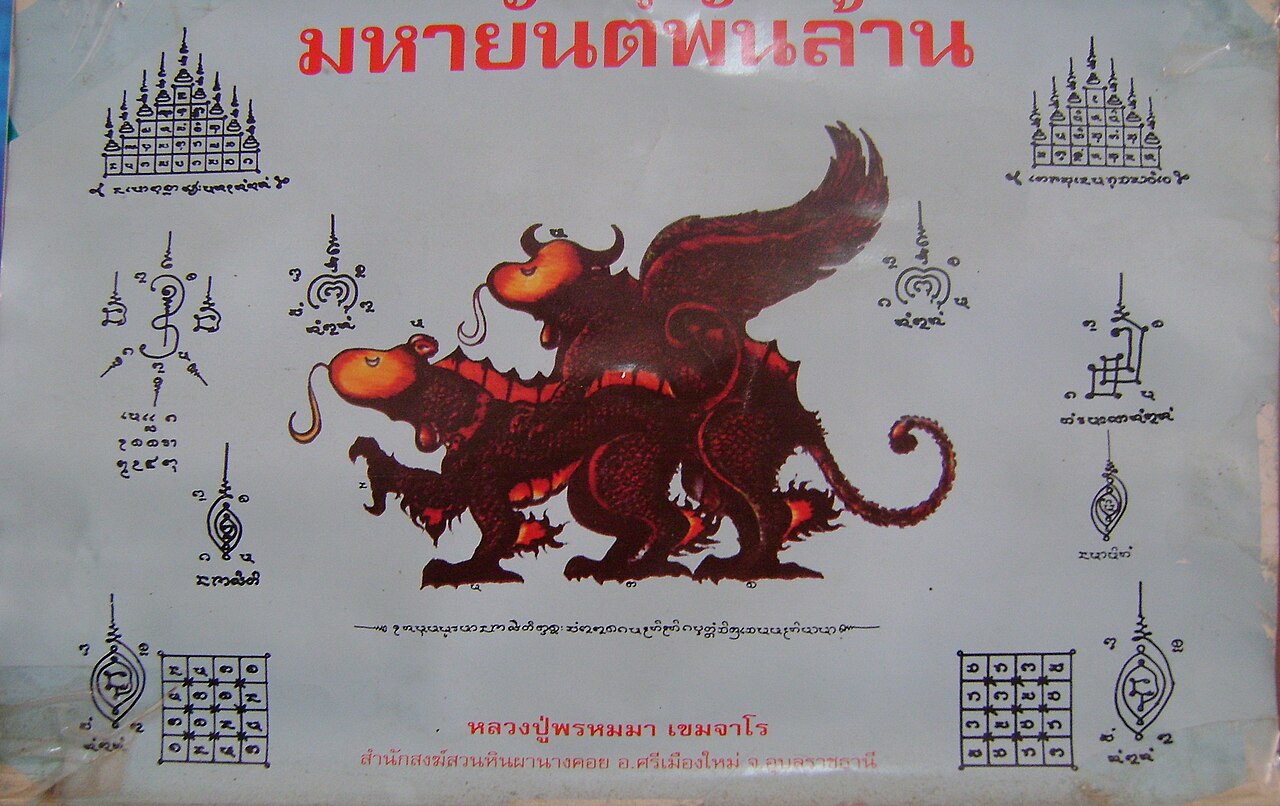
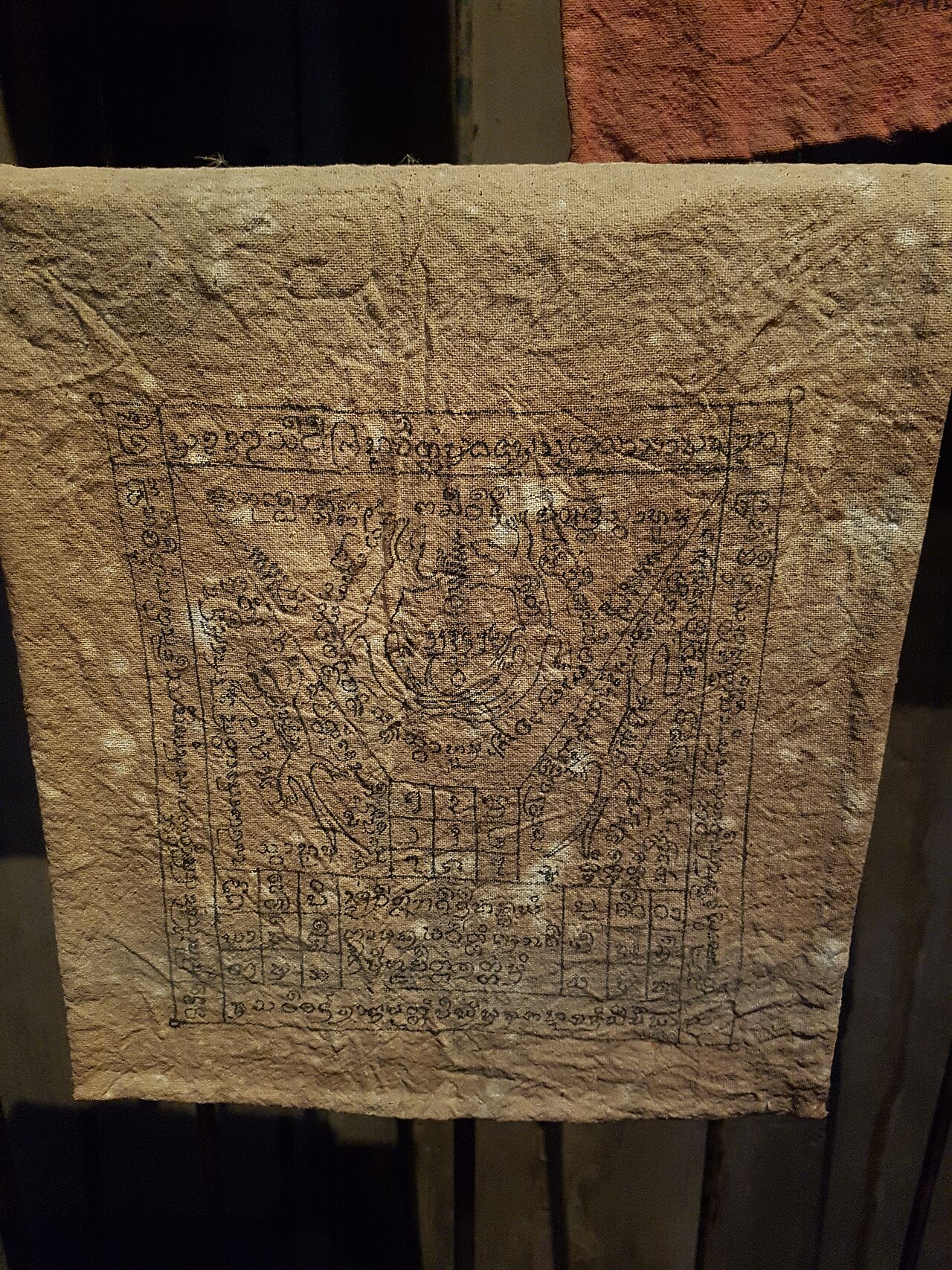
| Shape · ทรง | ผ้าผืนสี่เหลี่ยม ขาว แดง หรือเหลือง เขียนยันต์ด้วยหมึกดำ ตั้งแต่ผืนเล็กพับใส่กระเป๋าถึงผืนใหญ่แขวนเหนือประตู A square or rectangular cloth — white, red or yellow — drawn in black ink with grids, figures and Khom script. Pocket squares, arm- and head-bands (prachiat), door hangings, and shirts sewn from small pieces (suea yan). |
|---|---|
| Worn · การพก | พับใส่กระเป๋า พันแขน พันศีรษะ หรือแขวนไว้ที่บ้าน Folded in a pocket, tied round the arm or head, or hung in the house over a door |
| Obverse · ด้านหน้า | ยันต์และอักขระขอม มักมีรูปพระ ฤๅษี หนุมาน หรือสัตว์กลางผืน The yantra and Khom text; often a Buddha, a lersi, Hanuman or an animal at centre |
| Reverse · ด้านหลัง | เรียบ หรือพิมพ์ทะลุ Plain, or the print showing through |
| Notes | Modern temple issues are screen-printed in one colour; the treatise's cloths are drawn by hand, and the eight-direction cloth it names is a ceiling canopy for inscribing takrut, not a wearable. |
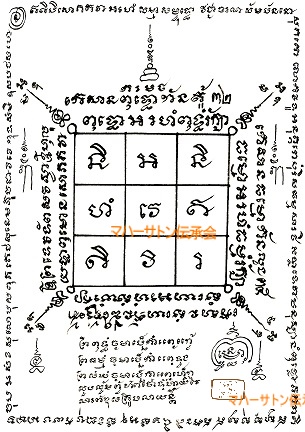
| Iconography · สัญลักษณ์ | ยันต์ตรีนิสิงเห Trinisinghe yantra — against ghosts and demons per the prachiat article ยันต์แปดทิศ eight-direction yantra; the treatise hangs it as a white ceiling cloth while inscribing ยันต์มหาสะท้อน Maha Saton reflecting yantra รูปพระ ฤๅษี หนุมาน กลางผืน a Buddha, lersi or Hanuman figure at centre on temple issues |
What to look at · จุดสังเกต
Type-level marks a reader can check by eye or loupe.
| เป็นผืนผ้าแบน ไม่ม้วน — ถ้าม้วนเป็นหลอดคือตะกรุด A flat cloth. Rolled into a tube it becomes a takrut; the medium is the tell | Catalogue · จากคลัง |
| สีผ้าที่พบ: ขาว แดง เหลือง หมึกดำ White, red or yellow ground with black ink or pencil per the prachiat article; the ground colour is not a rule | Cited · อ้างอิง |
| อักขระขอมภาคกลาง อักษรธรรมล้านนาและอีสาน อักษรไทยภาคใต้ Script places it: Khom in the centre, Tham in the north and northeast, Thai script in the south | Cited · อ้างอิง |
| ของวัดยุคใหม่พิมพ์สกรีนสีเดียว ของเก่าเขียนมือ เส้นไม่เท่ากัน Modern temple issues are screen-printed in one colour with even lines; hand-drawn cloths show uneven strokes and ink pooling | Tradition · ตามประเพณี |
| ผ้าที่ห่อหุ่นพยนต์ไม่ใช่ผ้ายันต์ในฐานะของชิ้นเอง A yantra cloth wrapping an effigy is part of that object, and takes that object's class | Catalogue · จากคลัง |
How to tell it from · แยกจาก
| ตะกรุด · Takrut (inscribed scroll-tube) | ผ้ายันต์แบน ตะกรุดม้วน หมวดเดียวกัน Flat versus rolled. Same class, same keeping; only the form differs. |
|---|---|
| หุ่นพยนต์ · Hun Payon (animated effigy) | หุ่นพยนต์เป็นรูปคนที่ผ้ายันต์ห่ออยู่ ต้องเซ่น ผ้ายันต์เปล่าไม่ต้อง A hun phayon is a figure that a yantra cloth may wrap, and it is fed; the bare cloth is not. If there is a body inside the cloth, it is not this record. |
The story · เรื่องเล่า Catalogue · จากคลัง
ตำราไม่มีบทสร้างผ้ายันต์โดยตรง แต่ใช้ผ้ายันต์เป็นเครื่องมือ: ดาดเพดานด้วยผ้าขาวลงยันต์แปดทิศเมื่อลงตะกรุดโทนในโบสถ์ และคาถาปลุกใหญ่นับ ผ้าประเจียด ไว้ในบรรดาของที่ปลุกให้คงทนแคล้วคลาด วิกิพีเดียไทยว่าประเจียดเป็นผ้าผูกศีรษะ คอ แขน สีขาว แดง เหลือง ที่กษัตริย์แจกทหารก่อนออกศึก และยังใช้ในมวยไทยและกระบี่กระบอง
The treatise has no recipe for the cloth itself; it uses one. A white cloth bearing the eight-direction yantra is stretched as a ceiling while a takrut is inscribed in the ordination hall, and the great waking-katha lists the prachiat among the things it rouses to endure and evade. Thai Wikipedia describes the prachiat as a white, red or yellow cloth tied at head, neck or arm, handed to soldiers by Taksin and Rama I before battle, and still worn by Muay Thai and krabi-krabong fighters. The temple-issue cloth hung over a shop door is the same object at rest.
Keeping · การเลี้ยงดู Catalogue · จากคลัง
ไม่มีผู้อยู่ ไม่ต้องเลี้ยง แขวนหรือพกได้โดยไม่ต้องรู้ประวัติ
Nobody home, nothing owed. Hang it or carry it with unknown history; its question is only whose hand drew it.
Pictures · ภาพ
Sources · แหล่งที่มา
- manuscript-wiki/data/holding_key.json — the 36-kind identification key behind wichaa.net/holding (vault; own)
- wichaa-vault _meta/vocab/classes.md — class axis (resident / upkeep / provenance_sensitivity) (vault; own)
- wichaa-vault _meta/vocab/materials.md — เนื้อ material axis (vault; own)
- ตำราสร้างเครื่องรางของขลัง — amulet-making treatise, manuscript 6983, bilingual transcription (170 pp, 160 formulas) (treatise; contributed volume; katha not proofed by a scholar)
- ประเจียด — วิกิพีเดีย (wikipedia; CC BY-SA 4.0)
- เลขยันต์ — วิกิพีเดีย (wikipedia; CC BY-SA 4.0)
- General knowledge of the Thai / Lanna amulet tradition (model training + secondary literature), hedged — never a specific date, title or scholar unless separately cited (book; n/a)
Default provenance: Cited · อ้างอิง axes → Catalogue · จากคลัง text.what_en → Catalogue · จากคลัง text.keeping_en → Catalogue · จากคลัง text.story_en → Catalogue · จากคลัง form.notes_en → Tradition · ตามประเพณี iconography → Cited · อ้างอิง origin.era_en → Cited · อ้างอิง market → Catalogue · จากคลัง · confidence medium · needs verification · updated 2026-09-02