เจ้าแม่กวนอิม kuan im · Guanyin pendant
觀音 (zh)
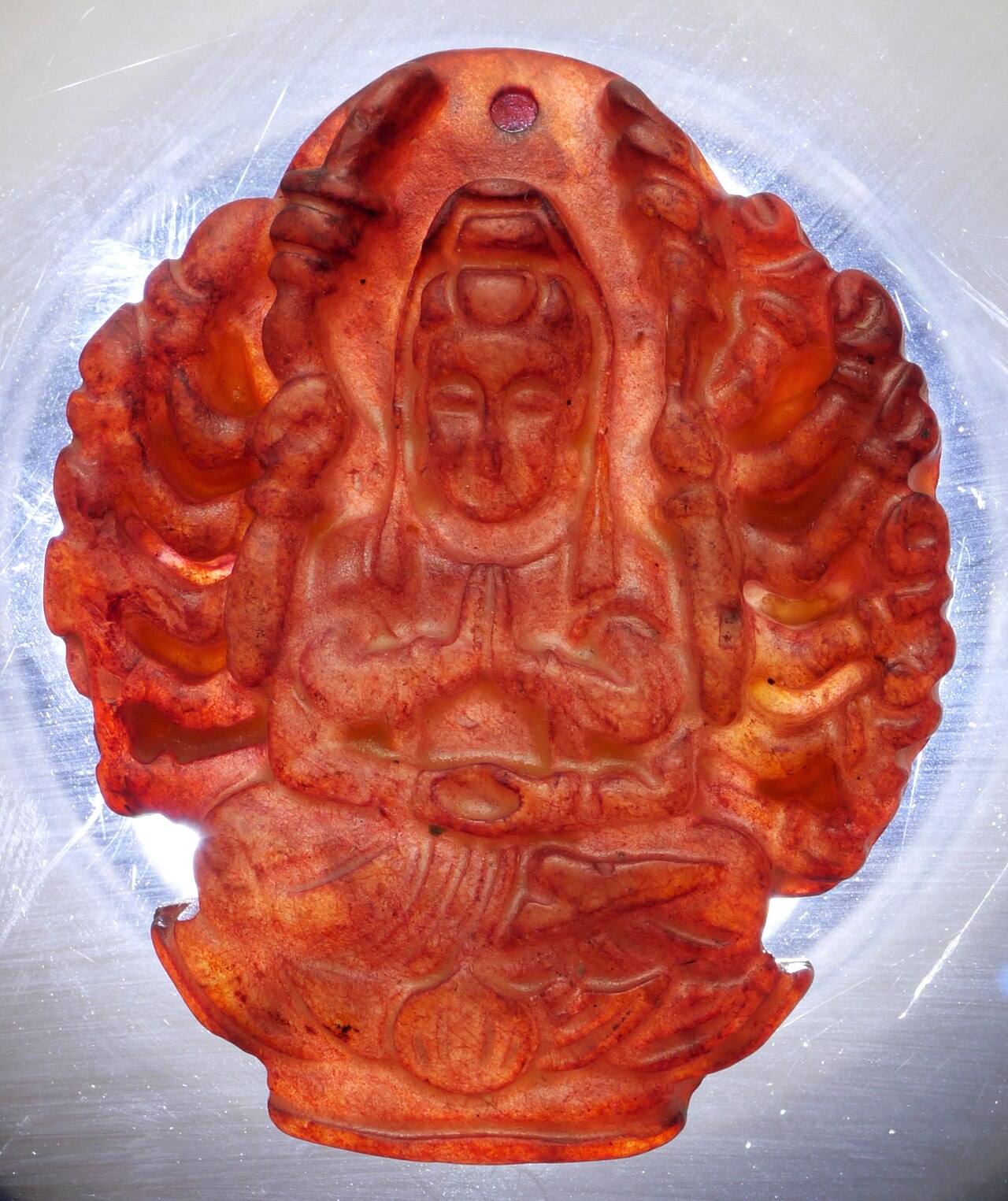
📷 ถือชิ้นนี้อยู่? ถ่ายรูปเทียบ · Holding one? Photograph it to compare 🔍 ค้นหา · search Guanyin pendant
จี้หรือรูปเจ้าแม่กวนอิม พระโพธิสัตว์อวโลกิเตศวรในร่างหญิงชุดขาว เทพแห่งความเมตตาของคนไทยเชื้อสายจีน นิยมทำเป็นหยกแกะ
A pendant or small image of Guanyin, Avalokitesvara in her white-robed female form, the compassion figure of Thai-Chinese households. The classic body is carved jade, worn on a cord.
also: กวนอิม · พระโพธิสัตว์กวนอิม · พระอวโลกิเตศวร · kuan yin · guan yin · chao mae kuan im · Kuan Yin · Avalokitesvara · Goddess of Mercy
At a glance · โดยย่อ
| Class · หมวด | เทพ / เทวดา deva-tier resident Tradition · ตามประเพณี |
|---|---|
| Resident · ผู้อยู่ | deva |
| Upkeep · การเลี้ยง | veneration |
| Provenance sensitivity | medium |
| Form · รูปแบบ | figure · รูปหล่อ/รูปปั้น |
| Material · เนื้อ | เนื้อโลหะ metal (unspecified) · เนื้อผง sacred-powder paste · เนื้อเงิน silver |
| Function · คุณ | เมตตามหานิยม loving-kindness and wide popularity · คุ้มครอง general protection, watching over · แคล้วคลาด evasion, narrow escape |
| Region · ถิ่น | ทั่วประเทศไทย Thailand, not regionally specific · ชุมชนไทยโพ้นทะเล Overseas Thai / Chinese-Thai collector communities |
| Maker · ผู้สร้าง | ศาลเจ้าจีนและวัดพุทธหลายแห่ง Chinese shrines and Buddhist wats alike; no single maker |
| Era · ยุค | Avalokitesvara became female in East Asia by about the twelfth century; the Thai cult is Thai-Chinese and Mahayana in origin Tradition · ตามประเพณี |
| Retail market (Lazada TH titles) | 9 listings · ฿34–399 typical · median ฿129 Catalogue · จากคลัง |
Form · รูปทรง Tradition · ตามประเพณี
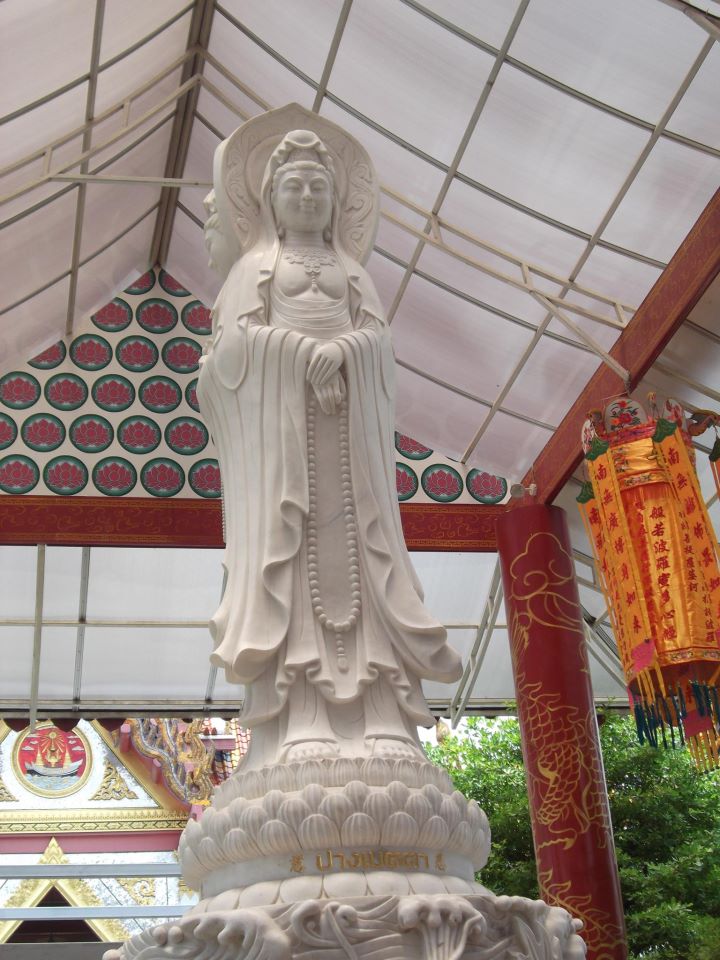
| Shape · ทรง | จี้หยกหรือหินแกะ รูปหล่อ หรือเหรียญ องค์หญิงชุดขาวยืนหรือนั่ง Carved jade or stone pendant, cast figure, or medallion: a white-robed female figure standing or seated on a lotus |
|---|---|
| Worn · การพก | ห้อยคอด้วยเชือกหรือสร้อย นิยมหยกในหมู่คนไทยเชื้อสายจีน Worn at the neck on a cord or chain; jade is the classic body among Thai-Chinese families and is not on the material axis |
| Obverse · ด้านหน้า | กวนอิมถือแจกันน้ำทิพย์และกิ่งหลิว หรือปางพันกร Guanyin holding the vase of pure water and a willow branch; or the thousand-armed form |
| Reverse · ด้านหลัง | เรียบ หรือยันต์ หรืออักษรจีน Plain, a yantra, or Chinese characters |
| Notes | Jade, the commonest pendant body, has no key in materials.md; the material axis lists metal and powder forms only. |
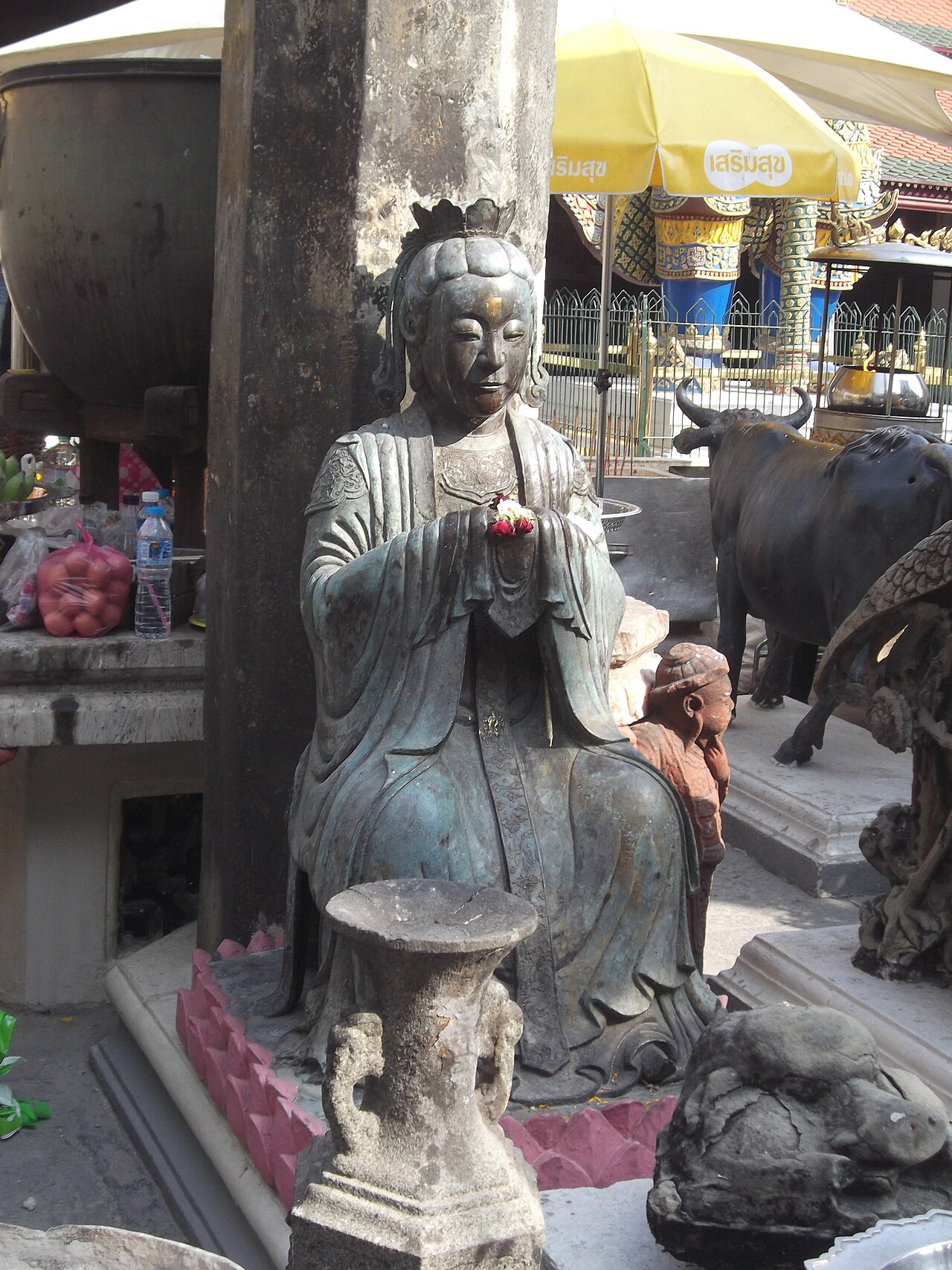
| Iconography · สัญลักษณ์ | ชุดขาว white robe แจกันน้ำทิพย์ กิ่งหลิว vase of pure water, willow branch ดอกบัว lotus seat ปางพันกร thousand-armed form |
What to look at · จุดสังเกต
Type-level marks a reader can check by eye or loupe.
| รูปหญิงชุดขาว ถือแจกันและกิ่งหลิว — ไม่ใช่นางกวัก ไม่ใช่พระพุทธรูป A white-robed woman with vase and willow: not a beckoning Nang Kwak, not a Buddha | Cited · อ้างอิง |
| ปางพันกร: แขนแผ่เป็นวงรอบองค์ Thousand-armed form reads as a fan of arms round the figure | Cited · อ้างอิง |
| จี้หยกแกะ: เย็นในมือ โปร่งแสงที่ขอบ ไม่ใช่วัตถุปลุกเสกในความหมายพระเครื่องเสมอไป Carved jade pendants are cool in the hand and translucent at the edge; many are never consecrated at a wat at all, which is a class note, not a flaw | Tradition · ตามประเพณี |
| ผู้บูชามักถือศีลกินเจ งดเนื้อวัว Devotees commonly keep vegetarian days and abstain from beef; a keeper asking about diet is a tell for the cult, not the object | Cited · อ้างอิง |
How to tell it from · แยกจาก
| นางกวัก · Nang Kwak (the beckoning lady) | นางกวักนั่งพับเพียบยกมือกวัก แต่งไทย · กวนอิมชุดขาวถือแจกัน Nang Kwak kneels in Thai dress with one hand beckoning; Guanyin stands or sits in a white robe with a vase. Both deva-tier. |
|---|---|
| พระพรหม · Four-faced Brahma pendant | พระพรหมสี่หน้า · กวนอิมหน้าเดียว รูปหญิง Brahma has four faces; Guanyin one, and female |
| พระสีวลี · Phra Siwali (the never-hungry monk) | พระสีวลีเป็นพระภิกษุถือกลดและบาตร Sivali is a monk with umbrella and bowl, class phra_khrueang; Guanyin is a bodhisattva in lay white |
The story · เรื่องเล่า Cited · อ้างอิง
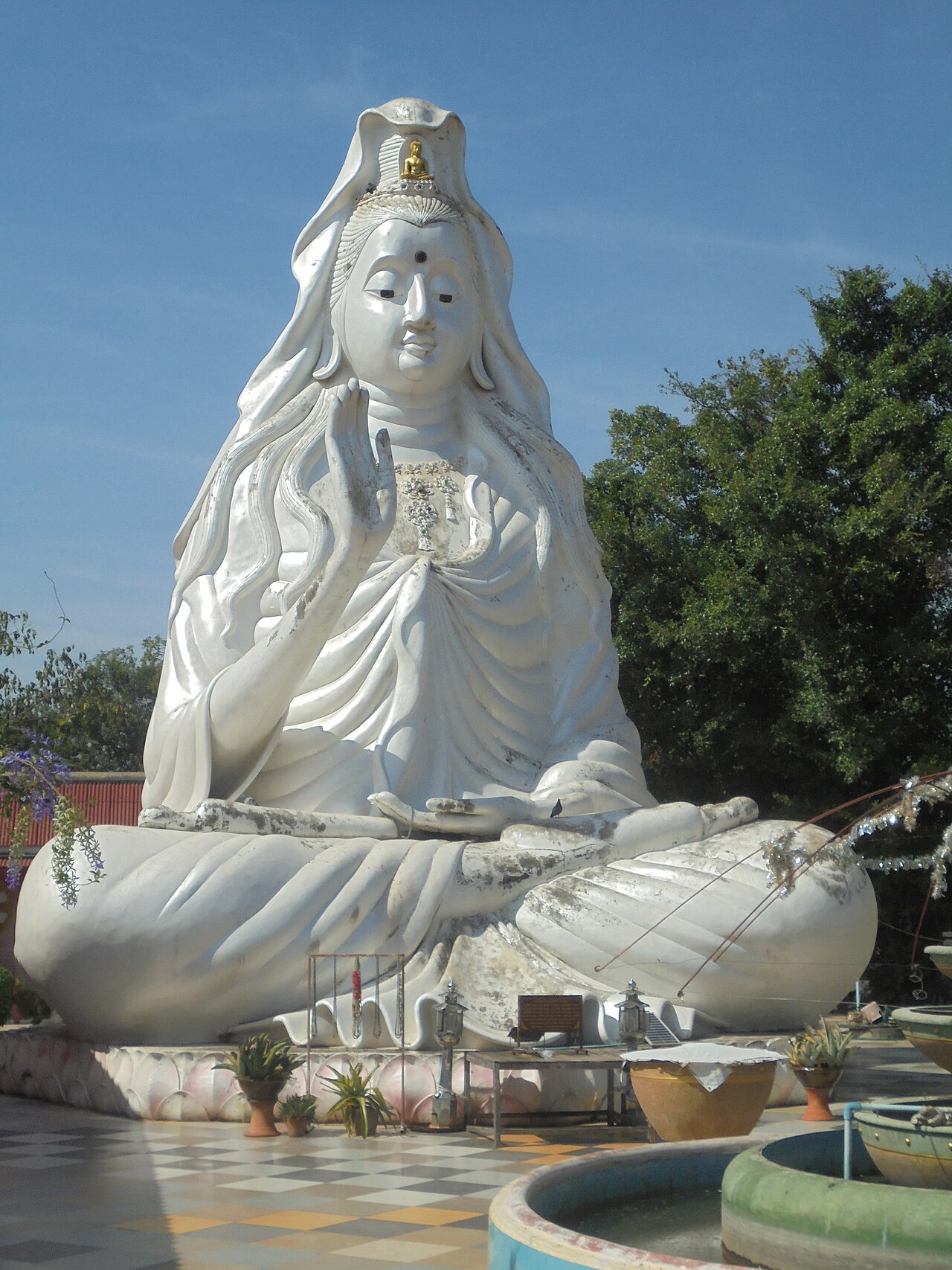
อวโลกิเตศวรเป็นชายในอินเดีย กลายเป็นหญิงในจีนและรวมกับตำนานเจ้าหญิงเมี่ยวซ่าน คนไทยเชื้อสายจีนบูชาเป็นเจ้าแม่ ถือศีลกินเจ งดเนื้อวัว มีองค์ใหญ่ที่วัดยานนาวาและวัดห้วยปลากั้ง คนพกจี้หยกกันมาก่อนจะมีเหรียญวัดออกตาม
Avalokitesvara was male in India and became female in China, merged with the legend of Princess Miaoshan. Thai-Chinese families venerate her as Chao Mae, keep vegetarian days and skip beef; big images stand at Wat Yannawa and Wat Huai Pla Kang. Jade pendants were worn long before Thai wats began issuing Guanyin medallions.
Keeping · การเลี้ยงดู Tradition · ตามประเพณี
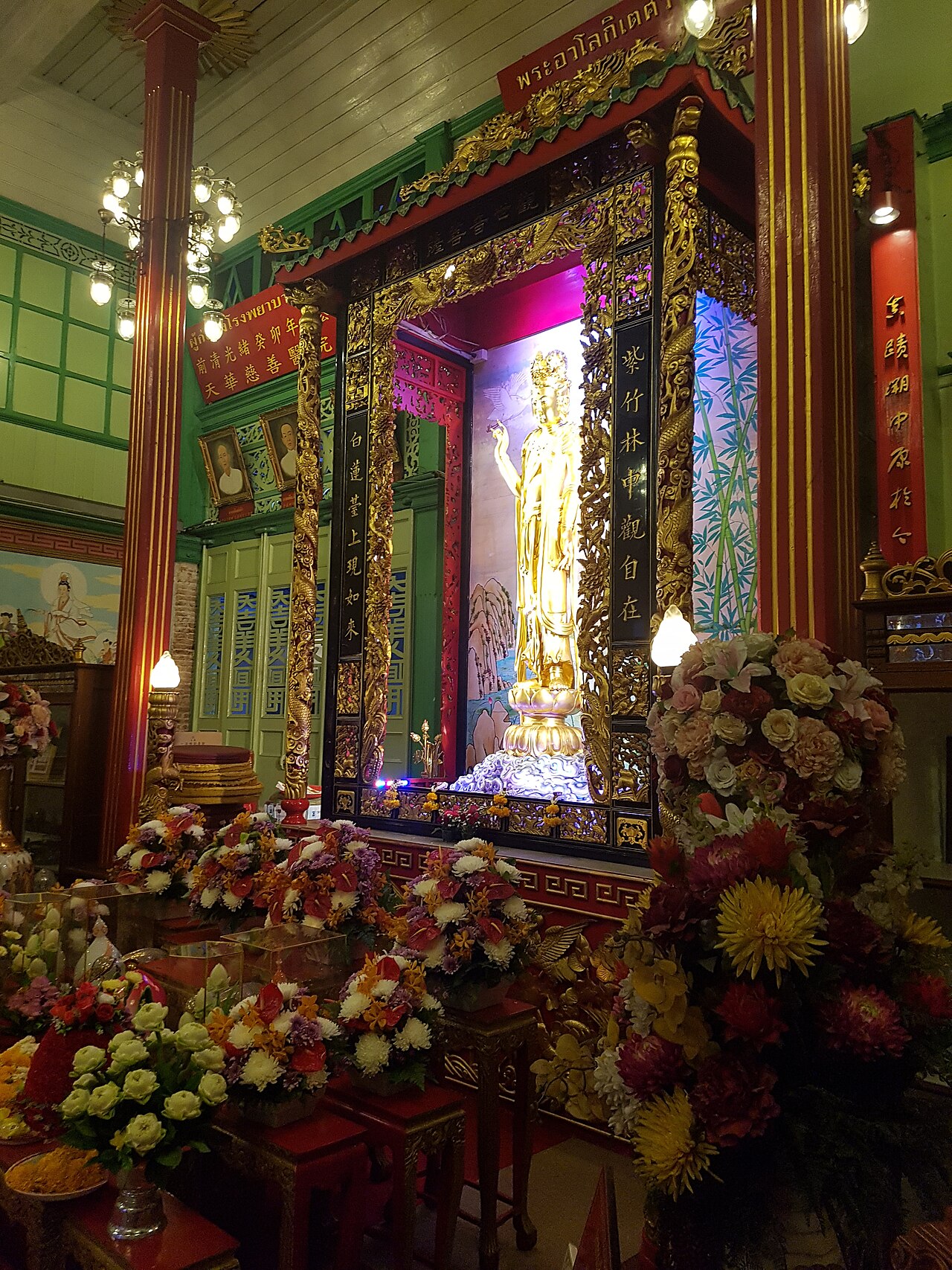
บูชาด้วยดอกไม้ น้ำ และการถือศีล ไม่ต้องเลี้ยง ไม่ใช่ผี
Kept by veneration: flowers, water, precepts kept on her days. Not fed, not a ghost. The vault class is deva-tier though she is a bodhisattva; the keeping is the same.
Pictures · ภาพ
Sources · แหล่งที่มา
- กวนอิม — วิกิพีเดีย (wikipedia; CC BY-SA 4.0)
- Guanyin — Wikipedia (wikipedia; CC BY-SA 4.0)
- wichaa-vault _meta/vocab/classes.md — class axis (resident / upkeep / provenance_sensitivity) (vault; own)
- General knowledge of the Thai / Lanna amulet tradition (model training + secondary literature), hedged — never a specific date, title or scholar unless separately cited (book; n/a)
Default provenance: Tradition · ตามประเพณี iconography → Cited · อ้างอิง text.story_en → Cited · อ้างอิง axes.class → Catalogue · จากคลัง market → Inference · อนุมาน · confidence medium · needs verification · updated 2026-09-02