พระเครื่องเขมร phra khrueang khmer · Khmer bronze amulet (Angkorian and post-Angkorian figurines)
ព្រះពុទ្ធរូប (km)
📷 ถือชิ้นนี้อยู่? ถ่ายรูปเทียบ · Holding one? Photograph it to compare 🔍 ค้นหา · search Khmer bronze amulet (Ang
รูปหล่อสำริดขนาดเล็กศิลปะขอม — นาคปรก พระทรงเครื่อง หรือเทวรูป — ที่นำมาห้อยคอหรือบูชา ของแท้ยุคพระนครเป็นโบราณวัตถุที่มีปัญหากฎหมาย ของในตลาดส่วนมากหล่อใหม่
A small Khmer-style bronze — naga-enthroned Buddha, crowned Buddha, or deity — worn as an amulet or kept on the altar. Genuine Angkorian pieces are antiquities with a legal problem attached; most of what circulates is modern casting in the style.
also: พระขอม · พระเขมรโบราณ · พระนาคปรกขอม · พระบูชาขอม · phra khom · Angkorian bronze · Lopburi-style bronze · Khmer bronze Buddha · Angkor bronze pendant · Khmer bronze figurine · Bayon-style bronze
At a glance · โดยย่อ
| Class · หมวด | พระเครื่อง Buddhist amulet Catalogue · จากคลัง |
|---|---|
| Resident · ผู้อยู่ | none |
| Upkeep · การเลี้ยง | none |
| Provenance sensitivity | low |
| Form · รูปแบบ | figure · รูปหล่อ/รูปปั้น |
| Material · เนื้อ | สัมฤทธิ์ bronze · เนื้อโลหะ metal (unspecified) |
| Function · คุณ | คุ้มครอง general protection, watching over |
| Region · ถิ่น | กัมพูชา · เขมร Cambodia / Khmer tradition · อีสาน Northeastern Thailand · ภาคกลาง Central Thailand (Bangkok, Ayutthaya basin) |
| Maker · ผู้สร้าง | ช่างหล่อขอม (หล่อแบบสูญขี้ผึ้งแปดขั้น) และช่างรุ่นหลัง Khmer founders using the eight-step lost-wax method in use since at least the sixth century; modern casters in the same style |
| Era · ยุค | สำริดฮินดู-พุทธตั้งแต่ศตวรรษที่ 7 · ยุคพระนคร 9–13 · หลังพระนครเป็นเถรวาท Hindu and Buddhist bronzes from the seventh century; Angkor period ninth to thirteenth; post-Angkor Theravada commissions of ancestors and Buddhist figures as merit Cited · อ้างอิง |
Form · รูปทรง Cited · อ้างอิง
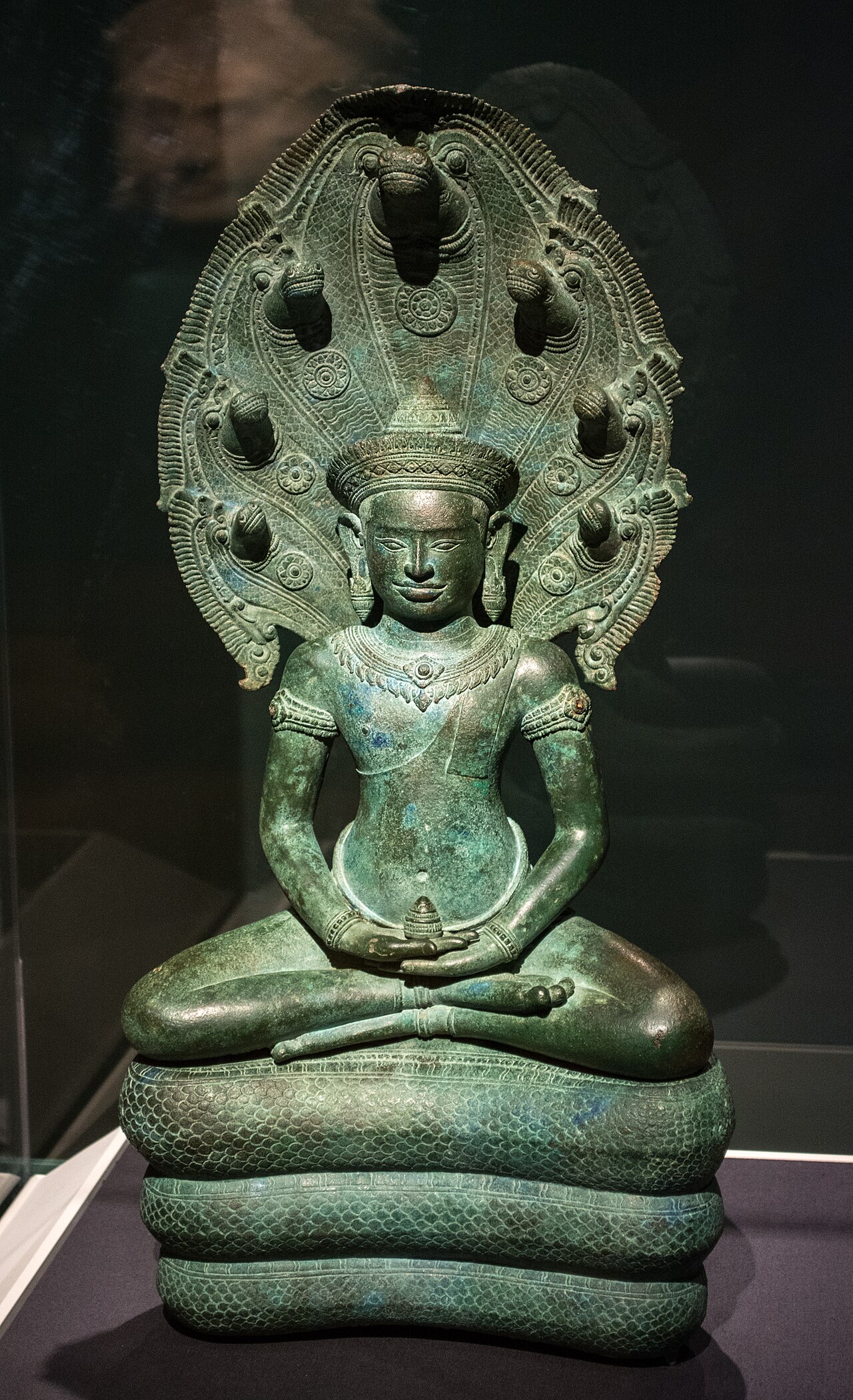
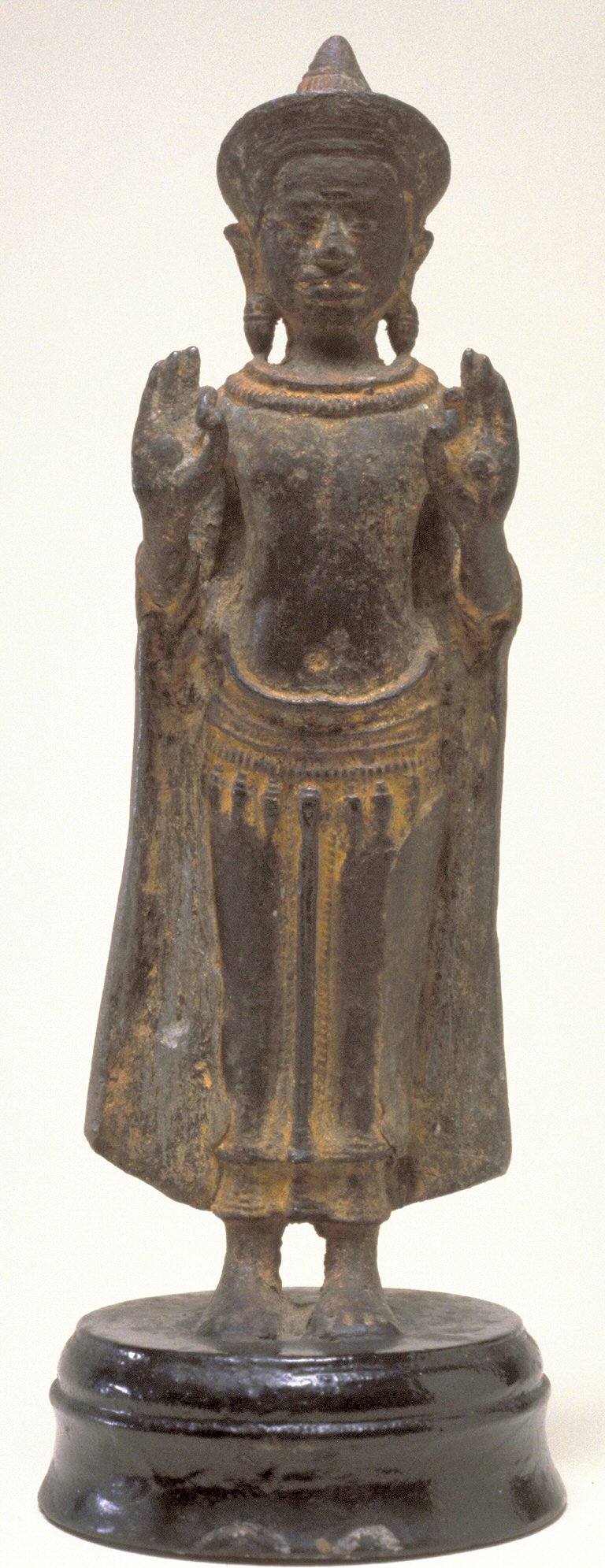
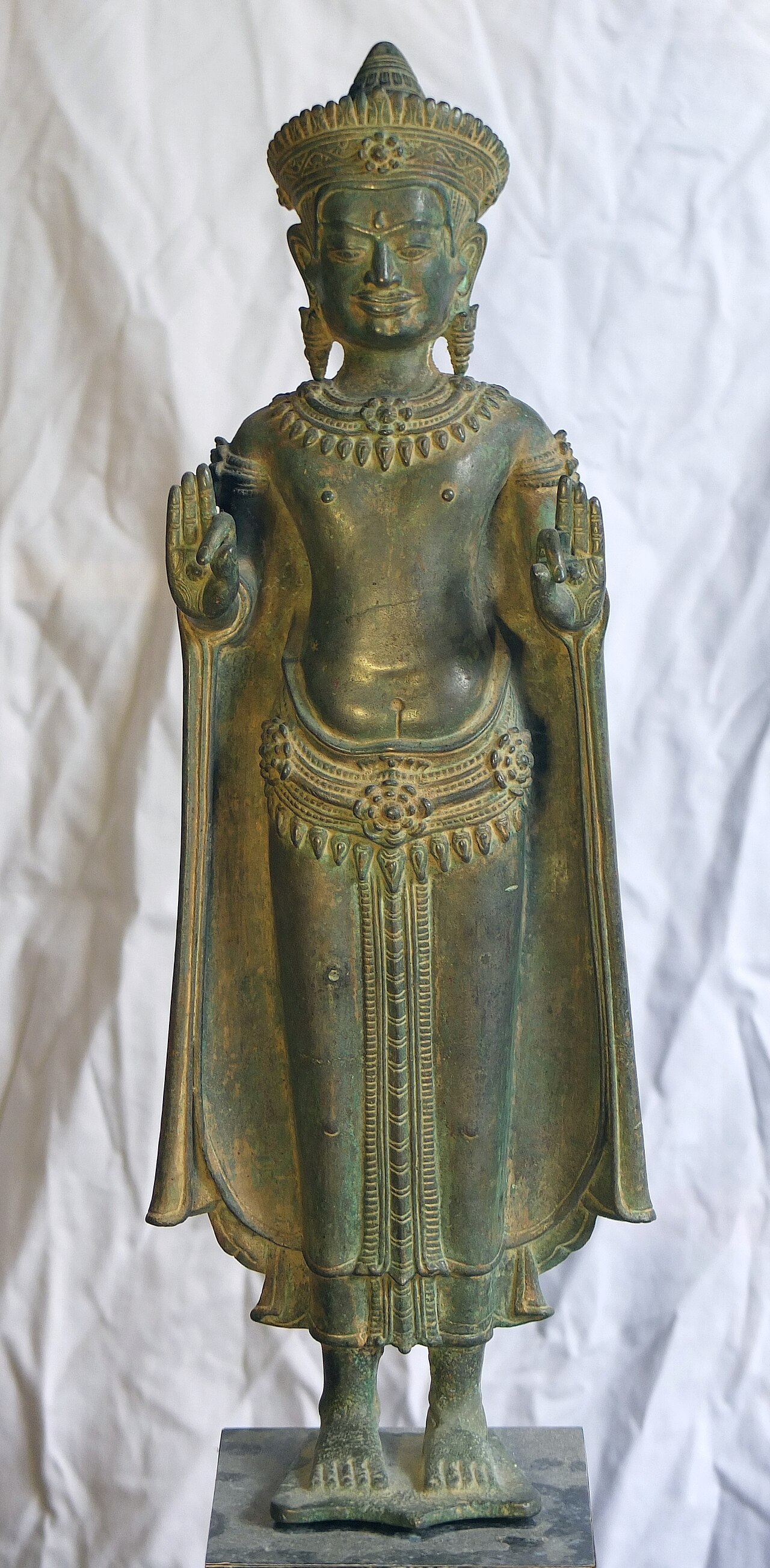
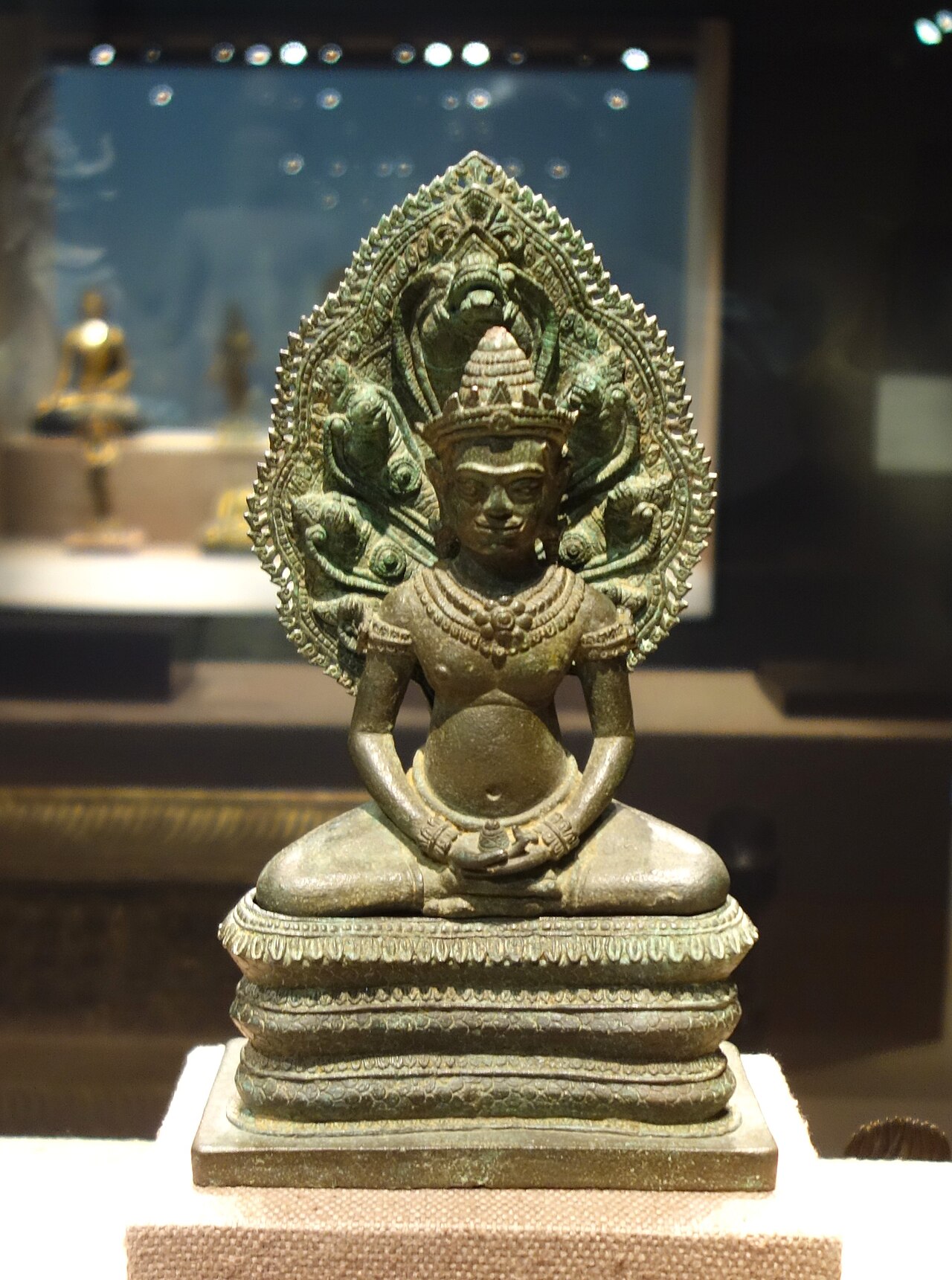
| Shape · ทรง | รูปหล่อสำริดลอยตัวขนาดเล็ก พระพุทธรูปนาคปรก พระยืนทรงเครื่อง หรือเทวรูป (โลเกศวร ปรัชญาปารมิตา เหวัชระ วิษณุ) ใส่ตลับหรือกรอบห้อยคอ A small solid-cast bronze in the round — naga-enthroned Buddha, crowned standing Buddha, or a deity (Lokeshvara, Prajnaparamita, Hevajra, Vishnu) — worn cased or framed, or kept on the altar. Museum pieces run from a few centimetres to half a metre; the worn ones are the small end. |
|---|---|
| Worn · การพก | ห้อยคอในกรอบ หรือบูชาบนหิ้ง Worn framed at the neck, or kept as an altar image |
| Notes | Deity figures worn as amulets sit in the deva class (venerated, not fed); the Buddha figures are phra khrueang. The record keeps the Buddha class and flags the other. |
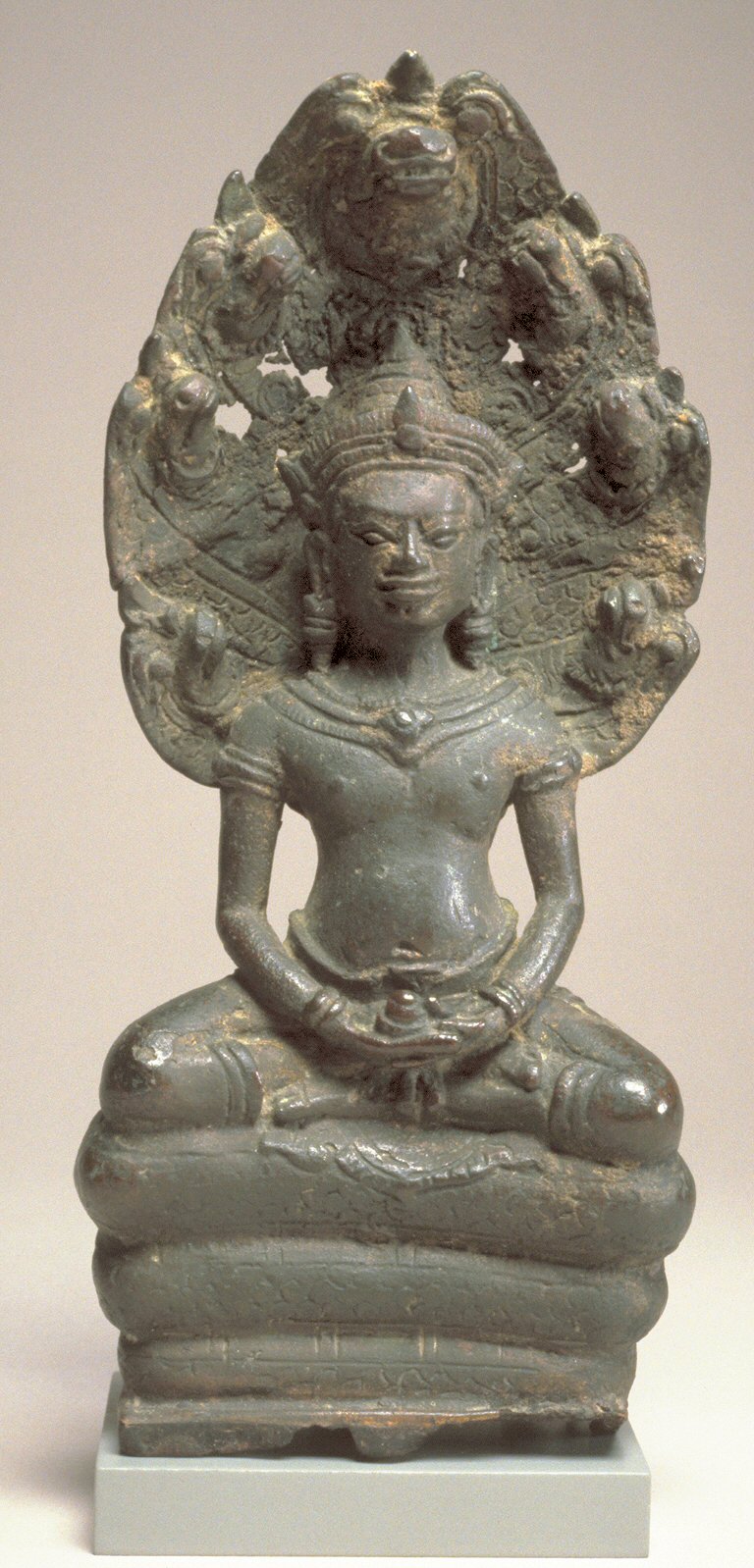
| Iconography · สัญลักษณ์ | พระนาคปรก นาคเจ็ดเศียร ขนดสามชั้น naga-enthroned Buddha (Mucalinda): seven-headed hood, coiled base — the Angkor favourite, and the form Jayavarman VII took as his own พระยืนทรงเครื่อง ยกสองพระหัตถ์ crowned standing Buddha with both hands raised in the same gesture โลเกศวร ปรัชญาปารมิตา Lokeshvara (Avalokiteshvara) and Prajnaparamita, the bronze-casters' favoured subjects เหวัชระ วัชรสัตว์ Hevajra and Vajrasattva — the esoteric layer of the Bayon period |
What to look at · จุดสังเกต
Type-level marks a reader can check by eye or loupe.
| หล่อสูญขี้ผึ้งตัน ลายละเอียดทุกขนาด Lost-wax solid casting with fine detail at every size — the Khmer method since at least the sixth century, still demonstrated by Cambodian artisans today | Cited · อ้างอิง |
| นาคปรก: ขนดเจ็ดรอบ เศียรเจ็ดแผ่พังพาน Mucalinda marks: coils (canonically seven) and a spread cobra hood, usually seven heads | Cited · อ้างอิง |
| หลังพระนคร ชาวบ้านสั่งหล่อรูปบรรพบุรุษและพระเถรวาทเป็นบุญ — ของขนาดกลางใช้ในพิธีและแห่ ของเล็กไว้ที่บ้าน Post-Angkor believers commissioned metal figures of ancestors and Theravada divinities as merit; mid-size bronzes served rites and processions, small ones were kept at home — the home-size piece is the ancestor of the worn amulet | Cited · อ้างอิง |
| สำริดพระนครถูกลักลอบขุดขายมหาศาล (แลตช์ฟอร์ด ค.ศ. 1970 เป็นต้นมา) — คำถามที่มาของชิ้นเก่าเป็นเรื่องกฎหมายก่อนเรื่องขลัง Angkorian bronzes were trafficked at scale from the 1970s (the Latchford case names bronzes and bells; museums returned pieces 2021–2026); for any old piece the provenance question is legal before it is spiritual | Cited · อ้างอิง |
| ประโคนชัย พ.ศ. 2507 พบสำริดก่อนพระนครเป็นกรุ (โลเกศวร) — คู่ขนานกับพระกรุไทย The 1964 Prakhon Chai find in Buriram — pre-Angkor bronzes including Avalokitesvara — is the Khmer-world parallel to a Thai cache find | Cited · อ้างอิง |
| ของในตลาดไทยที่เรียกพระขอมส่วนมากเป็นของหล่อใหม่แบบลพบุรี — คำว่า ขอม/เขมร ไม่ปรากฏในชื่อสินค้าลาซาด้าเลย Most of what the Thai trade calls phra khom is modern casting in Lopburi style, the trade holds; catalog.db has no Lazada TH title with ขอม or เขมร at all | Catalogue · จากคลัง |
How to tell it from · แยกจาก
| พระกรุ · Phra Kru (cache-find amulet) | พระกรุเป็นพระพิมพ์แบนกดพิมพ์ ดินหรือชิน · พระเขมรเป็นรูปหล่อลอยตัวสำริด — แต่ประโคนชัยคือกรุสำริด A phra kru is a flat pressed tablet of clay or chin from a sealed cache; this is a bronze in the round. The Prakhon Chai hoard shows bronzes can be cache finds too, so ask form first, findspot second. |
|---|---|
| รูปหล่อ · cast monk figure | รูปหล่อไทยเป็นพระเกจิที่มีชื่อ · สำริดเขมรเป็นพระพุทธหรือเทพแบบขอม A Thai rup lo is a cast portrait of a named monk; the Khmer bronze is a Buddha or deity in Angkorian style. Same material, different figure. |
| พระหูยาน · Phra Hu Yan (Lopburi long-eared tablet) | พระหูยานลพบุรีเป็นพระพิมพ์ชินแบน ศิลปะขอม · ไม่ใช่รูปหล่อลอยตัว Phra Hu Yan of Lopburi is Khmer-style too, but a flat chin tablet from a cache, not a figure in the round. |
| พระเชียงแสน · Chiang Saen (Lanna) bronze Buddha | พระเชียงแสนเป็นสำริดล้านนา พระพักตร์กลม เกตุดอกบัวตูม · ขอมมีนาคปรก มงกุฎ และหน้าสี่เหลี่ยม Chiang Saen bronzes are Lanna: round face, lotus-bud finial. Khmer pieces show the naga throne, the crown and diadem, and the squarer Bayon face. |
The story · เรื่องเล่า Cited · อ้างอิง
สำริดเป็นวัสดุที่ขอมถือว่าสูงส่ง ผูกกับความรุ่งเรือง หล่อแบบสูญขี้ผึ้งมาตั้งแต่ศตวรรษที่ 6 ยุคพระนครนิยมพระนาคปรก โลเกศวร และปรัชญาปารมิตา พระเจ้าชัยวรมันที่ 7 ส่งรูปโลเกศวร 23 องค์ไปทั่วอาณาจักรใน ค.ศ. 1191 และผูกพระองค์กับพระนาคปรก เมื่อเถรวาทเข้ามาหลังศตวรรษที่ 13 ชาวบ้านสั่งหล่อรูปเล็กไว้ที่บ้านและถวายวัดเป็นบุญ รูปเล็กเหล่านี้คือต้นทางของพระห้อยคอ ในศตวรรษที่ 20 สำริดพระนครถูกขุดขายจำนวนมาก
Bronze was a noble material to the Khmer, tied to prosperity, and cast by lost wax since at least the sixth century. Angkor favoured the naga-sheltered Buddha, Lokeshvara and Prajnaparamita; Jayavarman VII sent twenty-three Avalokiteshvara images across the kingdom in 1191 and took the naga-enthroned Buddha as the form under which he would be honoured — the Cleveland bronze from Banteay Chhmar is that image. When Theravada prevailed after the thirteenth century, believers commissioned small metal figures for the home and as offerings to temples, and those home-size pieces are the ancestors of the worn amulet. In the twentieth century the same bronzes were looted and sold at scale, which is why an old one now carries a question that a consecration cannot answer.
Keeping · การเลี้ยงดู Cited · อ้างอิง
พระพุทธรูปไม่มีผู้อยู่ บูชาตามปกติ · เทวรูปอยู่ชั้นเทพ บูชาแต่ไม่ต้องเลี้ยง · ถามที่มาเสมอ
Buddha figures: nobody home, ordinary veneration. Deity figures fall to the deva class — venerated, never fed. For any piece claimed as old, the keeper owes a paper trail before a prayer.
Pictures · ภาพ
Sources · แหล่งที่มา
- wichaa-vault _meta/vocab/classes.md — class axis (resident / upkeep / provenance_sensitivity) (vault; own)
- Cambodian art — Wikipedia (wikipedia; CC BY-SA 4.0)
- Khmer Empire — Wikipedia (wikipedia; CC BY-SA 4.0)
- Mucalinda — Wikipedia (wikipedia; CC BY-SA 4.0)
- Buddhism in Cambodia — Wikipedia (wikipedia; CC BY-SA 4.0)
- Khmer script — Wikipedia (wikipedia; CC BY-SA 4.0)
- Douglas Latchford — Wikipedia (wikipedia; CC BY-SA 4.0)
- Prakhon Chai district — Wikipedia (wikipedia; CC BY-SA 4.0)
- manuscript-crawler catalog.db — items table, 13,020 Lazada TH listings (method=commerce) + 6,990 manuscripts (catalogue; crawled; counts and price spreads only, never listing text)
- General knowledge of the Thai / Lanna amulet tradition (model training + secondary literature), hedged — never a specific date, title or scholar unless separately cited (book; n/a)
Default provenance: Cited · อ้างอิง axes → Catalogue · จากคลัง form.shape_en → Tradition · ตามประเพณี names → Tradition · ตามประเพณี origin.first_attested → Cited · อ้างอิง text.story_en → Cited · อ้างอิง market → Catalogue · จากคลัง media → Cited · อ้างอิง · confidence medium · needs verification · updated 2026-09-02