A word that means the thing that holds everything up. Hindus, Buddhists, Jains and Sikhs each use it, in their own way. In Thailand it lives at the wat: a temple full of colour, food, dogs, children, festivals and talk.
Dharma comes from the Sanskrit root dhṛ, to hold or to support. Dharma is what holds: the order that keeps the world steady, the right way to live in it, and the teaching that explains it. As the word travelled across Asia it was carried in some languages and translated in others.
Ring a bell. Each one says dharma in another language.
carried from Sanskrit or Palianother word chosen to translate it
Four traditions
One word, four houses
The same word does different work in each tradition. Tap a card to turn it over.
Hindu
dharma
The order that holds the world together, and each person's share in keeping it.
Hindu
Dharma is one of four aims of a life, beside wealth (artha), pleasure (kāma) and freedom (mokṣa). Each person has a svadharma, a dharma of their own, set by age, family and calling. In the Bhagavad Gita, Krishna tells the warrior Arjuna it is better to do one's own dharma imperfectly than another's well. Many Hindus call their religion Sanātana Dharma, the eternal dharma.
Buddhist
dhamma
The Buddha's teaching, and the way things are that it points to.
Buddhist
Buddhists take refuge in three jewels: the Buddha (the teacher), the Dhamma (the teaching) and the Sangha (the community of monks, nuns and practitioners). The teaching begins with four truths: life holds suffering; suffering has a cause, craving; it can end; and a path of eight parts leads there. In the plural, dhammas are the smallest pieces of experience: a sound, a feeling, a thought.
Jain
dharma
The path of non-harm, and also a substance that lets things move.
Jain
For Jains, dharma is the religion itself, built on ahiṃsā, doing no harm to any living being. Jain philosophy also names dharma as one of six substances of the universe: the medium of motion. Water does not make a fish swim, but a fish cannot swim without it. Its partner, adharma, is the medium of rest, like shade that lets a tired traveller stop.
🐟
Sikh
dharam
Righteous living: earning by one's own work, sharing, and remembering God.
Sikh
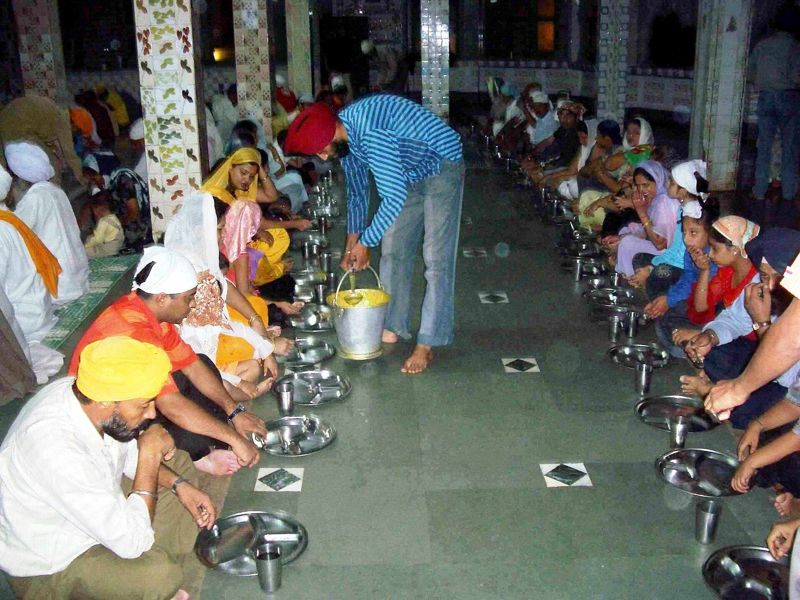
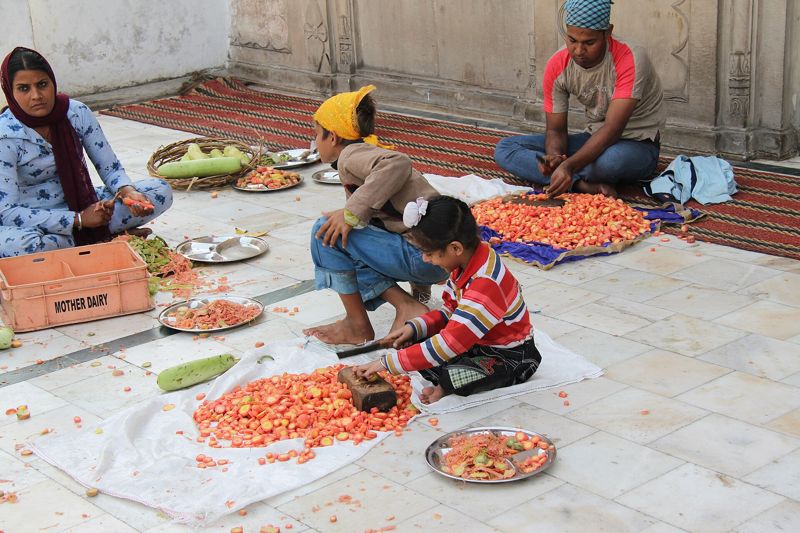
The Japji, the morning prayer that opens the Guru Granth Sahib, says the bull that holds up the earth is dharam, the son of compassion. It calls the earth itself a dharamsāl, a place for practising dharam. The first Sikh places of worship were called dharamsāls too. Every gurdwara keeps a langar, a free kitchen where anyone, of any faith, sits on the floor and eats together.
Everyday Thai
ธรรม tham
Dharma hides inside ordinary Thai words. Turn over to find it.
Everyday Thai
Look for ธรรม in each word.
ธรรมดาthammadanormal, ordinary
ธรรมชาติthammachatnature
ยุติธรรมyutithamfair, justice
ธรรมเนียมthamniamcustom, tradition
คุณธรรมkhunnathamvirtue
อักษรธรรมaksòn thamTham script, the dharma letters
The Buddha's first talk is remembered as Turning the Wheel of Dhamma. A wheel with eight spokes stands for the eight-part path. A dharma wheel with twenty-four spokes, the Ashoka Chakra, sits in the middle of India's flag.
Drag the wheel or press Spin. The spoke at the top is yours.
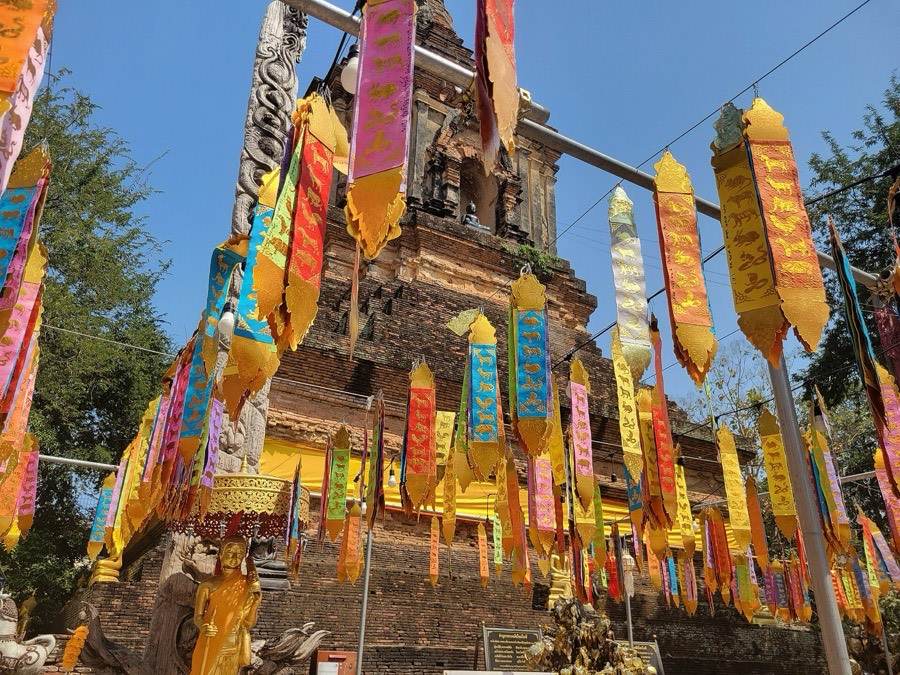
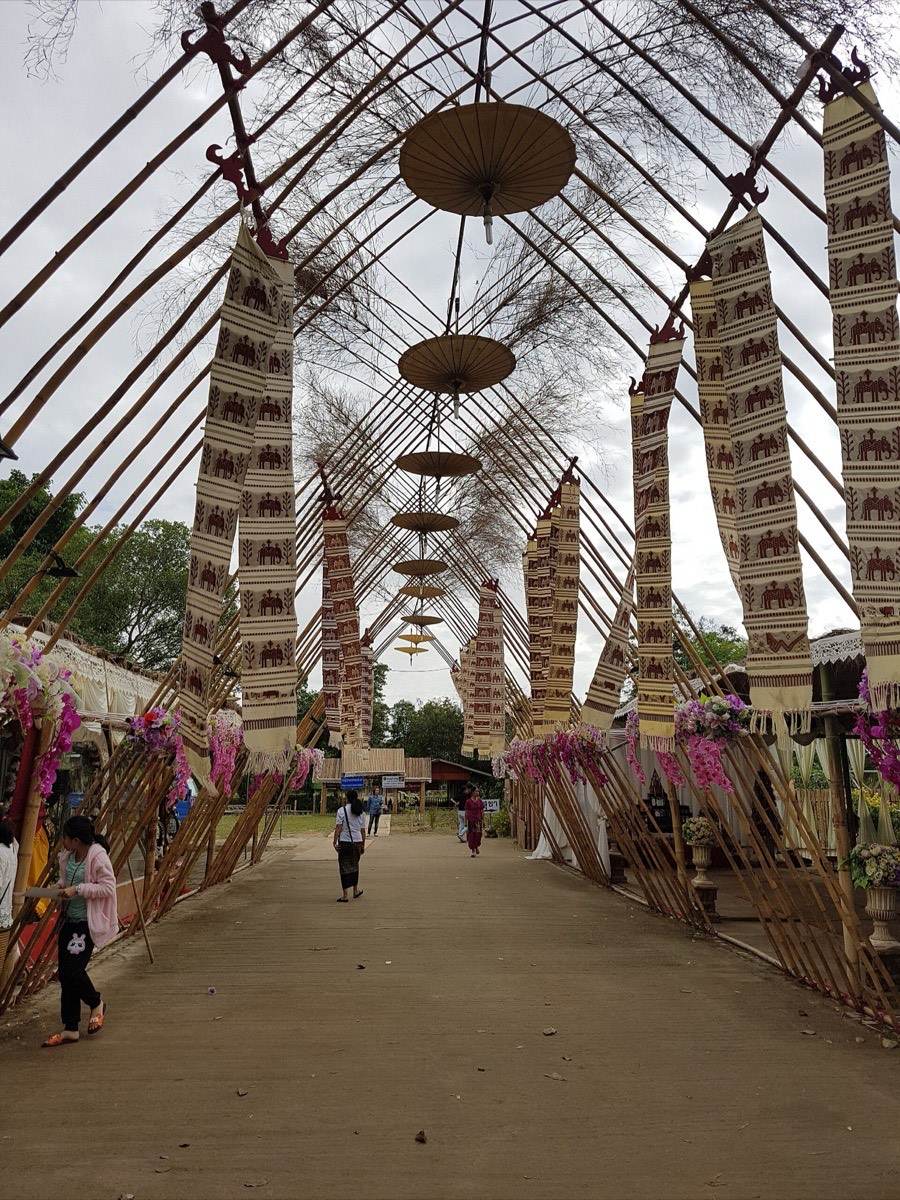
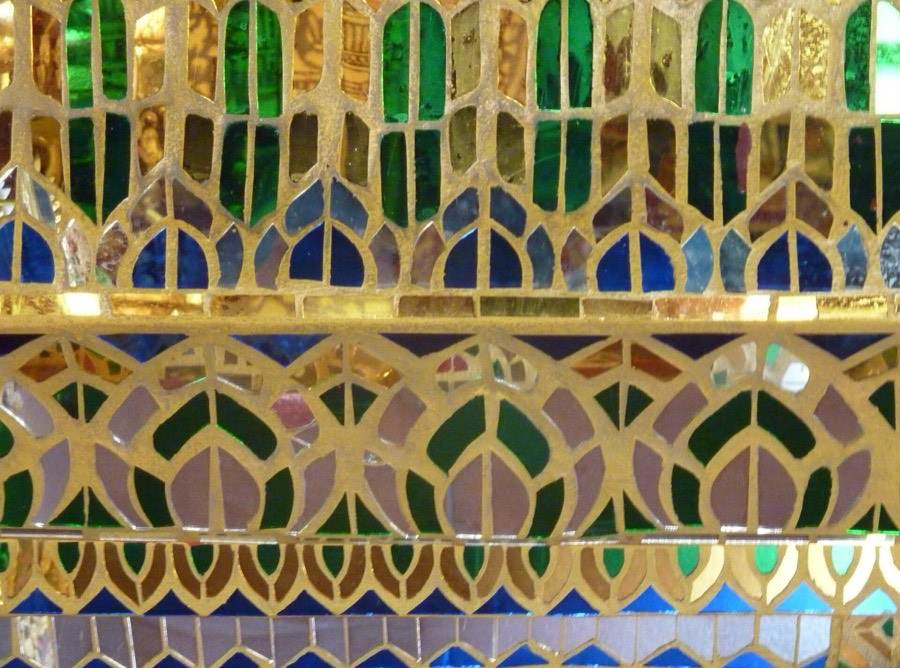
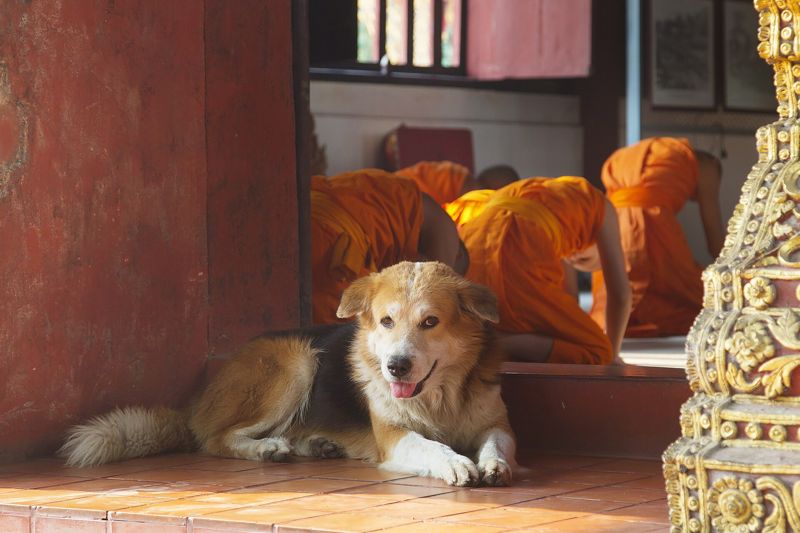
A wat (วัด) is a Thai temple-monastery. Monks and novices live there, and so do dogs, cats and the odd chicken. Village schools started in wats. Markets set up at the gate, families come for blessings, children play in the courtyard, and in the cool season the grounds fill with temple fairs: a Ferris wheel, ring-toss stalls, a band on a stage and grilled squid. The colour is there on purpose: glass mosaic, gold, red lacquer and long tung banners that move in the wind.
A day at the wat
06:00
Slide the sun across the day.
Wan phra (วันพระ), the Buddhist holy day, falls on the 8th and the 15th day of the waxing moon and of the waning moon. More people come to the wat on those days.
Colour, up close
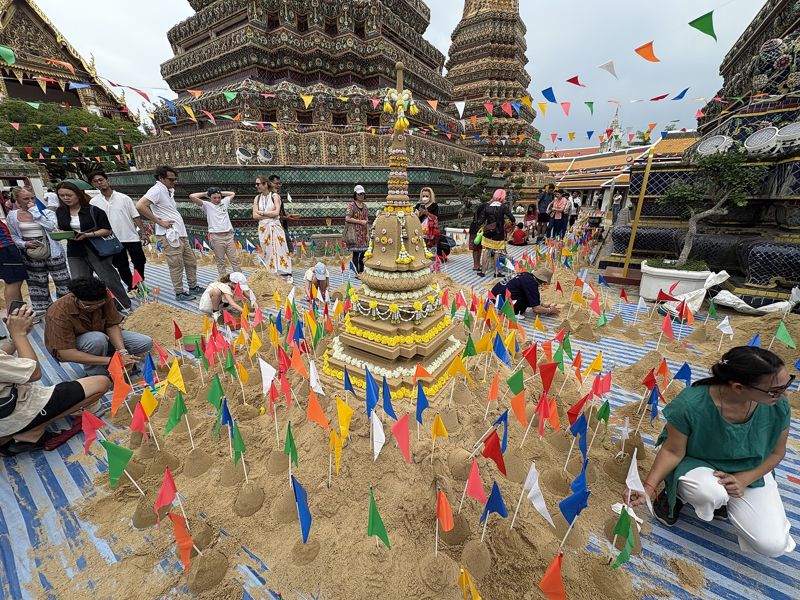
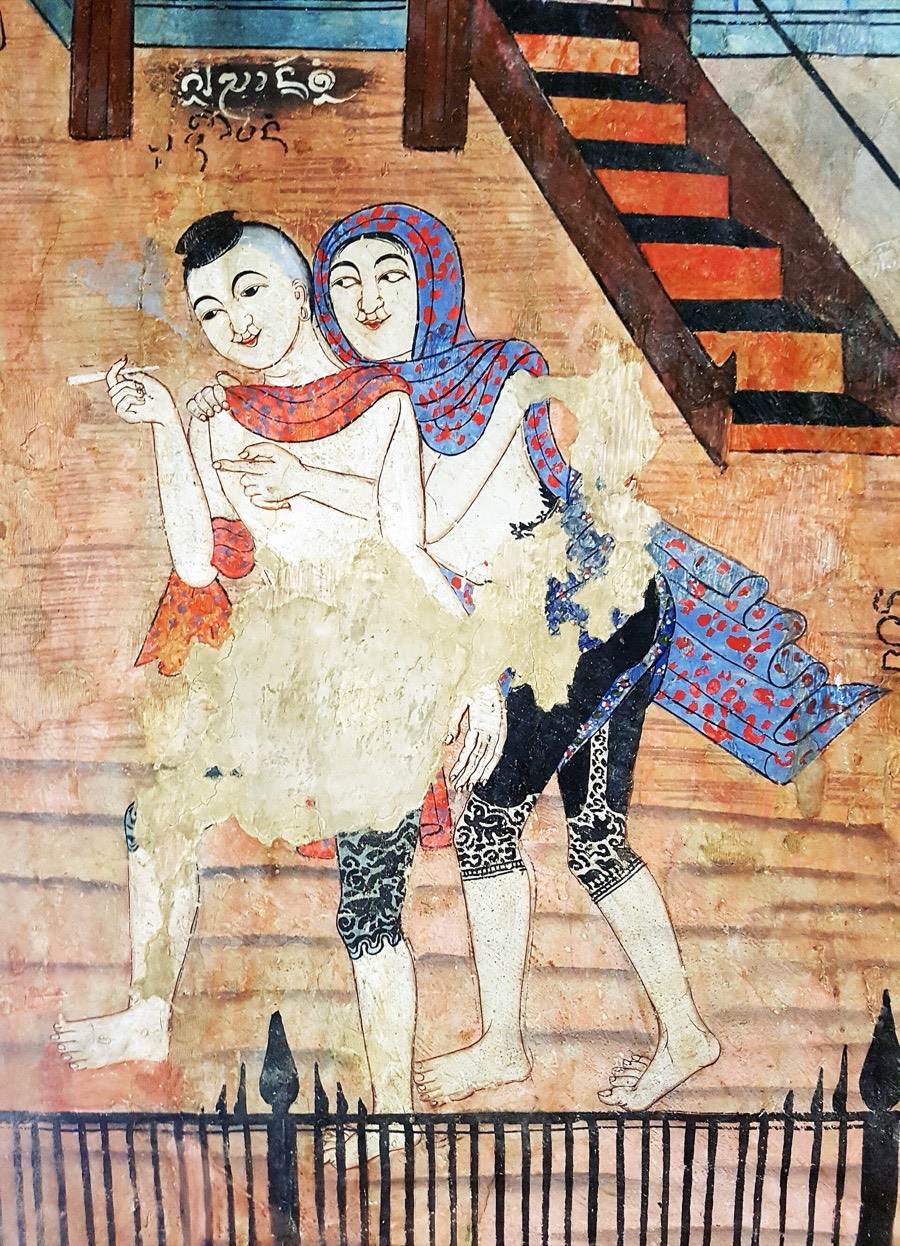
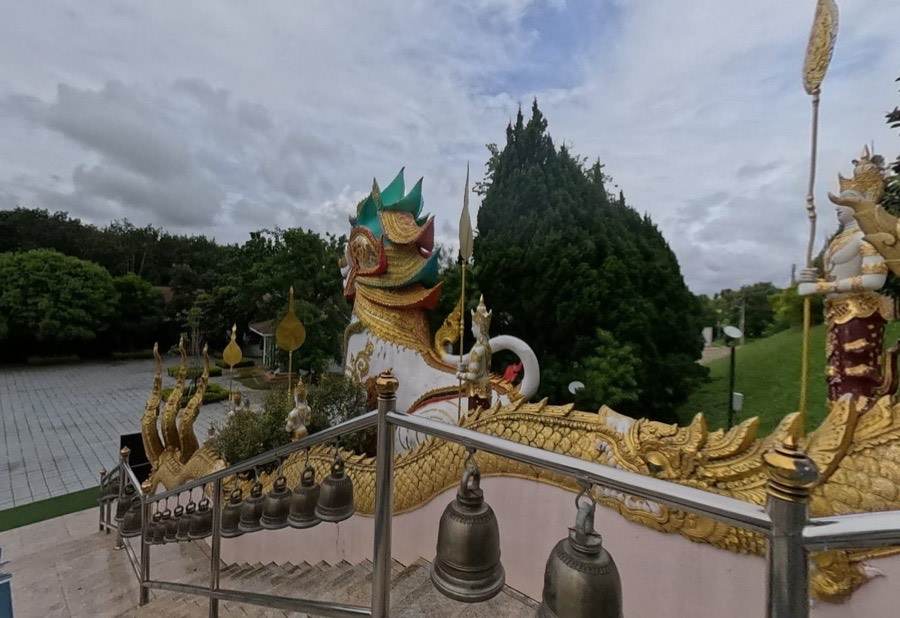
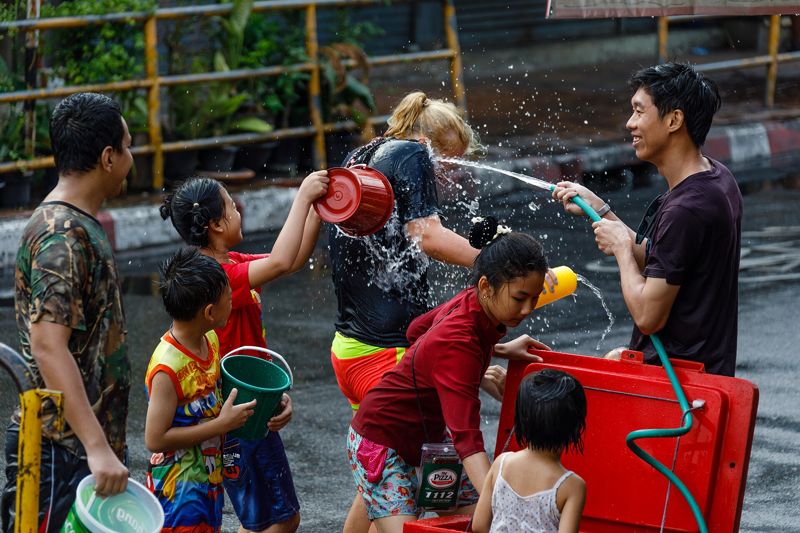
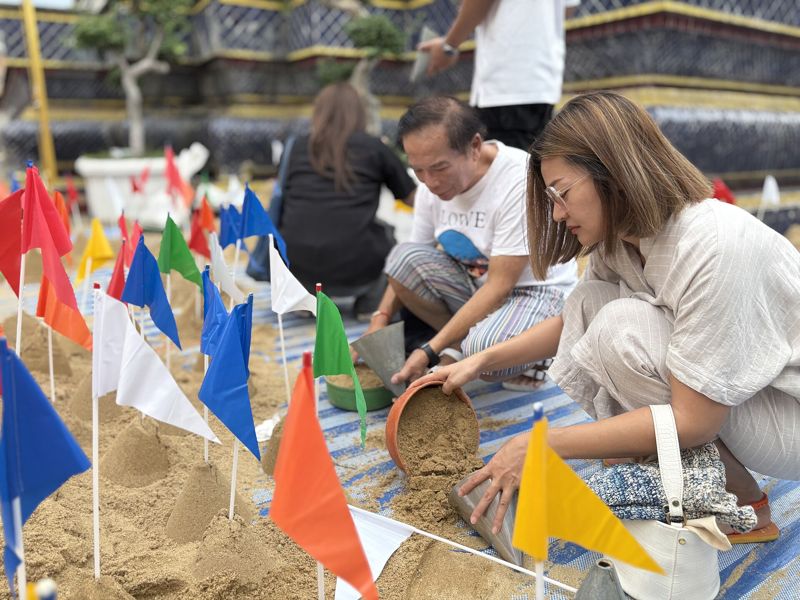
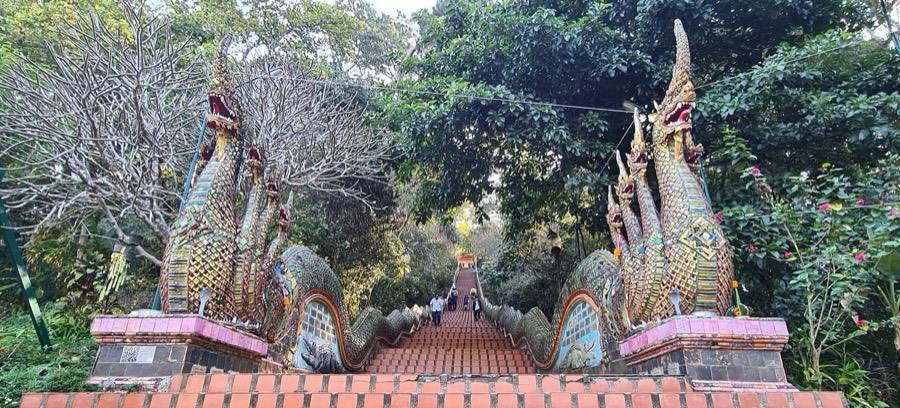
A path lined with tung at Wat Hiranyawat.Iudexvivorum · CC0Coloured glass and gold at Wat Chiang Man, Chiang Mai.Photo Dharma · CC BY 2.0The Whisper of Love: a mural at Wat Phumin, Nan, of a man murmuring to a woman.Index Librorum Permissorum · CC0Bells on a naga rail at Wat Saeng Kaew Phothiyan. Visitors ring them as they pass.NaN Peacock · CC BY 4.0A temple dog and novices at Wat Phra Singh, Chiang Mai.JJ Harrison · CC BY-SA 3.0Songkran in Chiang Mai.CEphoto, Uwe Aranas · CC BY-SA 4.0Sand chedi and flags at Songkran, Wat Pho, Bangkok.Chainwit. · CC BY 4.0A family cooks for a langar.Hari Singh from Ilford, Essex, UK · CC BY 2.0
Sand for the wat
In northern Thailand people say you carry a little of the wat away on your feet all year. At Songkran, the Thai New Year in mid-April, families carry sand back into the wat and build chedi (pagodas) of it, then plant bright flags on top. Then everybody throws water at each other.
0
Siam si
Shake the sticks
At many Thai and Chinese temples people kneel, hold a bamboo cup of numbered sticks and shake it until one stick falls out. The number matches a printed slip. These slips carry verses of the Dhammapada, a book of the Buddha's sayings.
You can also shake your phone.
Dharma letters
Written in tham
In northern Thailand the old script is called tua tham or aksòn tham, the dharma letters, because monks used it to write the teaching onto palm leaves. A palm-leaf manuscript itself is called a tham. To sponsor one and give it to a wat is to offer tham, and the great preaching festival of Lanna, held at Yi Peng in the twelfth lunar month, is Tang Tham Luang, setting up the great tham.
6,718of the 6,986 manuscripts catalogued on wichaa are written in tham scripts: Lanna, Lao and Lue.
154named temples hold them.
103carry the Vessantara story, the prince who gave everything away, read aloud in thirteen chapters at Thet Mahachat festivals.
Other traditions have their own words for the order of things and the way to walk in it. They are not the same as dharma. They are neighbours. Tap one to read it.
Visiting
Most wats are open to visitors. People cover shoulders and knees, take their shoes off at the door of each hall, keep their feet pointed away from the Buddha images, and drop a little money in the donation box if they wish.
Photographs from Wikimedia Commons and the Lanna Craft site, with their makers and licences below. Dhammapada verses from F. Max Müller's 1881 translation (Project Gutenberg). Manuscript counts are read from the wichaa catalogue when the page is built.